

Coastal rooms can feel bright and relaxed, but they still need practical surfaces and a layout that works for everyday life.
Natural stone adds texture and variation, and I find it works best when its colors connect with the cabinetry, floors, and light already in the room.
In kitchens and bathrooms, the countertop often draws the eye first, so its pattern can shape the feel of the whole space.
The most useful designs balance that visual weight with comfortable work areas and finishes that are easy to live with.
I’d save a few ideas that suit your home’s light and materials, then consider how the stone might look in your own space.
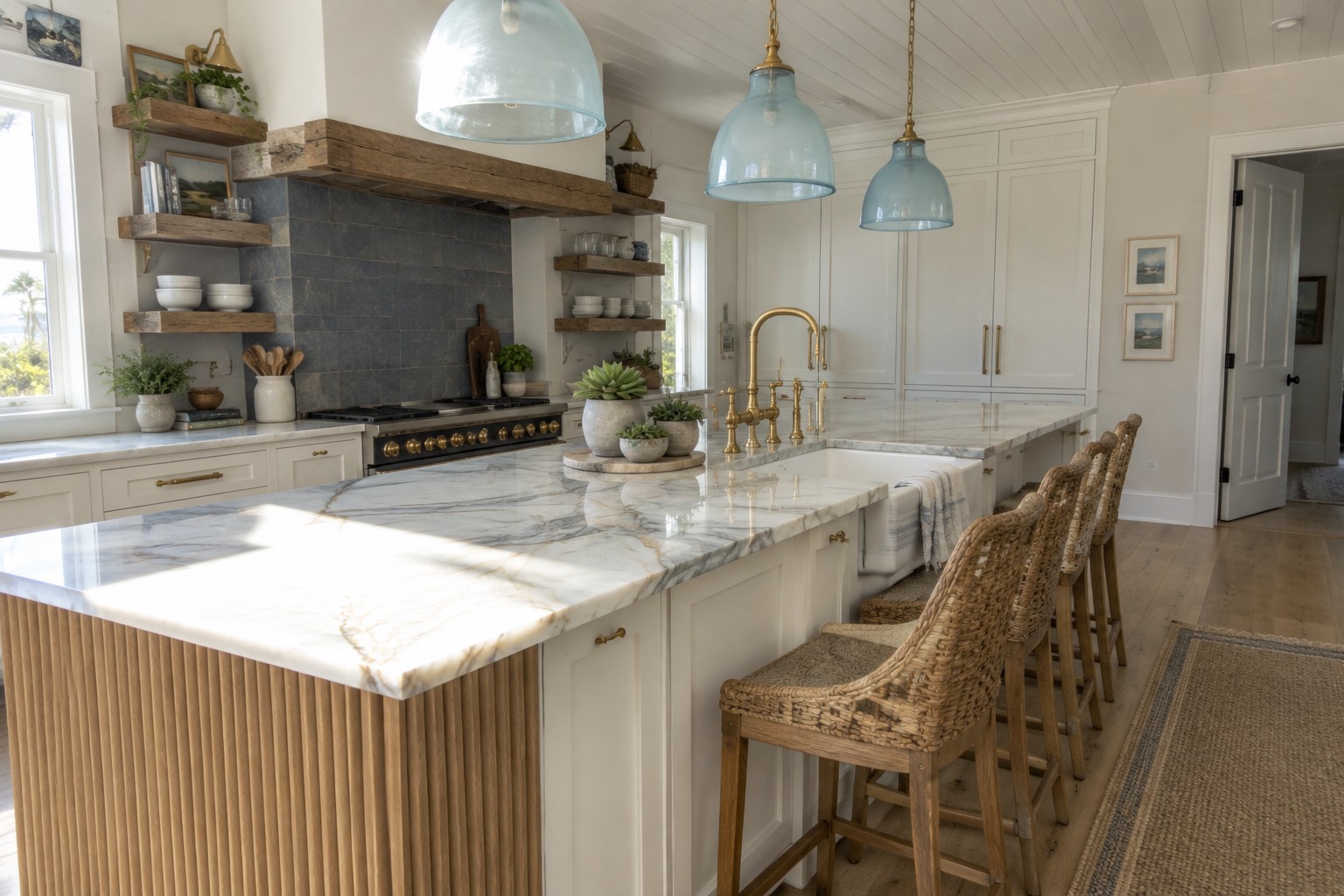
Natural Stone Makes a Practical Kitchen Island Feel Special

A large natural stone island gives a kitchen plenty of room for everyday tasks while making the countertop a feature in its own right. The veining adds interest without needing a busy pattern elsewhere, so it works especially well with simple cabinetry.
For a similar look, let the stone cover a generous island surface and, if the budget allows, continue it down one end. Keep nearby finishes fairly quiet, and choose a durable stone suited to regular cooking and cleanup.
Use Stone Countertops In A Shared Vanity

A long vanity with two sinks gives a shared bathroom more room to function without making the counter feel crowded. The gray stone countertop is a practical choice here, since its simple finish suits a busy space and works well with the softer cabinet fronts.
This layout is especially useful in a narrow bathroom where two people need to get ready at once. Leave some clear counter space between the sinks, and choose a durable stone that can handle everyday use.
Make a Dining Nook Feel Relaxed

A built-in bench can make a dining area feel settled without taking up space for extra chairs. It also gives people room to sit close together, which works especially well in a small kitchen or a casual family dining spot.
Keep the bench comfortable with cushions that can handle everyday use. A stone tabletop is a practical choice for meals and gatherings, but check that it leaves enough legroom beneath the table.
Use Natural Stone in a Hardworking Laundry Room

Natural stone countertops can make a laundry room feel more finished without making it less practical. Here, the veined marble runs along a long counter and continues around the sink, giving the room a useful work surface for sorting and folding.
This approach suits a narrow utility room where one continuous counter can serve several tasks. Choose a stone finish that fits your tolerance for upkeep, and wipe spills promptly, especially around the sink.
Make A Small Dressing Area More Useful
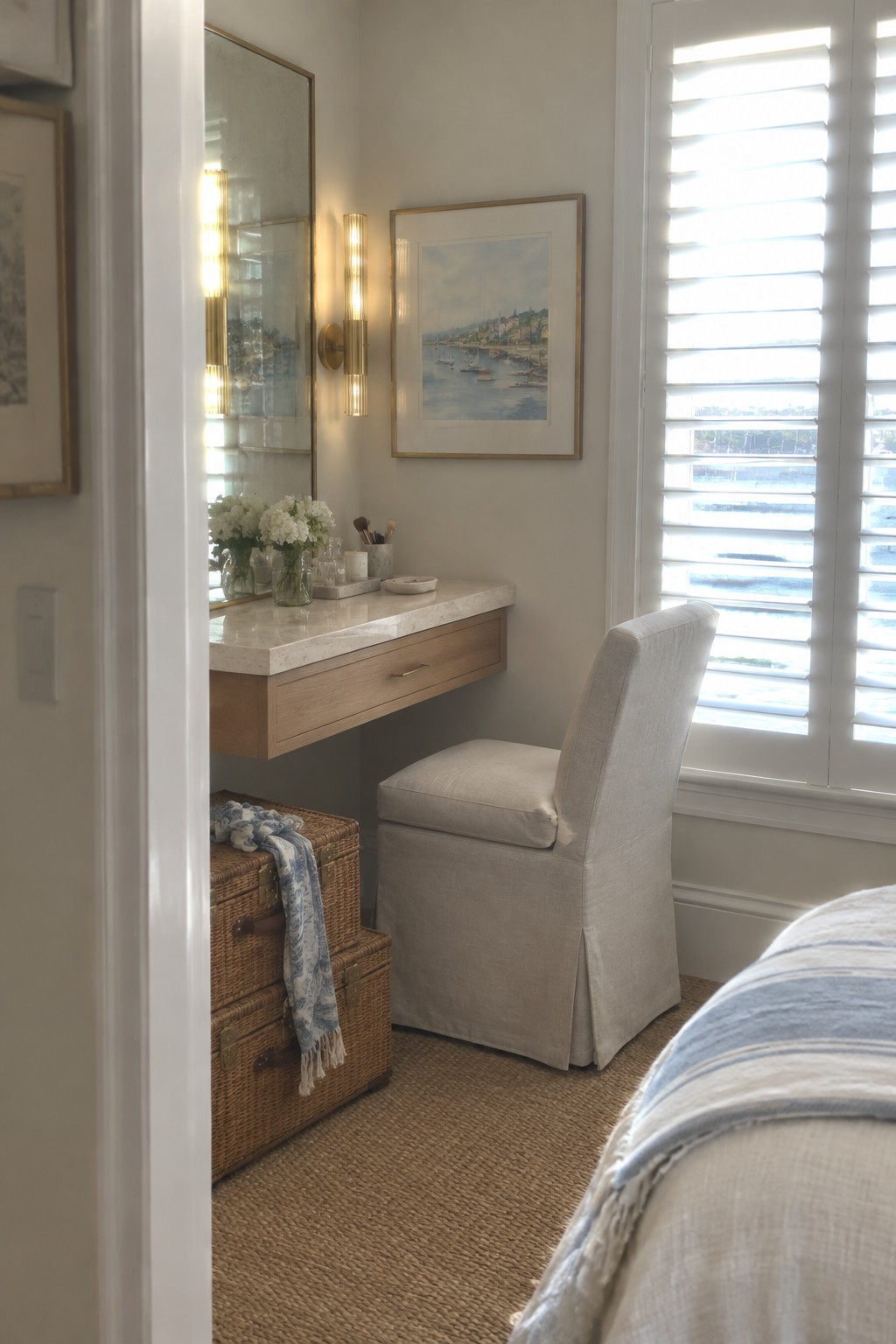
A floating vanity can make a bedroom dressing area feel less crowded while still giving you a handy place to get ready. The natural stone countertop provides a durable surface for everyday items without taking up floor space below.
This setup works well in a bedroom or dressing nook where a full-size dresser would feel bulky. Keep the countertop fairly clear, and choose a chair that can tuck neatly underneath when it is not in use.
Use a Stone Desk for a Coastal Home Office

A natural stone desktop brings a sturdy, easy-to-use surface to a home office. Its pale color suits a coastal interior, while the stone gives the work area a little more character than a standard wood desk.
For a similar setup, choose a stone with subtle veining so papers and everyday items still stand out clearly. A built-in desk can make good use of a window wall, especially in a small office or a quiet corner of a larger room.
Use Natural Stone In A Bathroom Vanity

A natural stone countertop can make a bathroom vanity feel considered without making the room fussy. Here, the pale marble keeps the vanity light, while its subtle veining gives the surface a little character.
This approach suits a small powder room or a shared bath where you want a durable surface that still feels welcoming. A simple wood vanity is a good match, and keeping the countertop mostly clear lets the stone stand out.
Make A Long Kitchen Island Work Harder
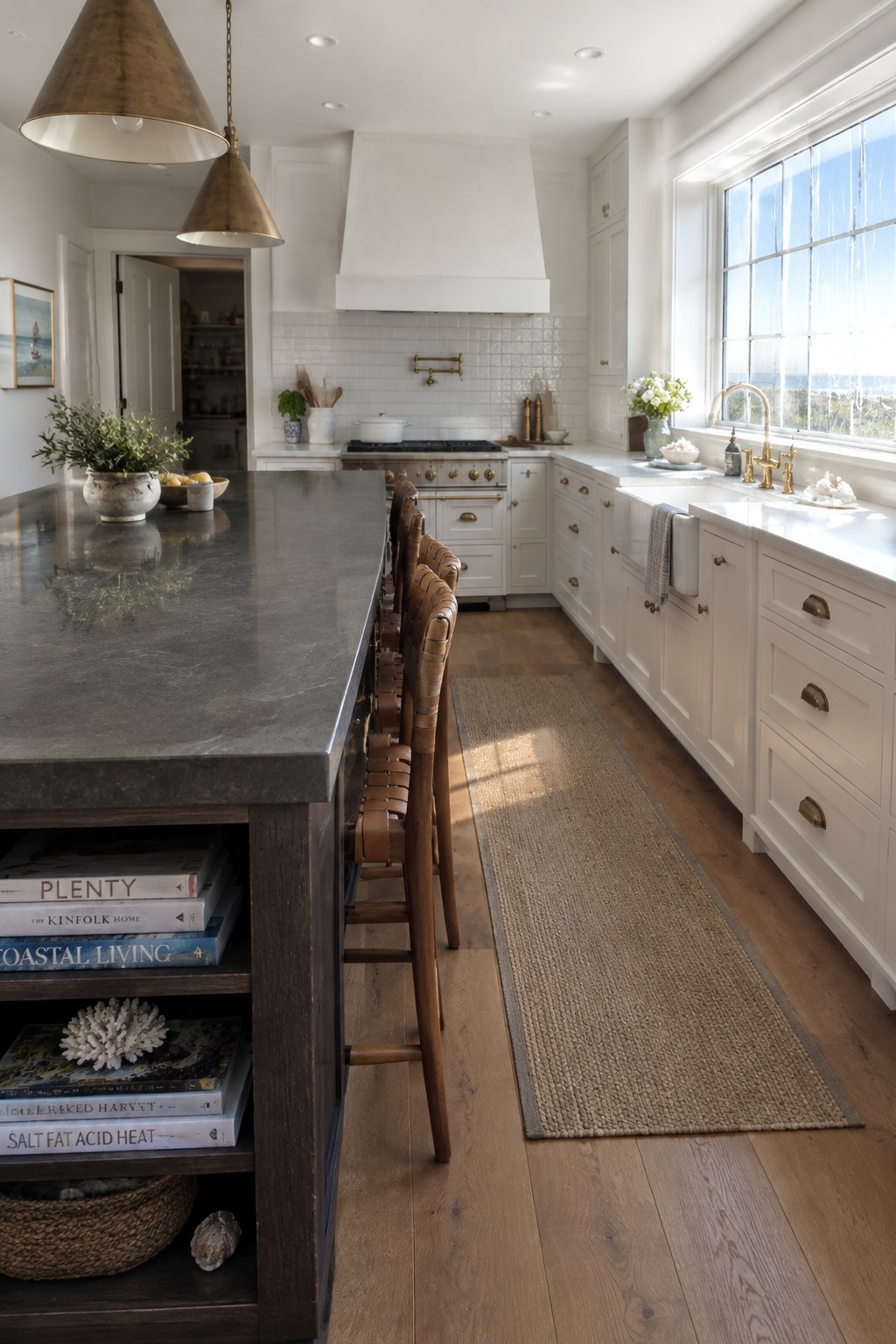
A long island can give a kitchen useful prep space and a casual place to sit. Here, the dark stone countertop stands out against the white cabinets, while the open shelving at the end keeps a few cookbooks close at hand.
This layout suits a kitchen with enough room for stools along one side and a clear walkway beside it. Choose a durable stone that can handle daily use, and leave enough space around the island so people can move through the kitchen comfortably.
Use Natural Stone for a Bathroom Vanity
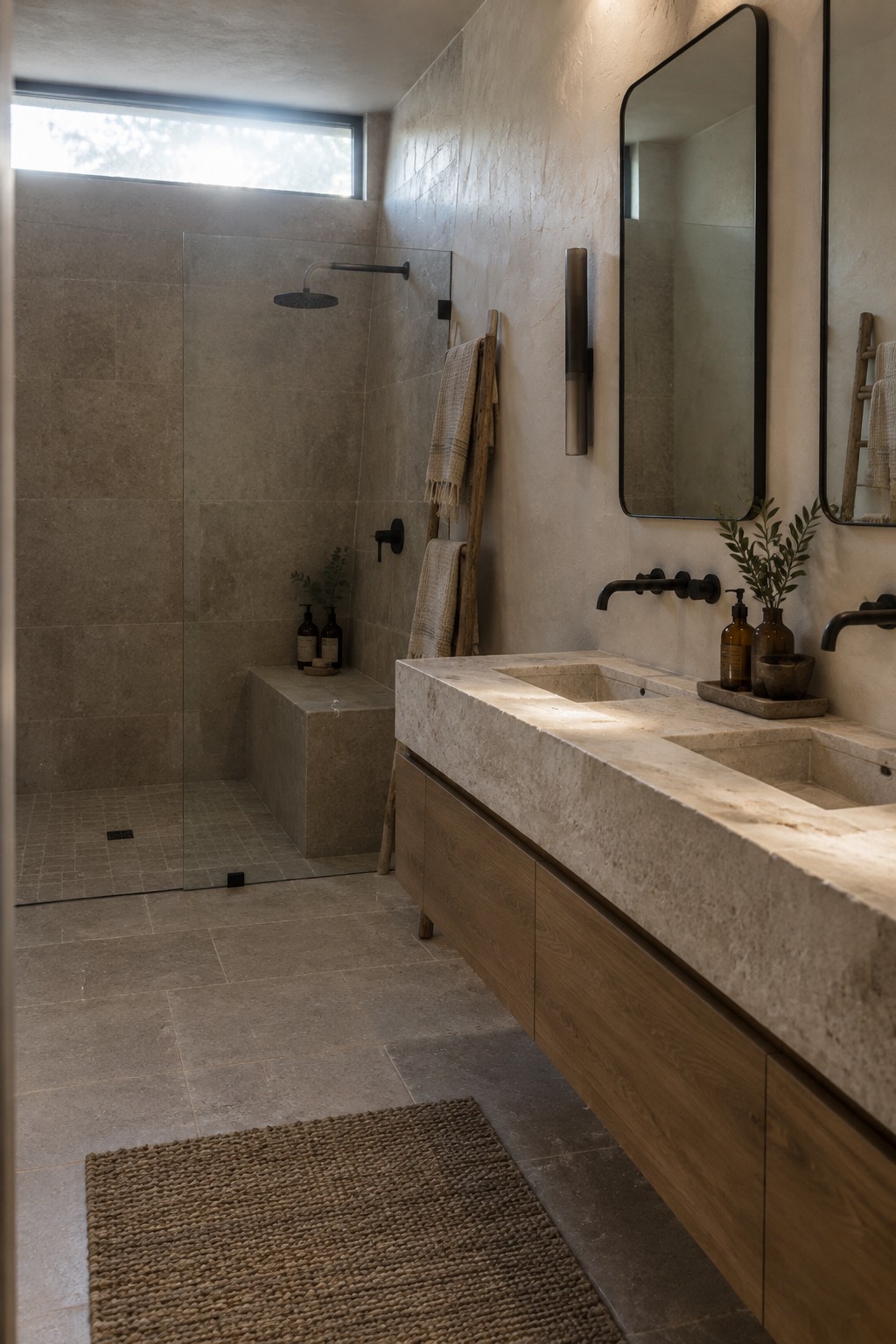
A thick stone countertop gives a bathroom vanity a sturdy, built-in feel. Here, the pale stone keeps the vanity simple while its natural variation makes the surface more interesting than a plain slab.
This approach suits bathrooms where you want the countertop to be a lasting feature. Choose a finish that can handle regular use, and check the stone’s care needs before deciding, since some types need sealing.
Use a Curved Island to Open Up the Living Area

A curved kitchen island can make an open-plan room easier to move through. Its rounded end takes up less visual space than a sharp corner and gives the kitchen a natural edge beside the seating area. Here, the pale stone countertop keeps the island feeling light.
This shape works well in homes where the kitchen and living room share one space. Leave enough room around the curve for chairs and walkways, and choose a durable stone finish that suits everyday cooking.
Use Natural Stone In A Kitchen Bar

A small kitchen bar can make good use of natural stone, especially when it serves as both a work surface and a place to rinse glasses or prepare a quick drink. The continuous stone counter and backsplash here give the narrow space a practical, finished look.
This idea suits a butler’s pantry or a stretch of kitchen cabinetry that might otherwise go unused. Choose a durable stone and keep the counter fairly clear so there’s room to work.
Use a Large Stone Island for Casual Kitchen Seating

A generous stone island can serve as both a work surface and a place to sit, which makes a kitchen easier to use throughout the day. The broad countertop here leaves room for food prep while still accommodating several wicker stools.
This setup works well in an open kitchen where people tend to gather while someone cooks. Leave enough space around the stools for comfortable movement, and choose seat cushions that can handle everyday use.
Choose a Marble-Look Countertop for a Coastal Bathroom

A pale stone countertop can bring a coastal feel to a bathroom without relying on beach-themed decor. The blue-gray veining on this long vanity gives the surface character while keeping the overall look light.
This approach works well on a double vanity, where one continuous countertop helps the sinks feel connected. Choose a stone or durable stone-look surface that suits your budget, and check its care needs before committing.
Use a Stone Countertop In A Small Bar Area

A natural stone counter can give a small bar area a useful work surface without making it feel like a full kitchen. Here, the pale stone keeps the built-in feeling simple, while the brass faucet adds a little contrast.
This idea suits a butler’s pantry or a compact beverage station. Choose a counter with enough room for a small sink and a few everyday items, and keep the surrounding storage simple so the area stays easy to use.
Use a Shared Vanity To Add Storage
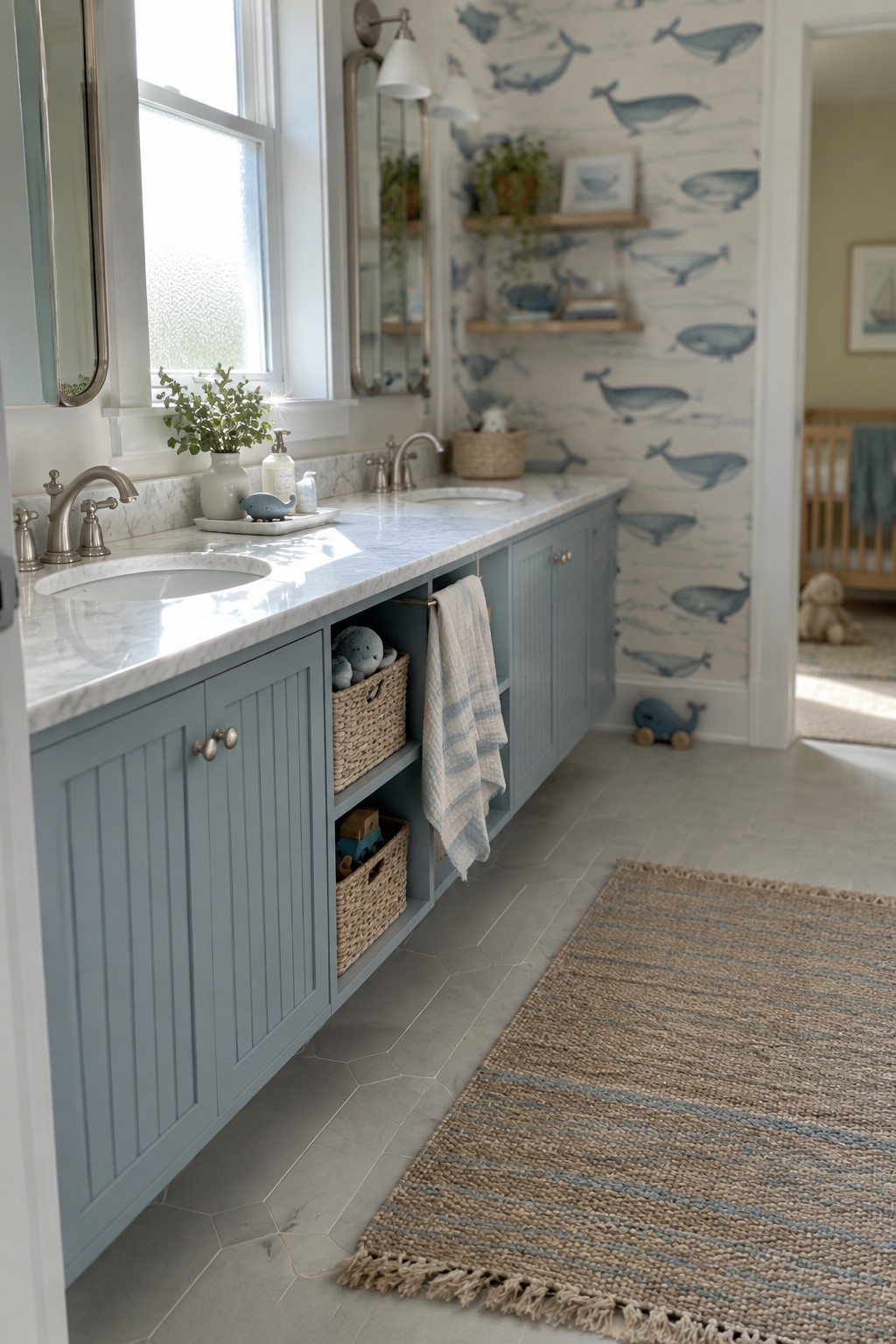
A long vanity with open cubbies can make a shared bathroom easier to use. The stone countertop gives each sink a durable surface, while the middle shelves keep towels and baskets within reach.
This setup works well in family bathrooms where two people need space at the same time. Keep everyday supplies in the cubbies, and use baskets to hide smaller items and limit clutter.
Use Dark Stone for a Coastal Bathroom Vanity

A dark stone vanity can give a coastal bathroom a little more contrast than the usual pale finishes. Here, the thick countertop and integrated sink make the stone feel like a substantial part of the room, while the muted wall color keeps it from looking too stark.
This approach works well in a small bathroom where one strong material can set the tone. Choose a stone with some natural variation, and keep nearby finishes simple so the vanity stays easy to live with.
Let a Stone Countertop Connect the Kitchen and Dining Area

A natural stone island can help an open kitchen and dining area feel like one connected space. Its broad surface is useful for everyday prep, while the dining table nearby keeps meals and conversation close.
For a similar layout, leave enough room to move between the island and table, and choose a stone pattern that sits comfortably with the room’s wood tones. This works especially well in homes where the kitchen is part of the main gathering area.
Use a Dressing Island for Everyday Storage

A large dressing island can make a walk-in closet more useful by keeping drawers and a clear countertop close at hand. The pale stone surface gives you room to set out a few daily items without making the island feel like another storage cabinet.
This layout works best in a closet with enough space to walk around the island comfortably. Choose drawers for smaller clothing and accessories, and keep the countertop mostly clear so it stays easy to use.
Use Stone Counters In a Compact Bar Area
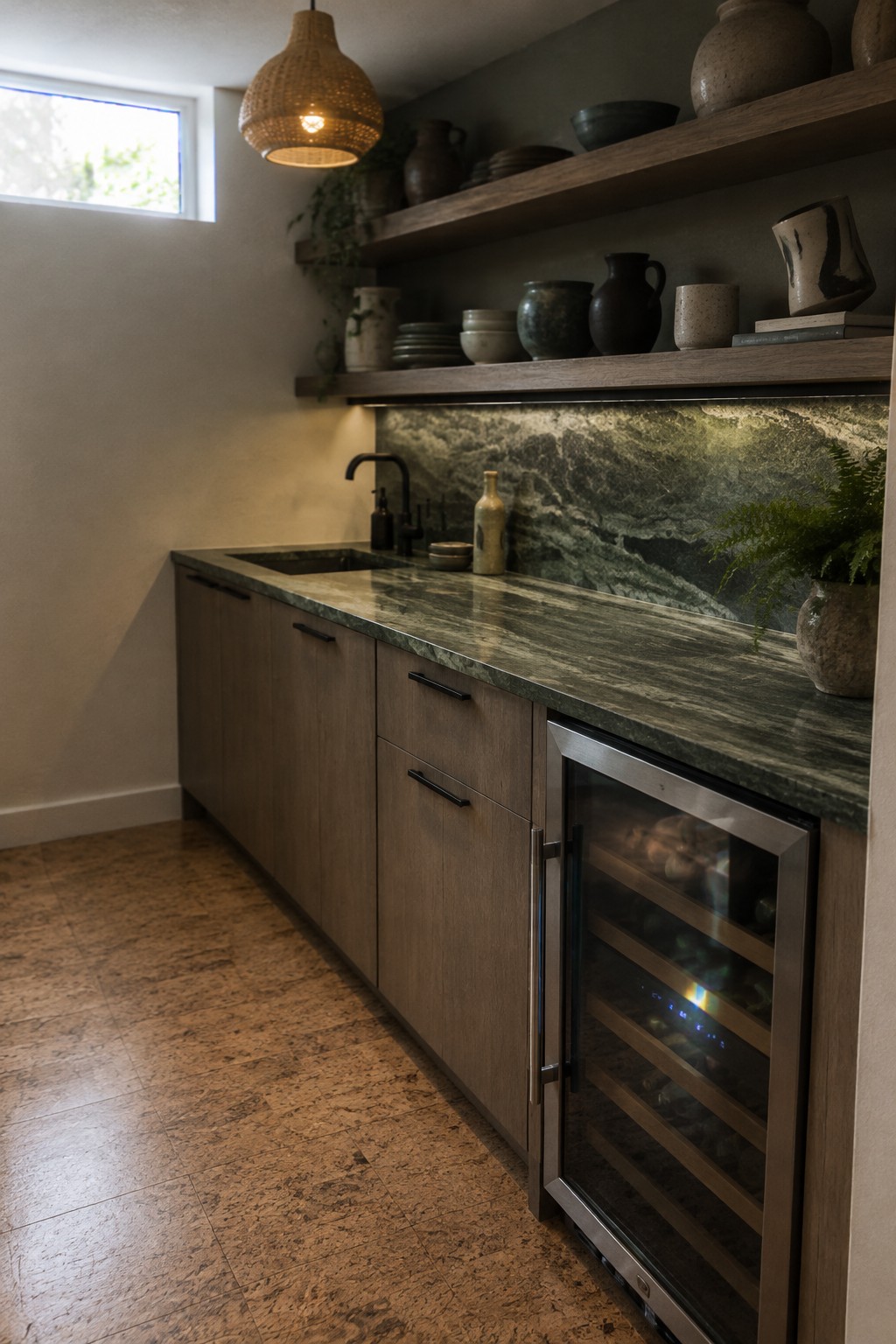
A natural stone counter can make a small bar area feel considered without needing much extra decoration. Here, the stone continues up the backsplash, giving the narrow counter a practical, easy-to-clean surface.
This approach works well in a kitchen alcove or a tucked-away beverage station. Choose a stone with a pattern you enjoy seeing across a larger surface, and keep the surrounding cabinetry simple so the counter remains the main feature.
Choose a Stone Vanity With Room for Baskets

A thick natural stone vanity can make a bathroom feel finished while still being useful every day. The long counter here holds two sinks, and its open space below leaves room for woven baskets instead of closed cabinetry.
This setup works well in a shared bathroom where towels and extra supplies need a nearby home. Use baskets that fit the opening without crowding it, and keep the stone’s color and pattern fairly quiet if you want the room to feel calm.
Use Open Shelving to Keep a Coffee Station Handy

Open shelves make a coffee station easy to use without taking up valuable counter space. Here, the cups sit within reach above the espresso machine, while the marble counter gives the setup a practical place to prepare a drink.
This approach works well in a kitchen nook or pantry where you want everyday items close at hand. Keep the shelves to the pieces you use often, and leave enough counter space around the machine for making coffee and cleaning up.
Use a Stone Console to Keep an Entry Simple
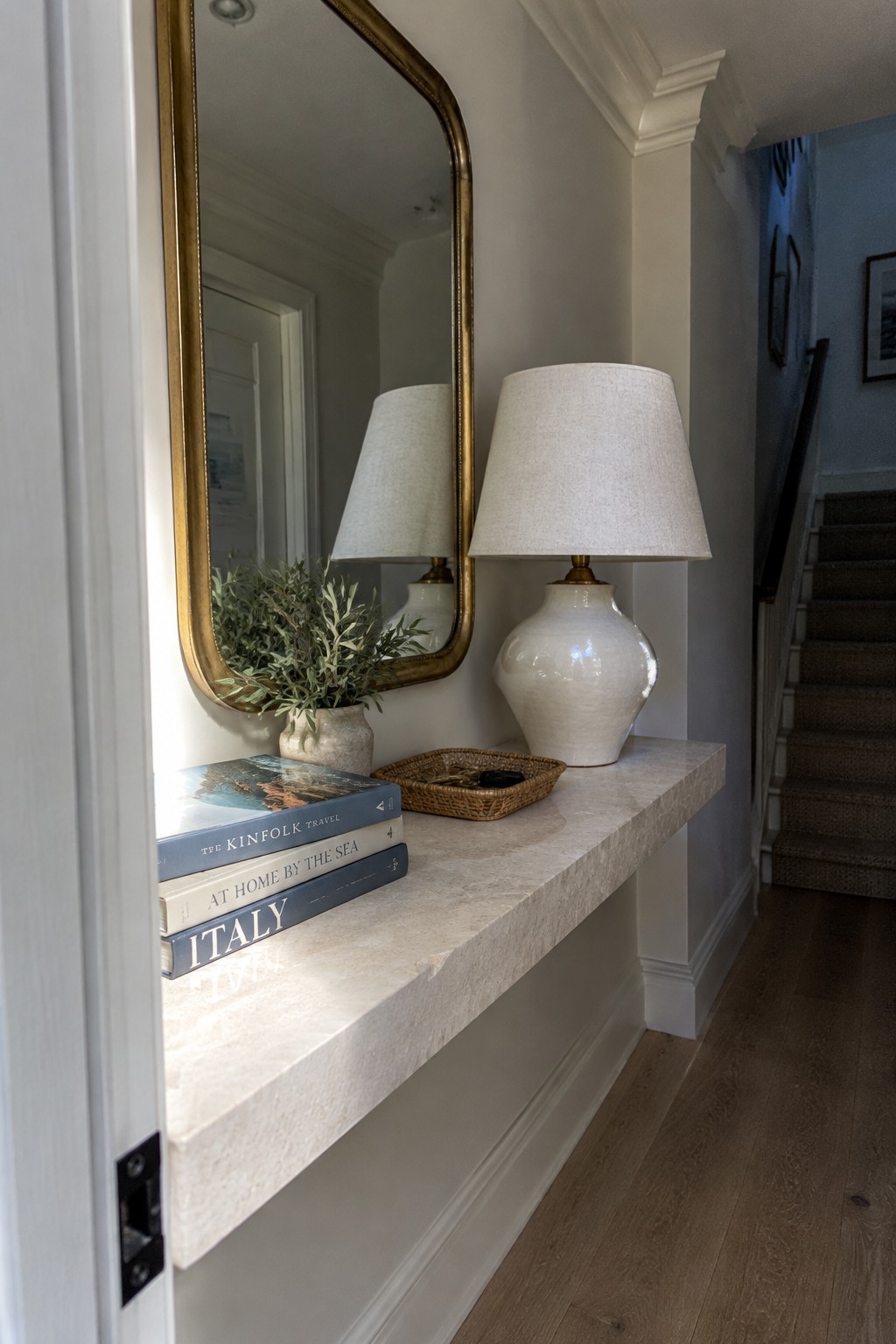
A slim stone console is a useful way to add a landing spot in an entry without taking up much floor space. Its solid surface can handle everyday items, while a few carefully chosen pieces keep the area from feeling cluttered.
This works well in a narrow hall or beside a stairway, especially when there is room for a mirror above the console. Choose a countertop with a durable finish, and leave enough clear space for people to pass comfortably.
Choose Veined Stone for a Coastal Kitchen

Natural stone can bring color and character to a coastal kitchen without relying on beach-themed decor. Here, blue-gray veining carries across the counters and island, giving the pale cabinetry a little contrast.
This approach works well when you want the stone to be the main pattern in the room. Keep nearby finishes fairly simple, and choose a slab in person if you can, since veining can look quite different from one piece to another.
Frequently Asked Questions
Q: What natural stone works best for a relaxed coastal kitchen?
A: Honed marble and light limestone both bring a soft, organic feel that suits coastal interiors. If you cook often, granite is a practical choice that still offers plenty of natural variation.
Q: Will natural stone countertops look too busy with coastal decor?
A: They can, especially if the stone has bold veining and the room already has patterned tile or textiles. Pair a more expressive slab with simple cabinetry and let the countertop be the main feature.
Q: How do I protect natural stone from spills?
A: Wipe up spills promptly, especially wine, citrus, and oils, which can stain or etch some stones. Use a cutting board and check whether your countertop needs periodic sealing.
Q: Can I use natural stone in a small coastal kitchen?
A: Yes. A pale stone with subtle movement can keep the room feeling open without making it look plain.
