


Coastal rooms can feel calm without looking bare, but the balance depends on how the softer finishes meet the practical parts of everyday life.
Warm white walls make a room feel open, while natural wood brings enough variation to keep the space from seeming flat.
I tend to notice the furniture layout first, since even beautiful materials feel awkward when there is no easy path through the room.
Texture, lighting, and a few well-chosen details can make this palette feel personal rather than like a set of matching finishes.
Some of these ideas are easy to adapt, whether you are changing one corner or rethinking how a whole room works.
Use Natural Materials To Keep a Living Room Relaxed

Natural materials can make a living room feel comfortable without much extra decorating. A woven rug and chunky wood coffee table bring texture into the space while keeping the overall look simple.
This approach suits rooms with light upholstery and an easygoing layout. Choose a few pieces with visible grain or weave, then leave enough open surface so the room does not feel crowded.
Use Natural Wood for a Softer Bedroom

A woven wood headboard is an easy way to bring natural texture into a bedroom without making the space feel busy. It gives a simple bed a little more character while keeping the overall look relaxed.
This idea works well in a coastal bedroom, especially with white bedding and other quiet finishes. Choose a headboard with an open weave, and let it be the main textured feature rather than adding several competing patterns.
Use Natural Wood for a Warmer Bathroom
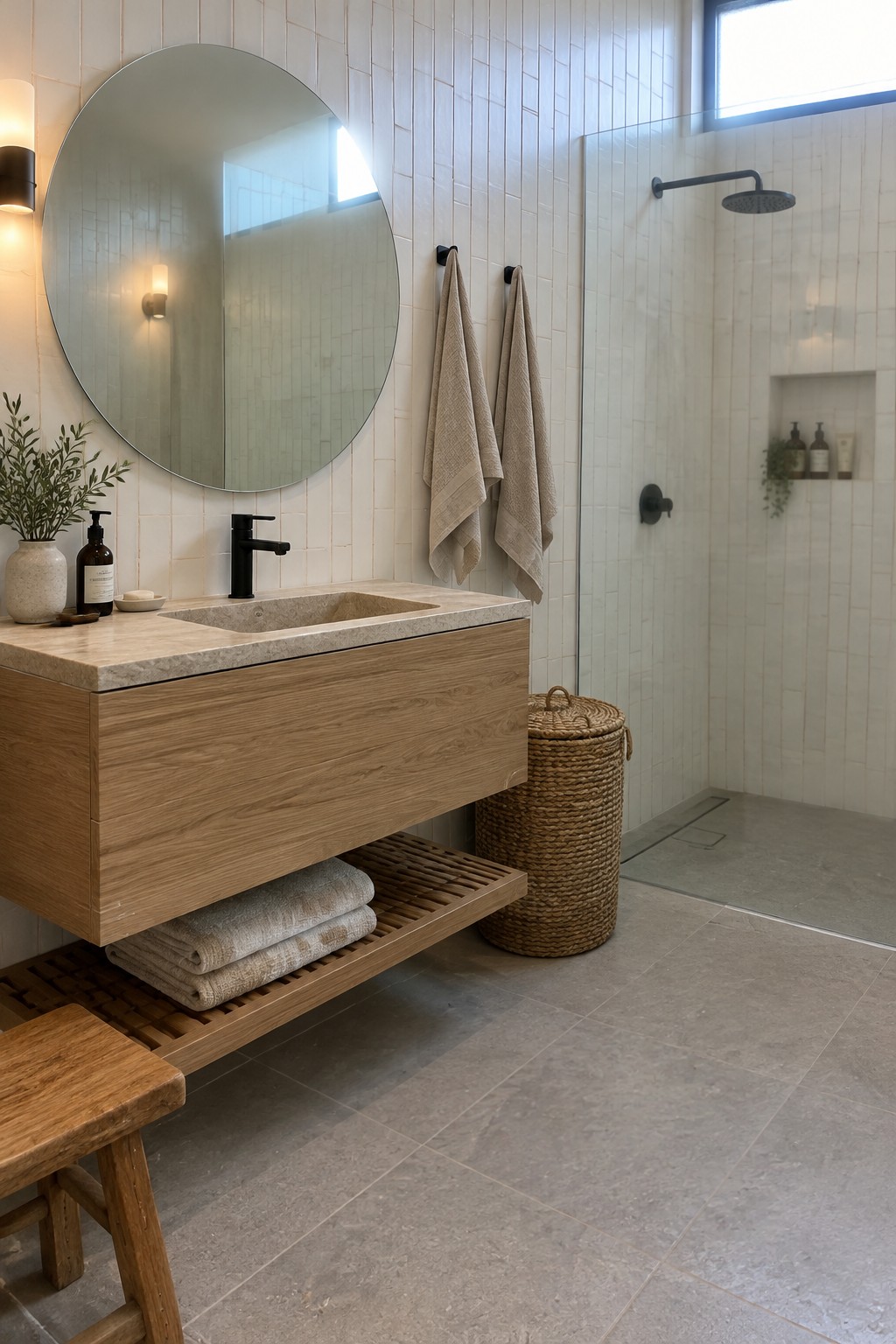
A wood vanity is a simple way to bring a softer, more natural feel to a bathroom. Here, the oak finish keeps the room from feeling too stark against the pale tile, while the clean-lined shape still feels practical.
This approach works well in coastal homes where you want a light look without relying on white cabinetry everywhere. Choose a finish with visible grain, and keep the wood tone fairly consistent so the room feels calm rather than busy.
Choose a Round Wood Table for Everyday Dining

A round wood table makes a dining area feel easy to move around and comfortable for conversation. The woven chairs in this room keep the solid tabletop from feeling too heavy.
This shape works well in a smaller dining space or an open kitchen where people pass through often. Leave enough room to pull out the chairs, and keep the tabletop styling simple so there’s still space to eat.
Make An Entryway Work Harder With Built-In Storage

A built-in bench with baskets below makes an entry easier to keep tidy without needing a separate storage cabinet. It gives shoes, bags, and everyday items a clear place, while the wood seat keeps the nook from feeling too utilitarian.
This kind of setup works well in a narrow mudroom or hallway where floor space is limited. Add a shelf and a few hooks above the bench, but leave some open space so the entry stays easy to use.
Choose a Round Wood Coffee Table for Easy Living Room Flow

A round coffee table can make a living room easier to move through, especially when sofas face each other. Its curved edges take up less visual space than a boxy table and are kinder to walk around in a busy room.
Choose a size that leaves a comfortable path between the table and the seating. A simple wood finish suits a relaxed coastal interior, and a low table like this works well when you want the sofas to stay the focus.
Make a Small Home Office Feel Personal
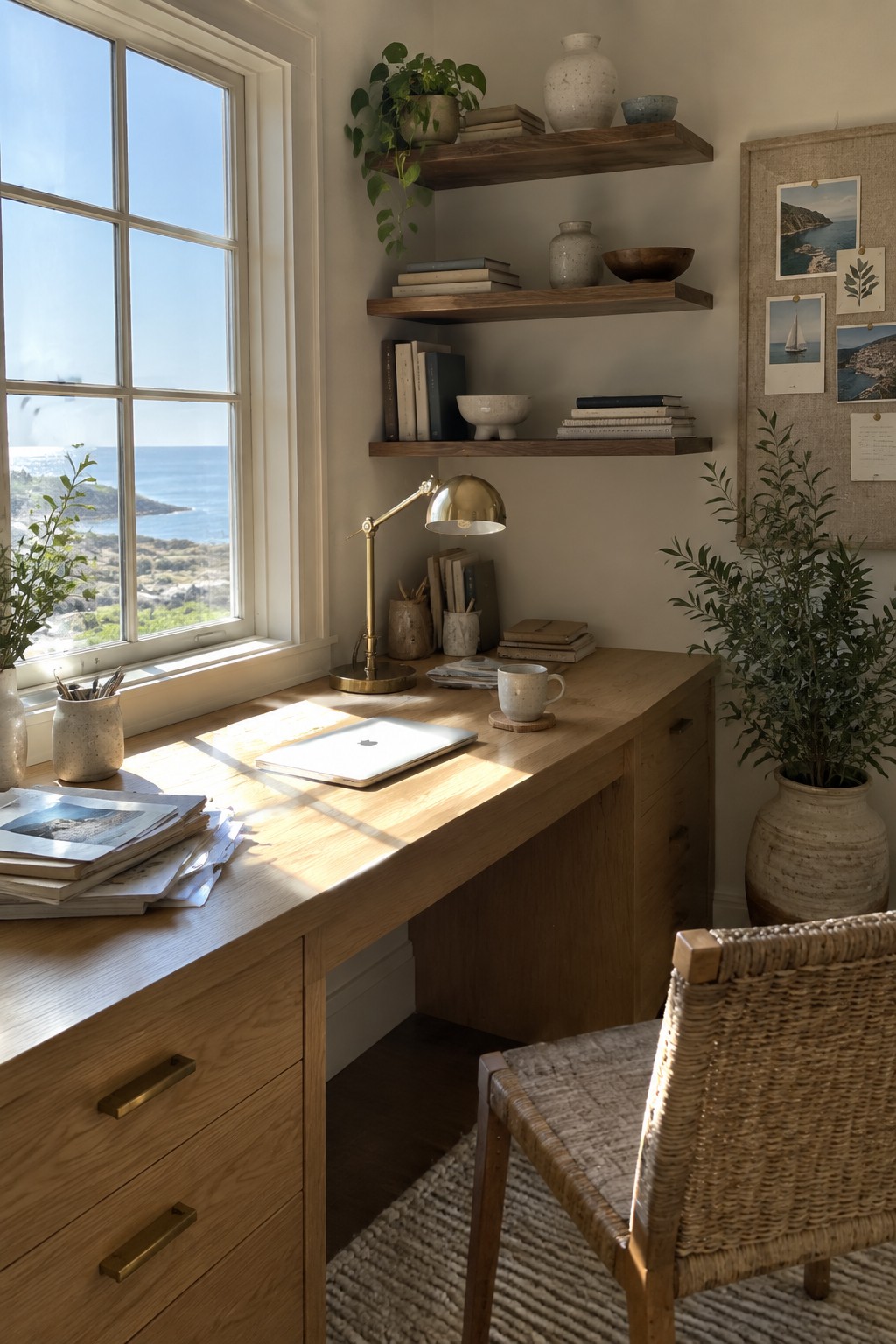
A simple wood desk can make a home office feel comfortable without much extra furniture. Here, the desk sits beside the window, leaving the work surface open for everyday use.
This idea works well in a spare corner or a room that serves more than one purpose. Choose a desk with drawers for useful storage, then keep the items on top to a manageable few so there is still room to work.
Use Built-In Seating to Make Dining More Comfortable

A built-in bench can make a dining area feel relaxed and use the available space well. Here, the bench runs along the wall, so it takes up less room than another row of chairs and gives the table a comfortable, tucked-in feel.
This setup works especially well in a breakfast nook or a small dining area. Add cushions that are easy to clean, and leave enough space to pull out the chairs opposite the bench.
Add Open Shelving for Practical Laundry Storage
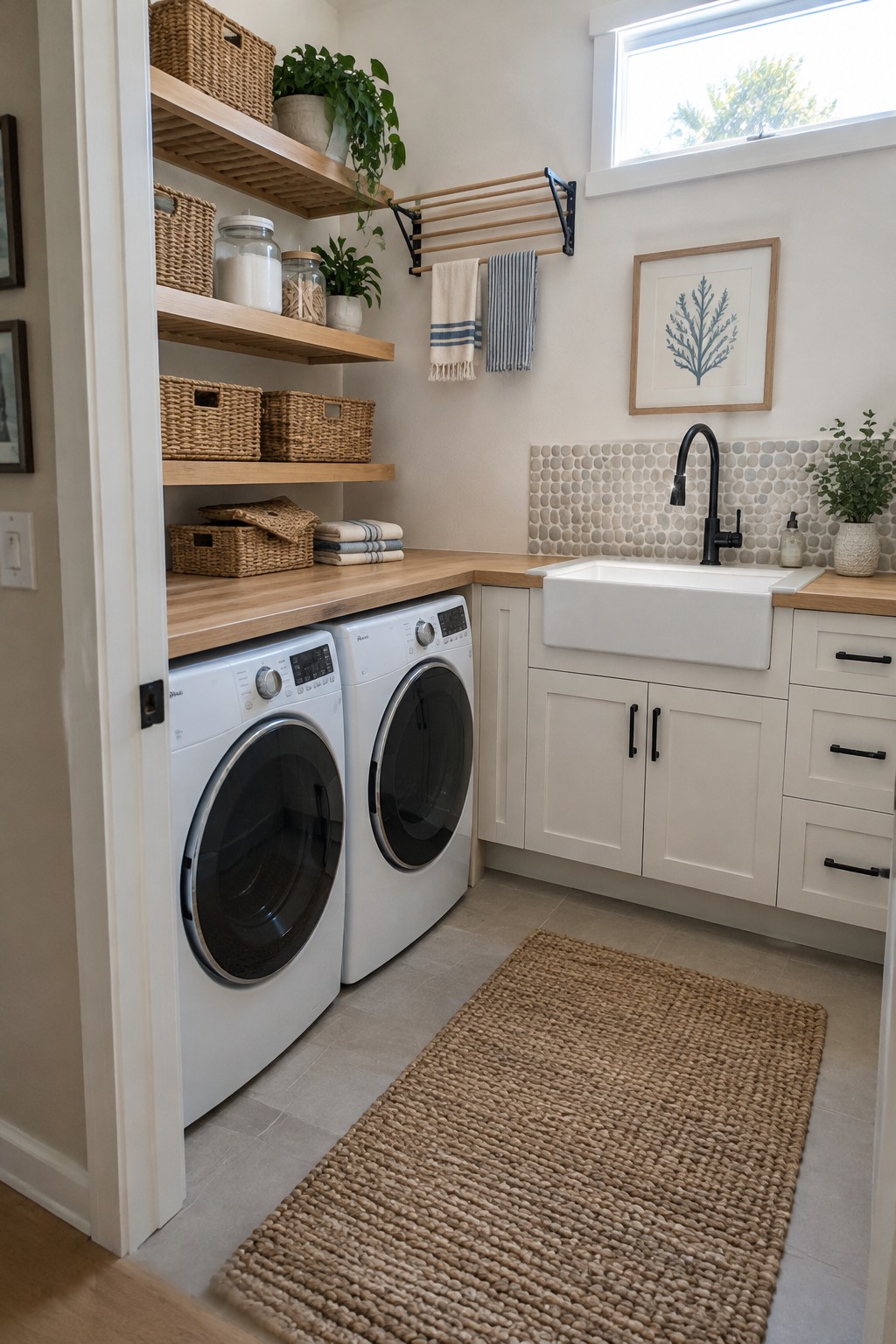
Open shelves make a laundry area easier to organize without adding more cabinets. Here, wood shelves hold baskets and everyday supplies, keeping them close at hand while leaving the worktop clear.
Use baskets to group smaller items and keep the shelves from looking cluttered. This approach works especially well in a compact laundry room, where accessible storage can make routine chores simpler.
Use a Dresser for Practical Nursery Storage
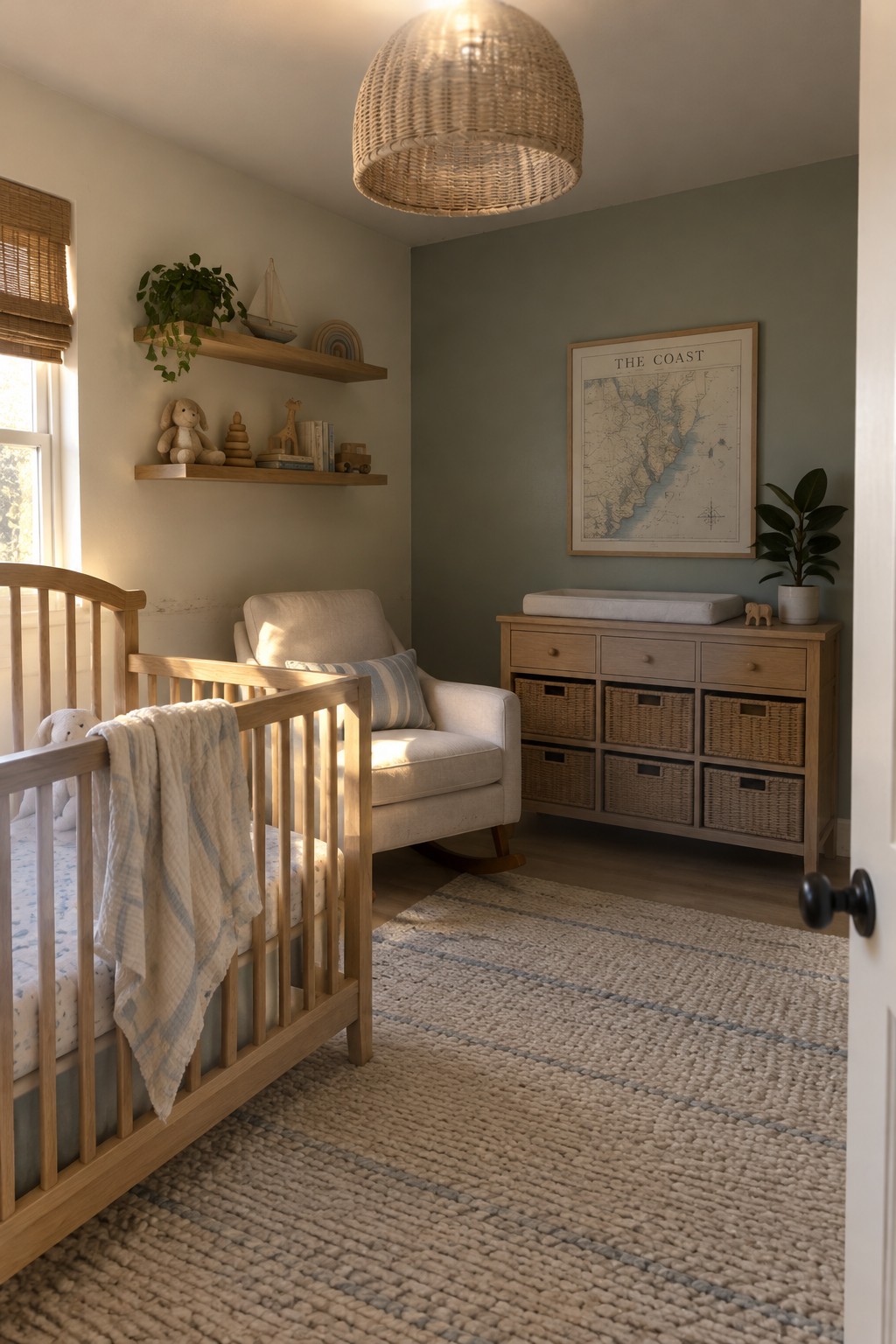
A dresser with room for baskets makes nursery storage easy to manage. The drawers hold smaller essentials, while baskets keep toys and spare blankets close at hand without leaving everything out in the open.
Choose a sturdy dresser that can also serve as a changing table, and secure it to the wall. Woven baskets suit a natural coastal look, but check that they slide in and out easily when you are carrying a baby.
Use Woven Materials To Warm Up a Bedroom

Woven materials are an easy way to make a bedroom feel more relaxed without adding much color. A textured headboard brings interest to the bed while still working with simple white bedding.
Try this idea on a bed that needs a little character, especially in a coastal or cottage-style room. Keep the other large pieces fairly simple so the woven texture has room to stand out.
Use Vertical Paneling for a Coastal Bathroom

Vertical wall paneling gives a bathroom a simple, cottage-like finish while keeping the walls from feeling plain. Painted a warm white, it works especially well alongside natural wood, as seen in the floating vanity.
This treatment suits powder rooms and smaller bathrooms where a little wall detail goes a long way. Keep the paneling subtle and use moisture-resistant materials, especially near sinks and showers.
Use Built-In Bookshelves to Make a Living Room More Useful
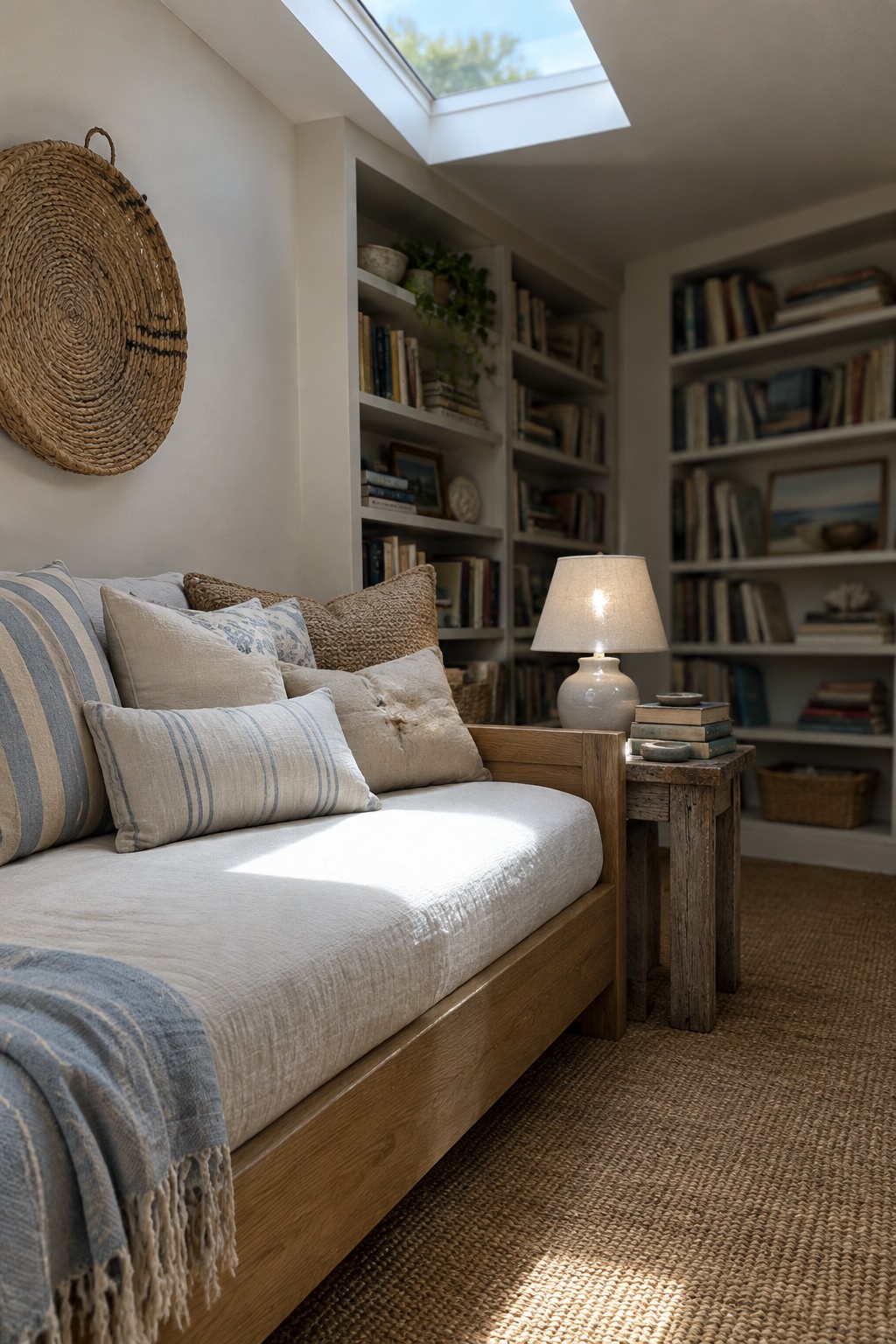
Bookshelves built into an unused wall can give a living room plenty of storage without taking up floor space. They also make it easy to keep books close at hand and display a few personal pieces.
This approach works especially well in a reading nook or a room with a sloped ceiling, where standard furniture may not fit as neatly. Keep some shelves open and avoid filling every inch, so the room still feels comfortable.
Add a Bar Counter to a Small Kitchen

A counter with a couple of stools can make a small kitchen more useful without needing a separate dining area. The wood countertop gives this bar a natural, easygoing look, while the overhang leaves room to sit comfortably.
This setup works well in a kitchen corner or along a short run of cabinetry. Leave enough space behind the stools for people to move through, and choose seats that tuck in neatly when the counter is not in use.
Use a Narrow Console To Make an Entryway More Useful
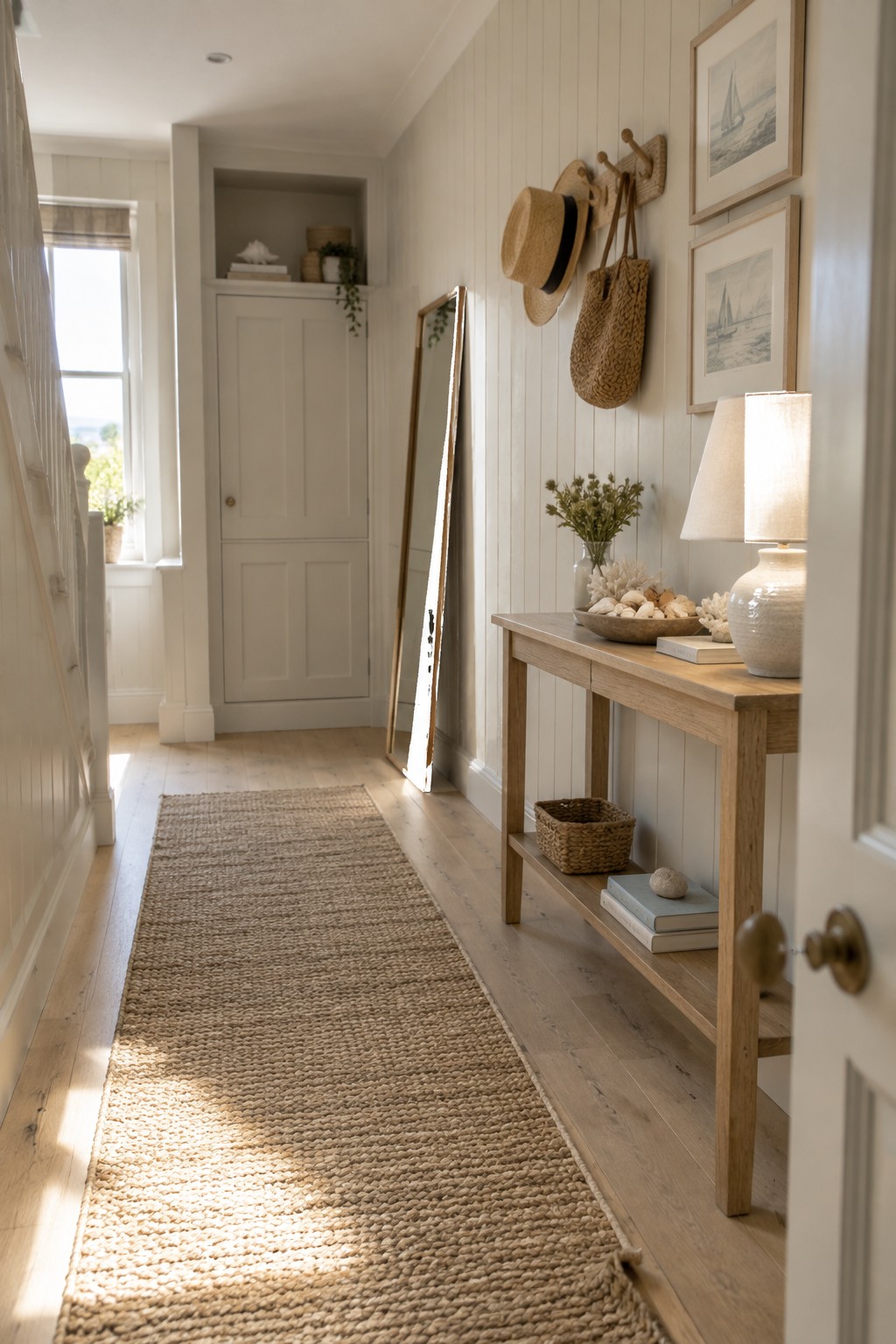
A slim console table makes good use of an entry hall without blocking the walkway. It gives keys and everyday items a place to land, while a lower shelf can hold a basket for small essentials.
Choose a table that leaves room to pass comfortably, especially in a narrow hall. A woven runner can help define the walkway and take some wear from the floor.
Use Natural Stone To Create a Calmer Bathroom

Stone-look tile and a pebble shower floor give this bathroom a quiet, natural feel without relying on lots of decoration. The wood vanity keeps the stone from feeling too cool, and the simple materials are easy to live with.
This approach works well in bathrooms where you want a clean look that still feels comfortable. Use larger tiles on the walls and floor, then reserve smaller pebble tile for the shower area; check that it has a comfortable, slip-resistant finish.
Make Built-In Shelves Work as a Home Office
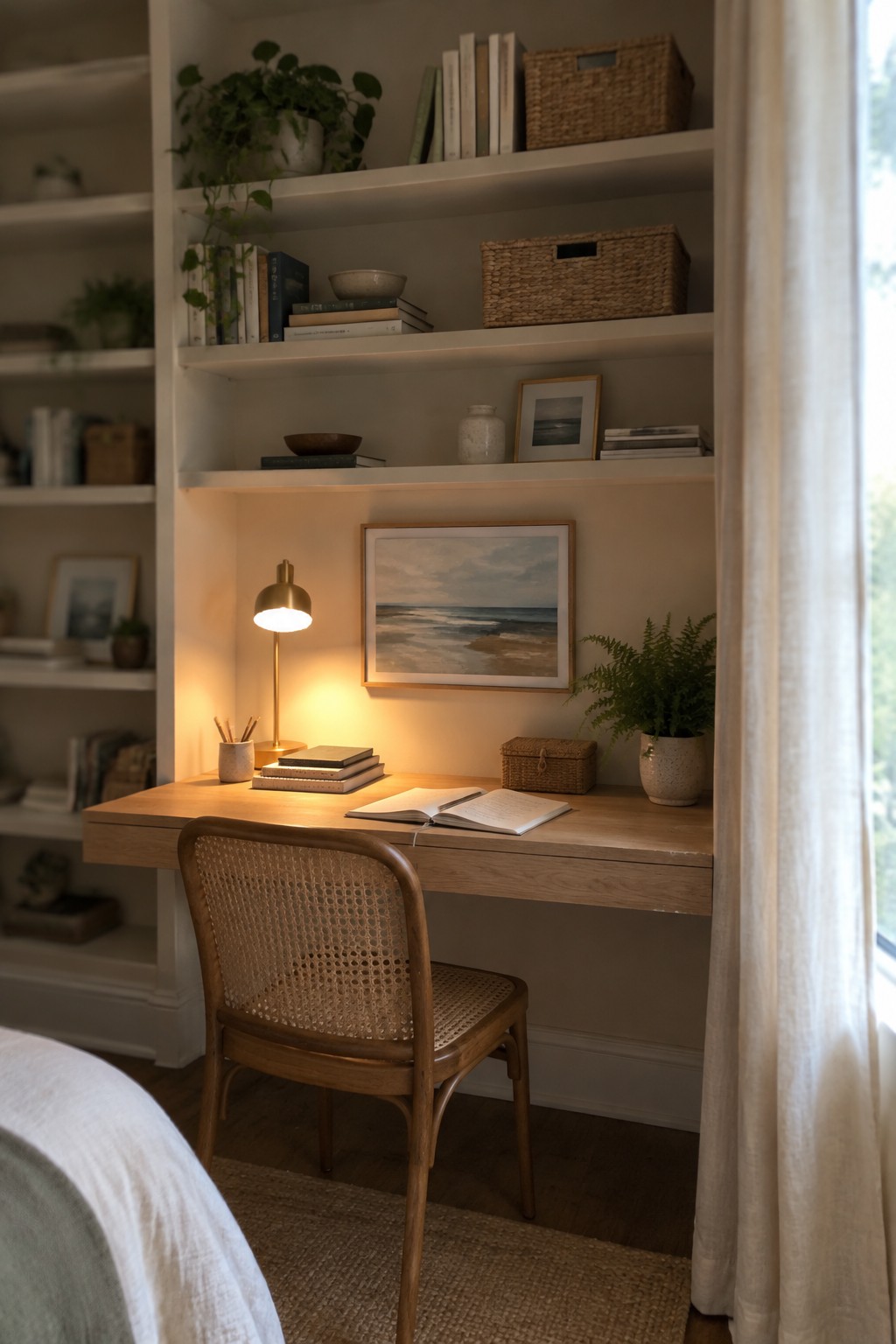
A desk fitted between built-in shelves makes good use of wall space, especially in a bedroom or a smaller home. The shelves provide storage close at hand, while the wood desktop gives the work area a practical surface.
Keep everyday supplies within reach and use baskets or closed boxes for items you do not need often. A desk nook like this works best when it is deep enough for comfortable writing and the chair can slide in without blocking a walkway.
Use Open Shelves to Make Pantry Storage Easy to Reach

Open pantry shelves keep everyday ingredients visible and simple to grab, which can make cooking feel less fussy. Matching glass jars help keep dry goods tidy without hiding what is inside.
This setup works well in a walk-in pantry or a deep kitchen alcove. Keep the most-used items on the middle shelves, and leave enough space between jars so the shelves stay practical rather than crowded.
Use Built-In Wardrobes to Make a Dressing Room More Practical

A wall of built-in wardrobes makes a narrow dressing room easier to use by keeping clothes and accessories in one place. The simple wood fronts also suit a warm, natural interior without adding visual clutter.
This idea works well in a bedroom or dressing area where floor space is limited. Use full-height cupboards for storage, and keep one section open if you want frequently used items within reach.
Use a Vessel Sink to Add Texture to a Bathroom

A vessel sink can bring a little texture to a bathroom without making the room feel busy. Here, the ribbed stone basin stands out against a simple wood vanity, so the materials feel natural and easy to live with.
This style works well in a powder room or a smaller bathroom where one sink can be the main feature. Choose a basin that leaves enough counter space for everyday items, and keep the faucet height in mind so it’s comfortable to use.
Choose Natural Stone for a Simple Bathroom

A stone pedestal sink gives a small bathroom a clear focal point without needing extra cabinetry or decoration. Its rounded shape and natural surface bring an easy, relaxed feel to a narrow powder room.
This style works well when you want the sink to be the main feature. Keep nearby finishes simple, such as pale wall paneling and dark, straightforward taps, so the stone can stand out without making the room feel busy.
Use a Sloped Ceiling To Make a Bedroom Feel Cozy
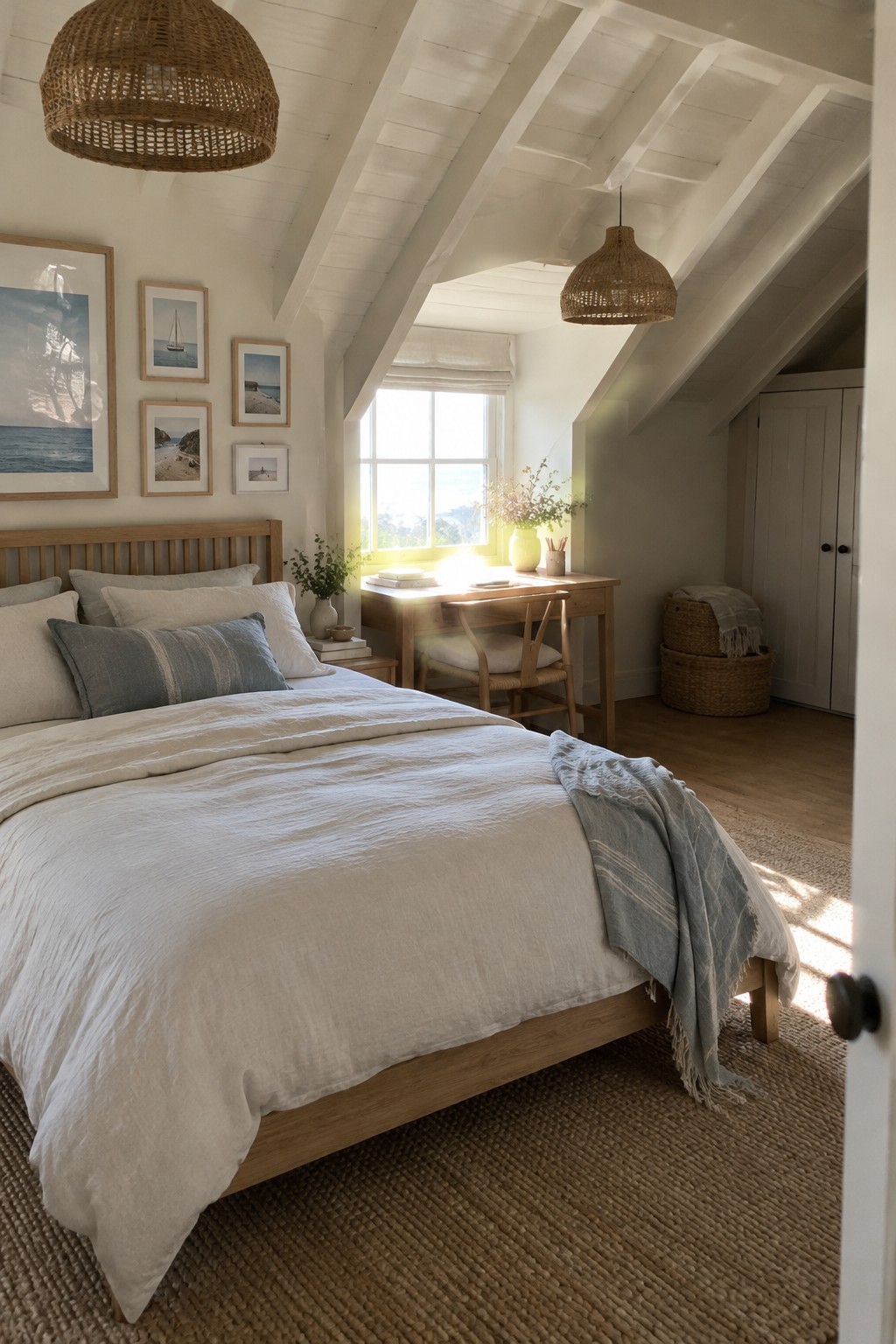
A sloped ceiling gives a bedroom a tucked-away feel without needing much extra decoration. Keep the rafters light and simple, as they are here, so the ceiling adds character without making the room seem closed in.
This idea suits attic bedrooms especially well. Place the bed where the ceiling is high enough to sit up comfortably, and use lower areas for storage or a small basket.
Frequently Asked Questions
Q: How do I keep warm white walls from looking too yellow next to natural wood?
A: Test a few paint samples beside your flooring or furniture, and check them in both daylight and lamplight. A soft, neutral white usually keeps the room warm without turning creamy.
Q: Can I get a coastal feel without using blue?
A: Absolutely. Pale wood, woven textures, linen, and a few organic shapes can bring in that breezy feeling on their own. Keep the palette relaxed and let natural materials do the work.
Q: What if my room has dark floors or wood furniture?
A: Balance the deeper tones with warm white walls, light upholstery, and airy curtains. You don’t need to replace everything; a few lighter pieces can make the room feel more open.
Q: How do I make natural wood feel relaxed rather than rustic?
A: Pair it with simple shapes and soft fabrics, and avoid using too many heavy wood finishes together. A little variation in tone feels natural, but matching every piece can make the room feel more formal.
