


Single-story coastal homes make the connection between indoors and out feel close at hand, but that only works when the layout suits everyday life.
I notice first whether the main rooms open naturally onto a porch or patio, and whether there is shade and room to sit once you get outside.
Wide doors and coastal materials can look appealing, yet their success depends on details like privacy, weather protection, and easy paths between spaces.
I would pay special attention to how each design balances open views with practical spots for dining, relaxing, and storing beach gear.
Some of these choices could translate well to a real home, even if you adapt the scale or materials to suit your climate and budget.
Make a Covered Porch Work Like an Outdoor Room

A covered porch can serve as a comfortable extension of the living space, especially when it has room for lounging rather than just passing through. Here, the built-in corner bench makes good use of the porch’s end and gives several people a place to sit.
For a similar setup, measure the seating area before adding tables so there’s still a clear path between the house and the yard. This layout suits a long porch or deck, and built-in seating can be sized to fit where freestanding furniture might feel crowded.
Set Up a Patio for Outdoor Dining

A long dining table makes a patio useful for more than a quick meal. It gives family and guests a place to gather, while keeping the main seating area clear. A simple, sturdy table is often the best choice for everyday use.
This layout suits a covered terrace beside the kitchen or dining room, especially in a coastal home where indoor and outdoor meals can easily overlap. Leave enough room to pull chairs out and walk around the table, and choose materials that can handle sun and damp air.
Make the Pool Part of the Living Space
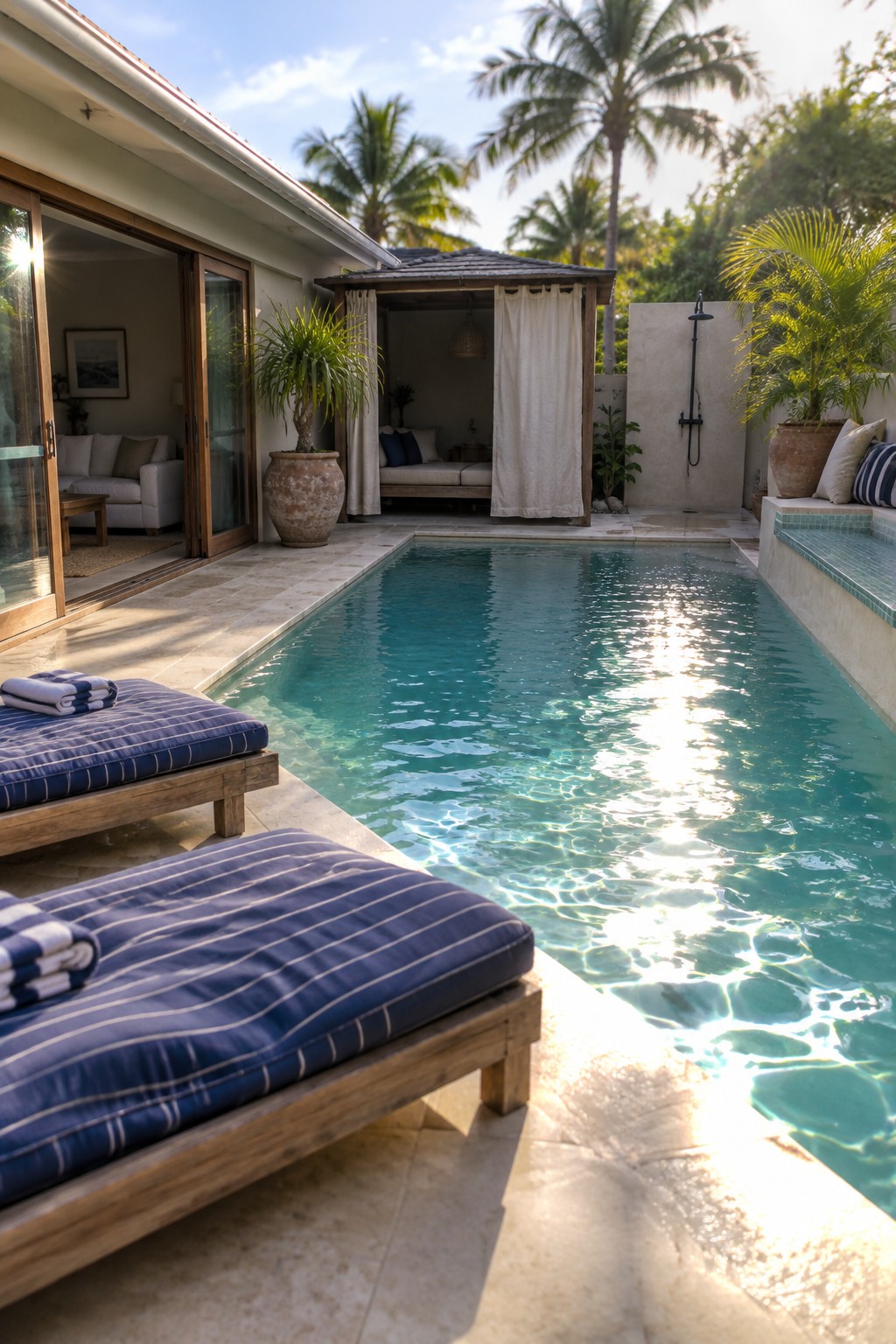
A pool beside the main living area makes it easier to move between indoor and outdoor spaces. Here, wide sliding doors open directly onto the pool deck, so the water feels like a natural extension of the home rather than a separate destination.
This layout works especially well in a single-story coastal home, where rooms can open onto a terrace without stairs getting in the way. Leave a clear path between the doors and pool, and include a shaded spot nearby for sitting out of the sun.
Make Room For Outdoor Cooking

An outdoor kitchen works best when it feels like part of the patio, not a separate work area. A counter that turns around the grill gives you space to prep and serve while keeping cooking close to the rest of the gathering.
This setup suits a covered patio where you want to use the kitchen in different weather. Keep the main walkway clear, and leave enough counter space beside the grill for plates and ingredients.
Use Large Windows to Connect the Living Room to the Garden
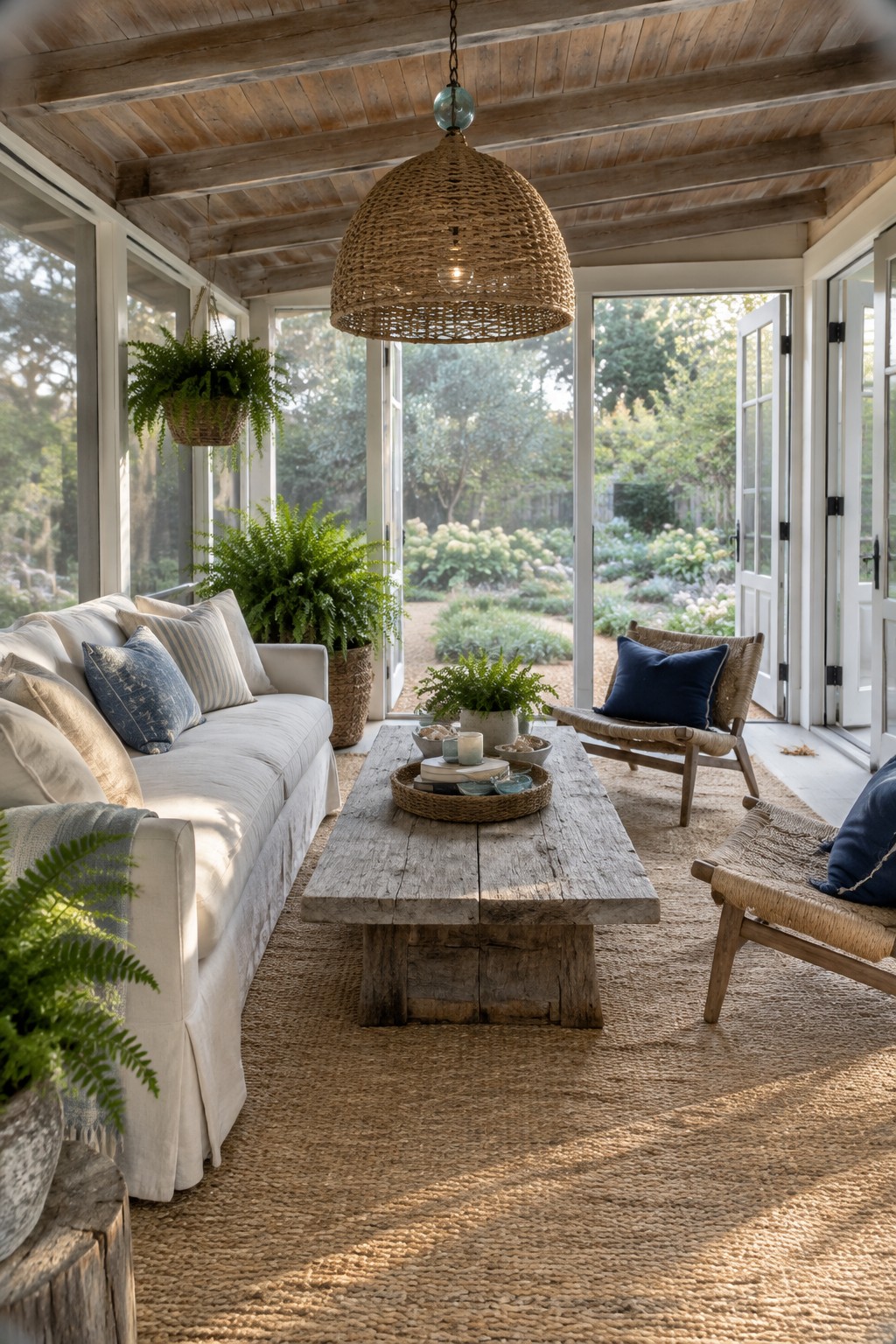
Floor-to-ceiling windows can make a living room feel closely connected to the outdoors, even when you’re inside. Here, the broad glass doors let the garden become part of the room’s view and make it easy to step outside.
This works especially well in a single-story home, where a living area can open directly onto a patio or garden path. Keep the furniture arrangement comfortable indoors, and make sure the doors have enough clear space to open without crowding the room.
Arrange Patio Seating Around a Fire Pit
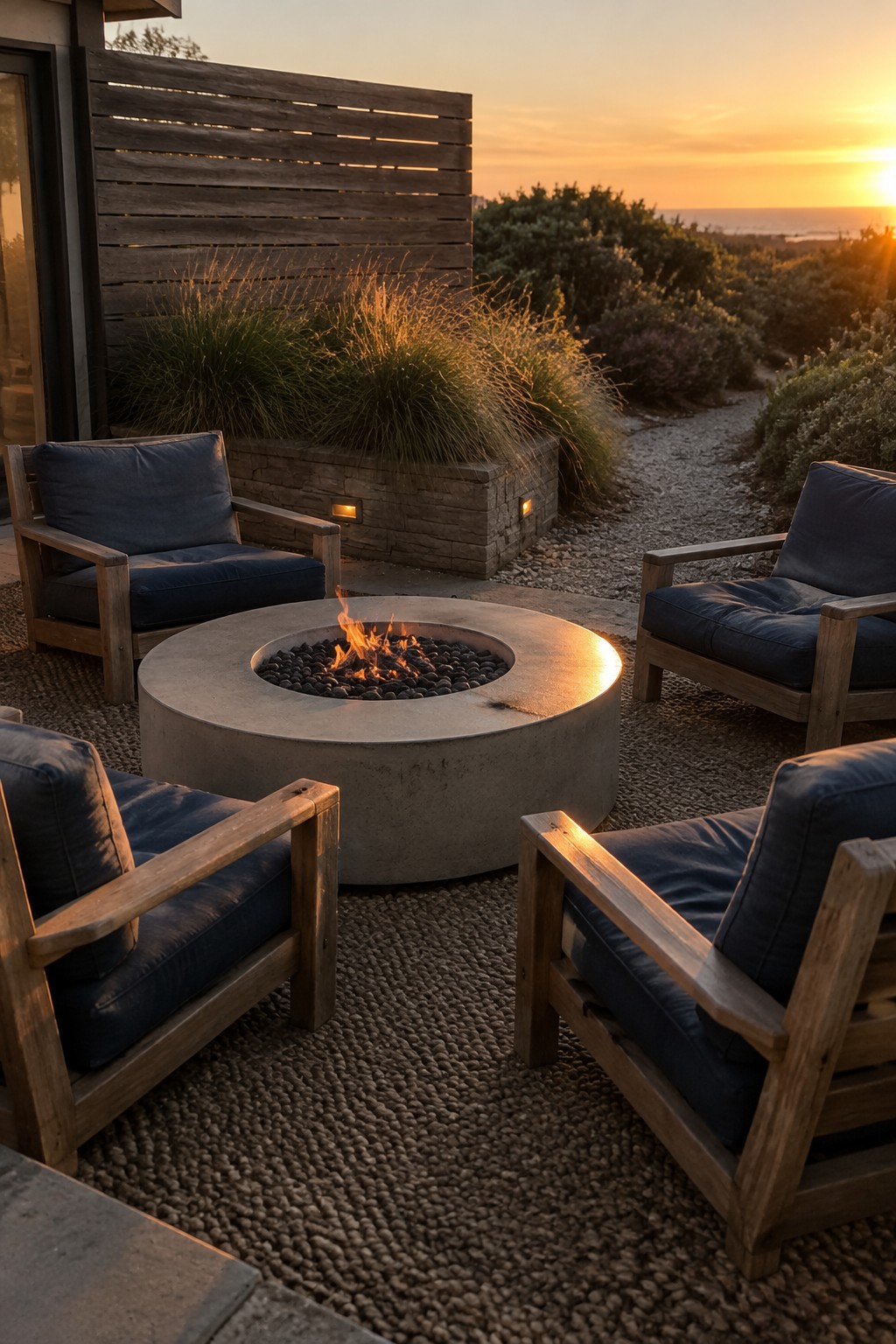
A fire pit can give a patio a clear place to gather, especially when the chairs face inward rather than sitting in a straight row. Here, the round pit sits at the center of four chairs, so everyone can join the conversation.
Keep enough space around the pit for people to move their chairs safely, and choose outdoor cushions that can handle coastal air and damp evenings. This layout works well on a smaller terrace where one shared seating area is more useful than separate zones.
Arrange Patio Seating Around a Shared Center
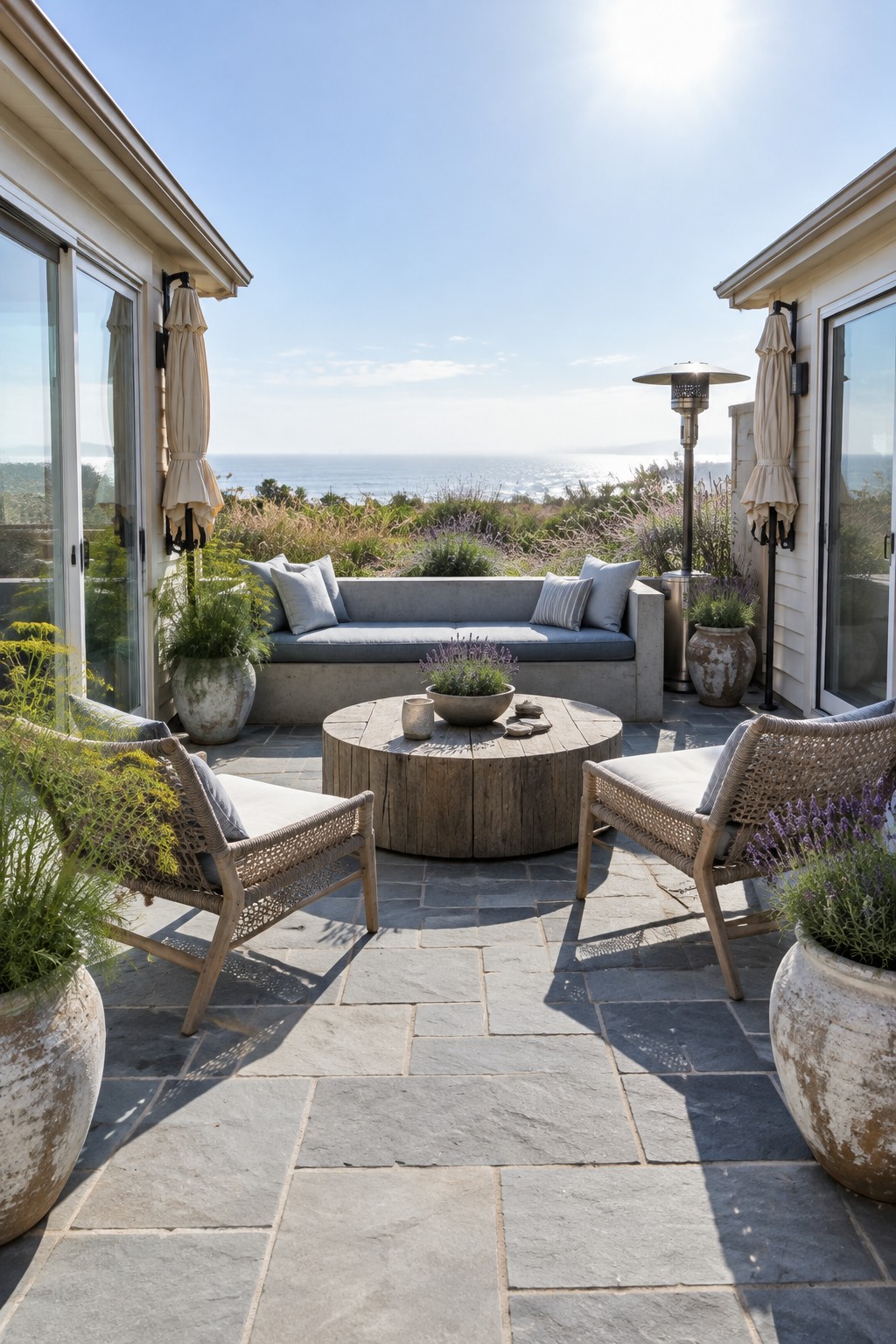
A simple seating layout can make a patio feel like an outdoor living room. Here, a sofa and two chairs face a low, round table, giving people a clear place to gather and talk.
This arrangement suits a compact terrace or a larger patio beside the house. Leave enough space to walk around the table, and choose outdoor cushions that can handle sun and damp weather.
Create a Private Outdoor Seating Area

A small seating area can feel more usable when it has a clear sense of privacy. Here, a built-in bench sits beside a wooden gate, creating a sheltered spot that still connects to the path beyond.
For a coastal home, try this layout in a narrow side yard or courtyard. Use a low wall or planted screen to give the seating area some separation, and leave a clear route through so it stays easy to reach.
Use a Pergola to Shade an Outdoor Dining Area
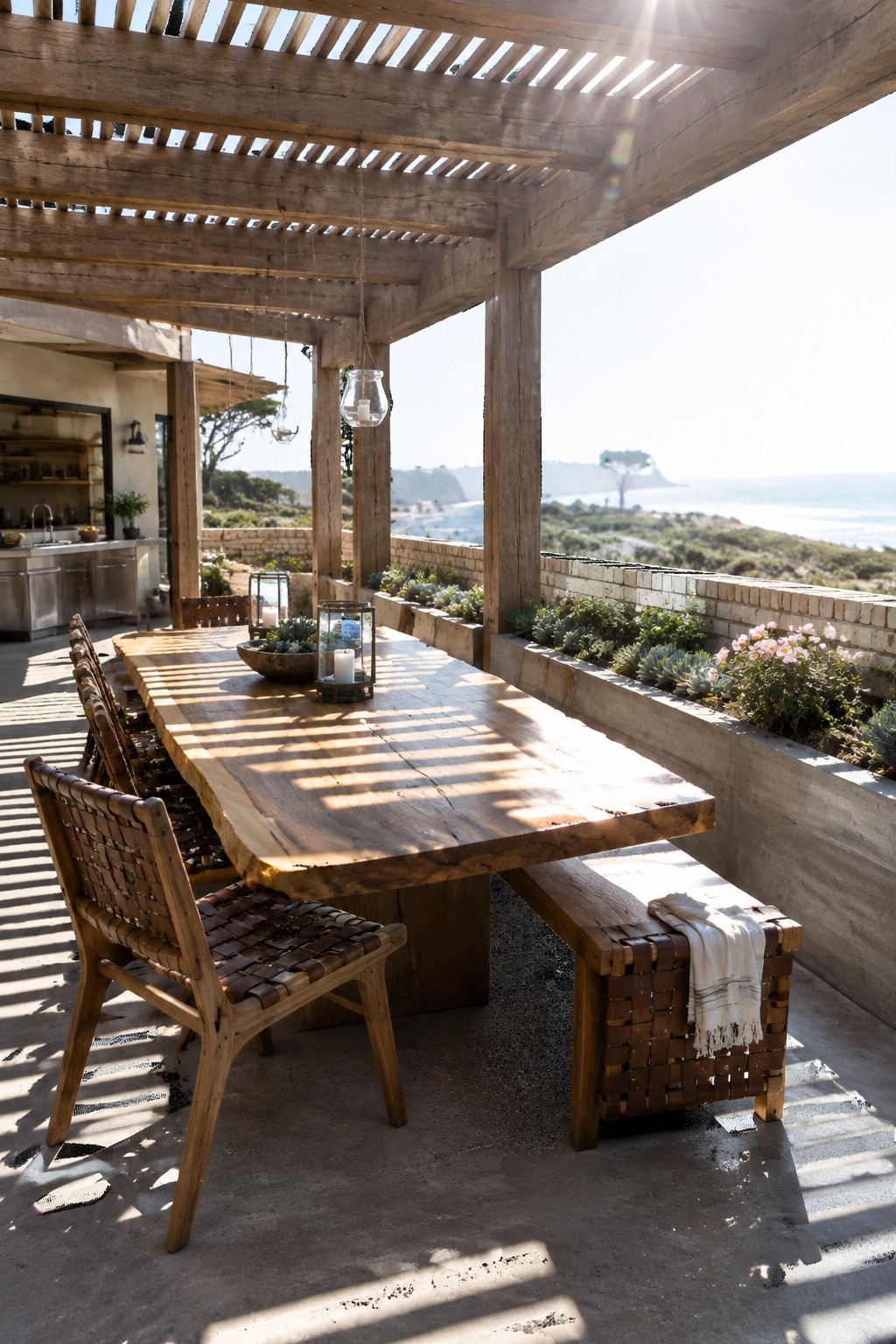
A pergola can make an outdoor dining spot more comfortable without closing it off from the rest of the yard. Its slatted roof provides some shade while still letting in daylight, so the table remains a pleasant place to gather.
For a coastal home, sturdy wood beams suit a relaxed, natural look. Add a long table beneath the cover, and leave enough room around it for chairs to pull out easily.
Use a Dining Room That Opens to the Garden
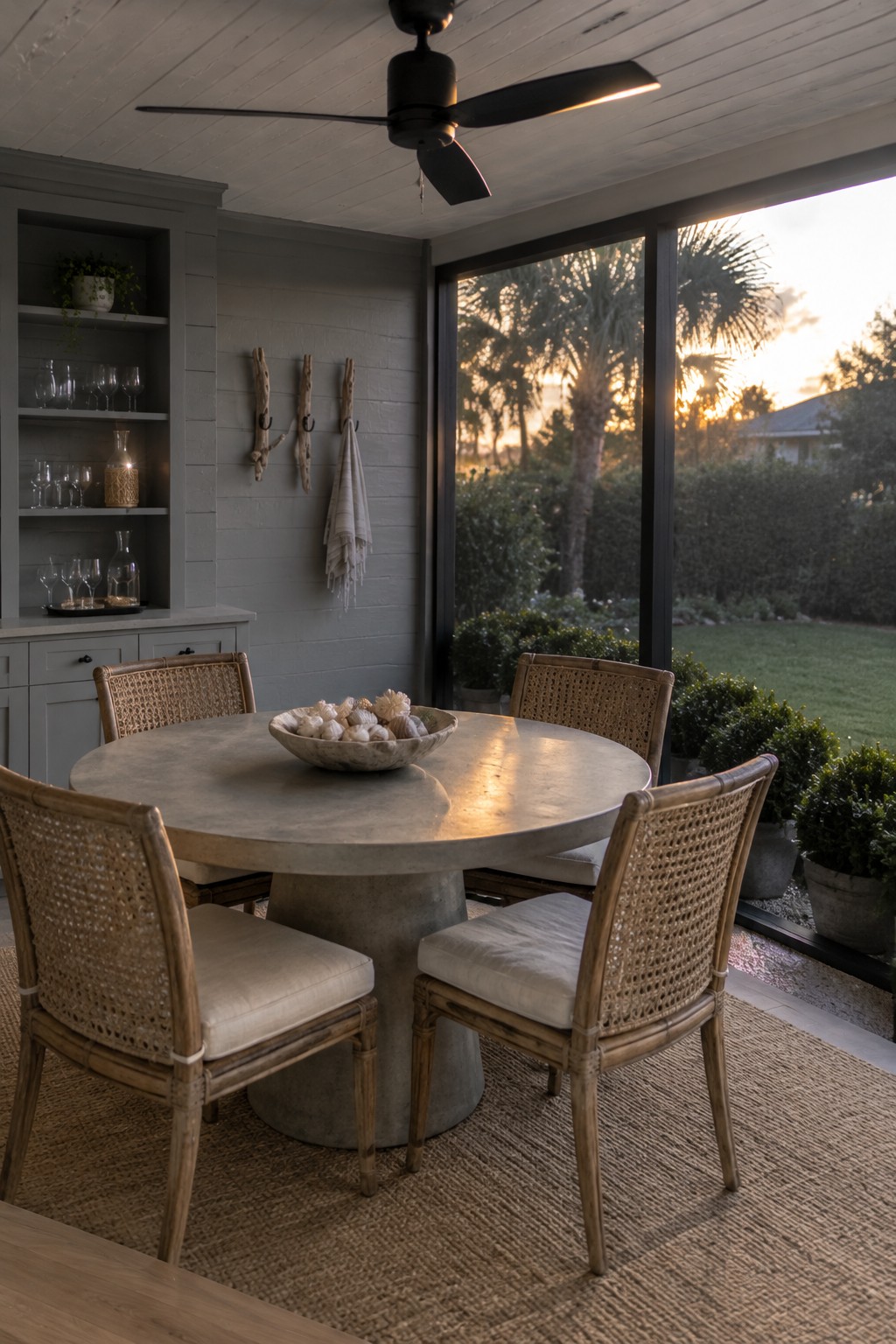
A dining area beside large glass doors makes it easy to move between meals indoors and time outside. The room still works as a regular dining space, but the garden feels close at hand.
This setup suits a single-story home where the dining area can open onto a patio or lawn. Keep a clear route to the doors so chairs do not block the way, and choose furniture that can handle everyday use.
Add a Built-In Bar to a Coastal Patio

A narrow outdoor bar can make a small patio more useful without taking up room for a full dining set. A wall-mounted counter gives guests a place to sit and chat, while leaving the floor open for easy movement.
For a similar setup, choose weather-resistant materials and stools that tuck neatly under the counter. A mosaic backsplash adds a practical, easy-to-clean surface, but keep the counter deep enough for drinks and serving dishes.
Make a Side Patio Work as an Outdoor Living Room

A side patio can feel like a useful extra room when the seating is arranged for everyday lounging. An L-shaped sofa gives several people a place to sit without taking up the whole paved area.
For a similar setup, leave a clear path past the seating and choose outdoor cushions that can handle regular use. A low coffee table keeps drinks and books close at hand without making the space feel crowded.
Use a Hammock Chair to Make a Small Patio More Relaxing

A hanging chair can make a compact patio feel like a place to pause, without taking up as much floor space as a full lounge chair. Here, the hammock seat hangs beneath a slatted shade screen, giving one corner a clear purpose.
This setup works well on a narrow terrace or side patio where space is limited. Make sure the overhead support is strong enough for the chair, and leave room to get in and out comfortably.
Use a Pergola to Shade a Coastal Deck

A slatted pergola can make a deck comfortable for lounging without closing it off from the outdoors. The open roof provides some shade while still letting daylight through, which suits a coastal home where you want the view and fresh air to remain part of the space.
For a similar setup, place the seating beneath the covered area and leave a clear route between the house and the yard. A built-in bench can make good use of a narrow deck, but leave enough room to move around a table.
Use a Narrow Porch for Outdoor Dining
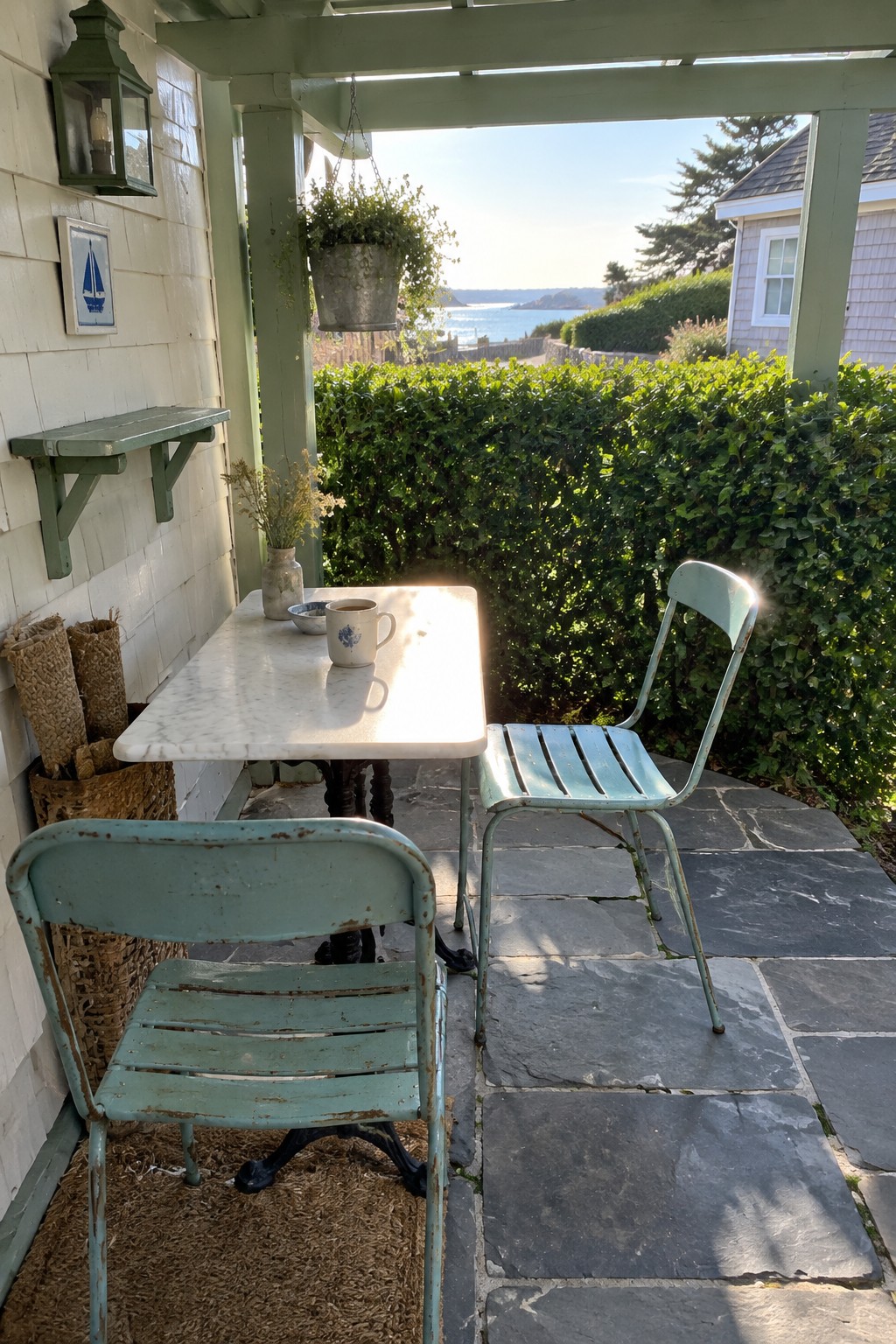
A small covered porch can still make a useful spot for a meal or a quiet cup of coffee. A compact table and folding chairs leave room to move, while the roof gives the seating a bit of shelter.
This setup suits a coastal home where porch space is limited. Keep the table close to the house and choose chairs that are easy to fold or shift when the porch needs to serve another purpose.
Make a Narrow Patio Work for Dining
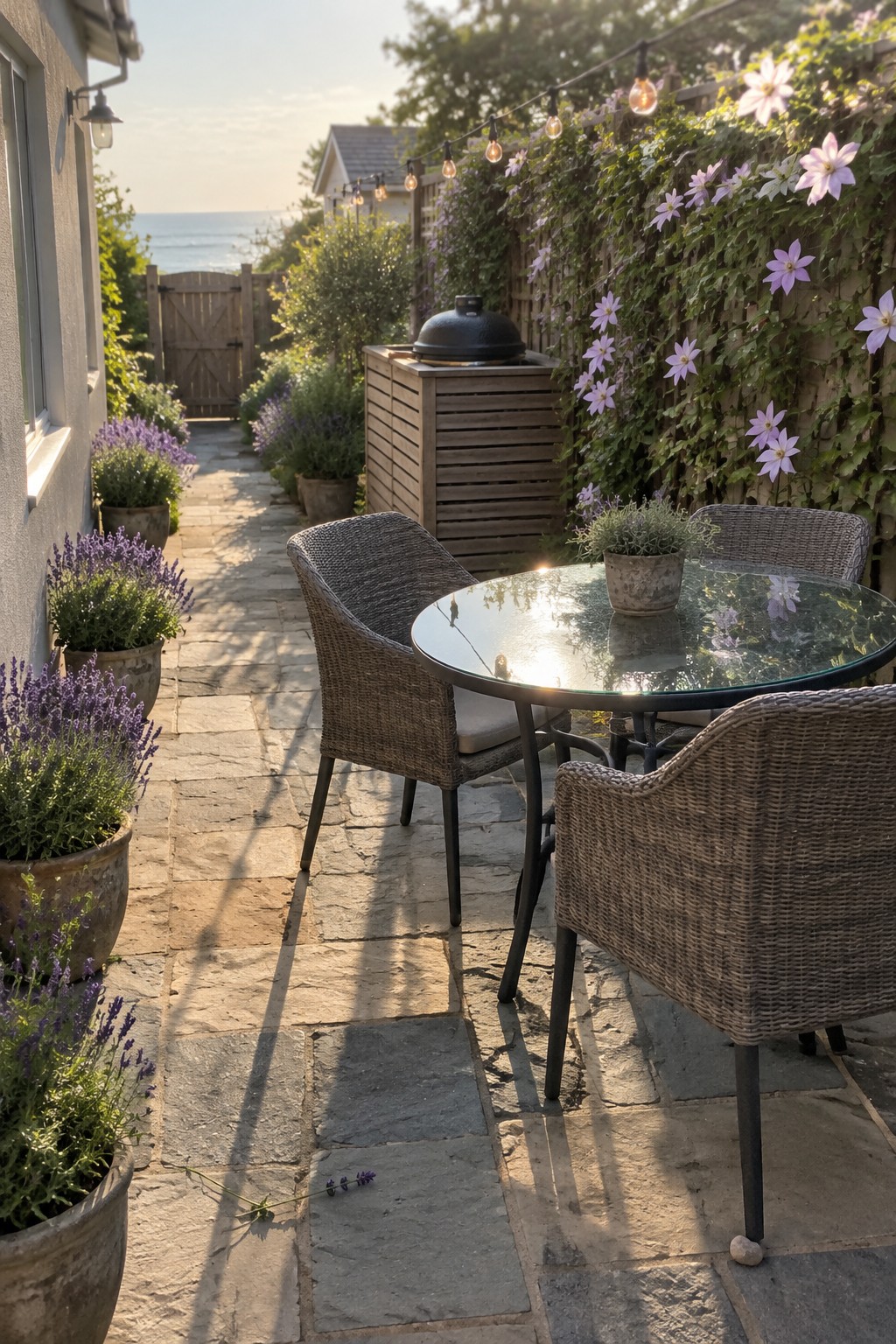
A slim patio can still fit a comfortable dining spot if the furniture leaves a clear route through the space. A round table is a useful choice here because it gives people room to sit without creating sharp corners along the walkway.
For a similar side patio, keep the table close to the seating area and leave the path open toward the gate or back door. Wicker chairs suit a coastal home, but check that they can handle damp weather or bring them under cover when needed.
Build a Built-In Lounge Into the Deck

A built-in bench can make a coastal deck feel like a natural extension of the home. It gives the seating area a clear place of its own without taking up room for extra chairs, and cushions keep the wood comfortable for everyday use.
This approach works especially well on a compact deck or patio where a freestanding sofa might crowd the walkway. Add storage beneath the seat if you need a place for outdoor cushions, and leave enough space around it for people to move through easily.
Frequently Asked Questions
Q: What makes a single-story coastal home feel connected to the outdoors?
A: Wide sliding or folding doors help the living area open onto a covered patio or deck. Keep the route between them clear, and you’ll make the outdoor space feel like a natural extension of the room.
Q: How can I get plenty of natural light without making the house too hot?
A: Add windows where they catch soft morning light, and use roof overhangs or covered porches to shade glass from strong afternoon sun. You can also choose operable windows to bring in a breeze when the weather allows.
Q: Are single-story coastal homes a good fit for a narrow lot?
A: They can be, especially with a long, simple floor plan and an outdoor courtyard that brings light into the middle of the home. Check local setback and flood rules early, since they can shape how much space you have to build.
Q: What flooring works well for indoor-outdoor living?
A: Choose a hard-wearing, slip-resistant surface that’s easy to clean, such as tile or sealed concrete. A similar finish inside and on a covered patio can make the transition feel smooth.
