


Coastal exteriors can feel fresh without leaning on the usual beach-house details, especially when the roof and siding work together in a restrained way.
I notice the shingles first when they add texture to a facade without competing with the windows, trim, or roofline.
Small choices in shingle shape, color, and placement can change whether a home reads as crisp and modern or more relaxed and weathered.
I’d pay close attention to how those details meet the entry and the edges of the roof, since that’s often where a design feels resolved or slightly off.
Some of these approaches are worth saving as a reference and adapting to the proportions and materials of a real home.
Shingle Siding Gives a Modern Home a Softer Look

Shingle siding can make a contemporary exterior feel less stark without losing its clean lines. Here, the natural variation in the shingles works well with simple window frames and a straightforward roofline.
This material suits coastal homes and other settings where a relaxed exterior feels at home. Keep the trim and other finishes fairly simple so the shingle texture remains the main feature.
Dark Shingle Siding Gives Coastal Homes a Modern Look
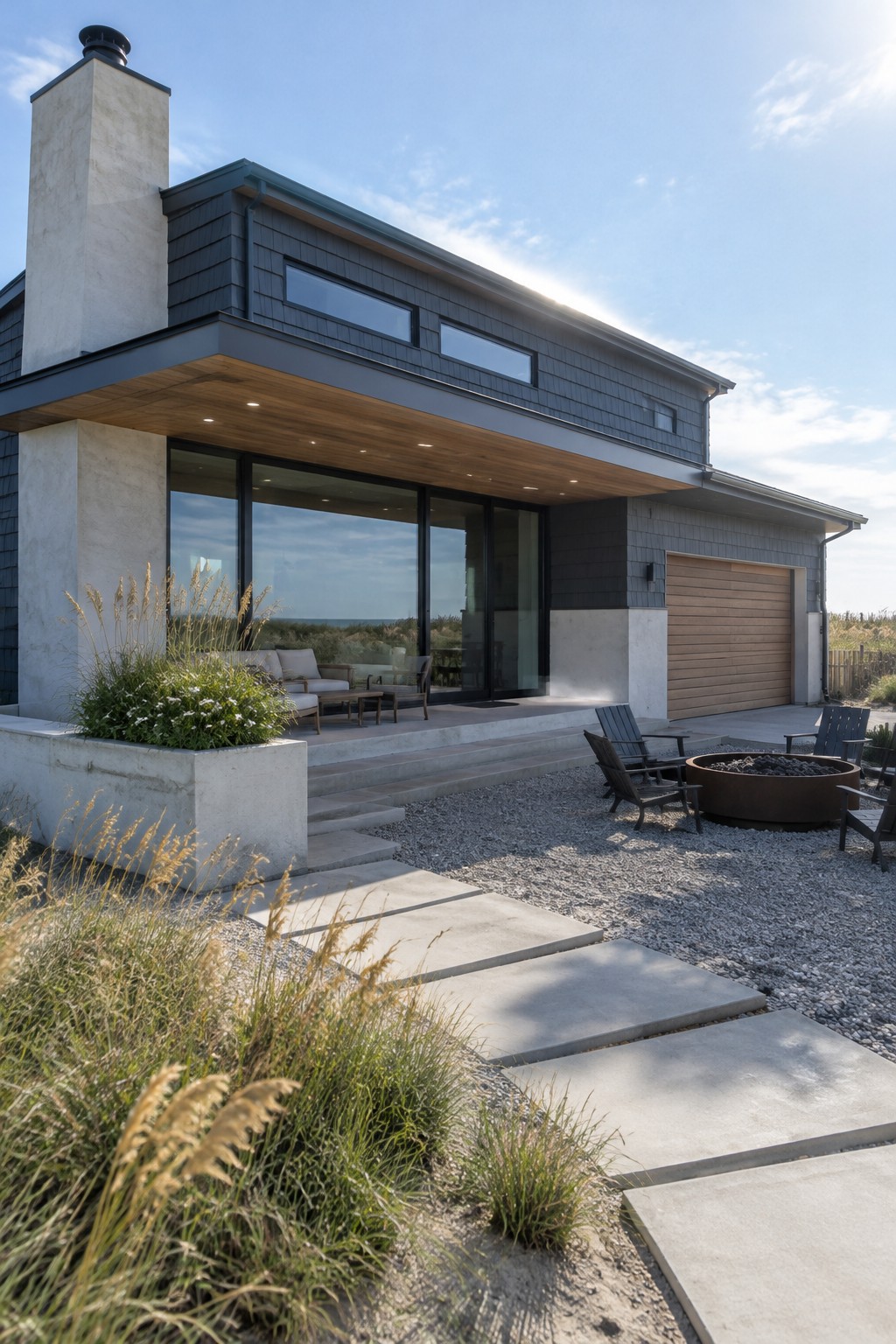
Dark shingle siding is a simple way to make a coastal home feel more contemporary while keeping a familiar, textured exterior. Here, it gives the upper facade a clear contrast against the pale stone chimney and wall.
This approach works well on homes with straightforward rooflines and large windows. Use shingles on one main section rather than every surface if you want the facade to feel lighter.
Use Shingle Siding for a Softer Modern Exterior
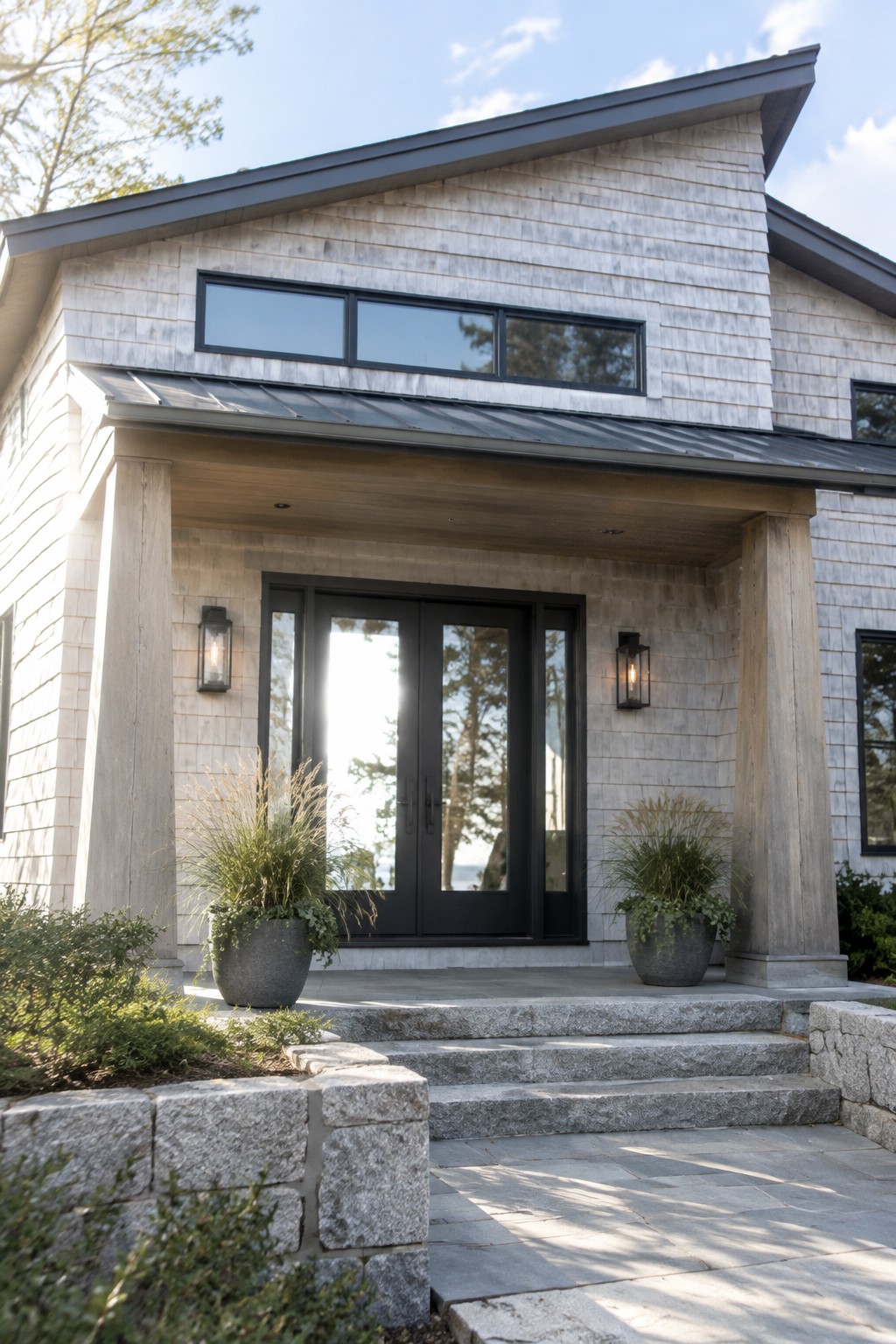
Modern coastal homes can feel less stark when their facades use shingle siding instead of broad, smooth panels. Here, weathered-looking shingles give the steep roofline a more relaxed character, while dark trim keeps the exterior looking current.
This approach works well on a simple, angular house where a little surface texture can add interest without extra ornament. Choose a shingle color that suits the roof and trim, and keep the shapes and details straightforward.
Make Room for Outdoor Dining
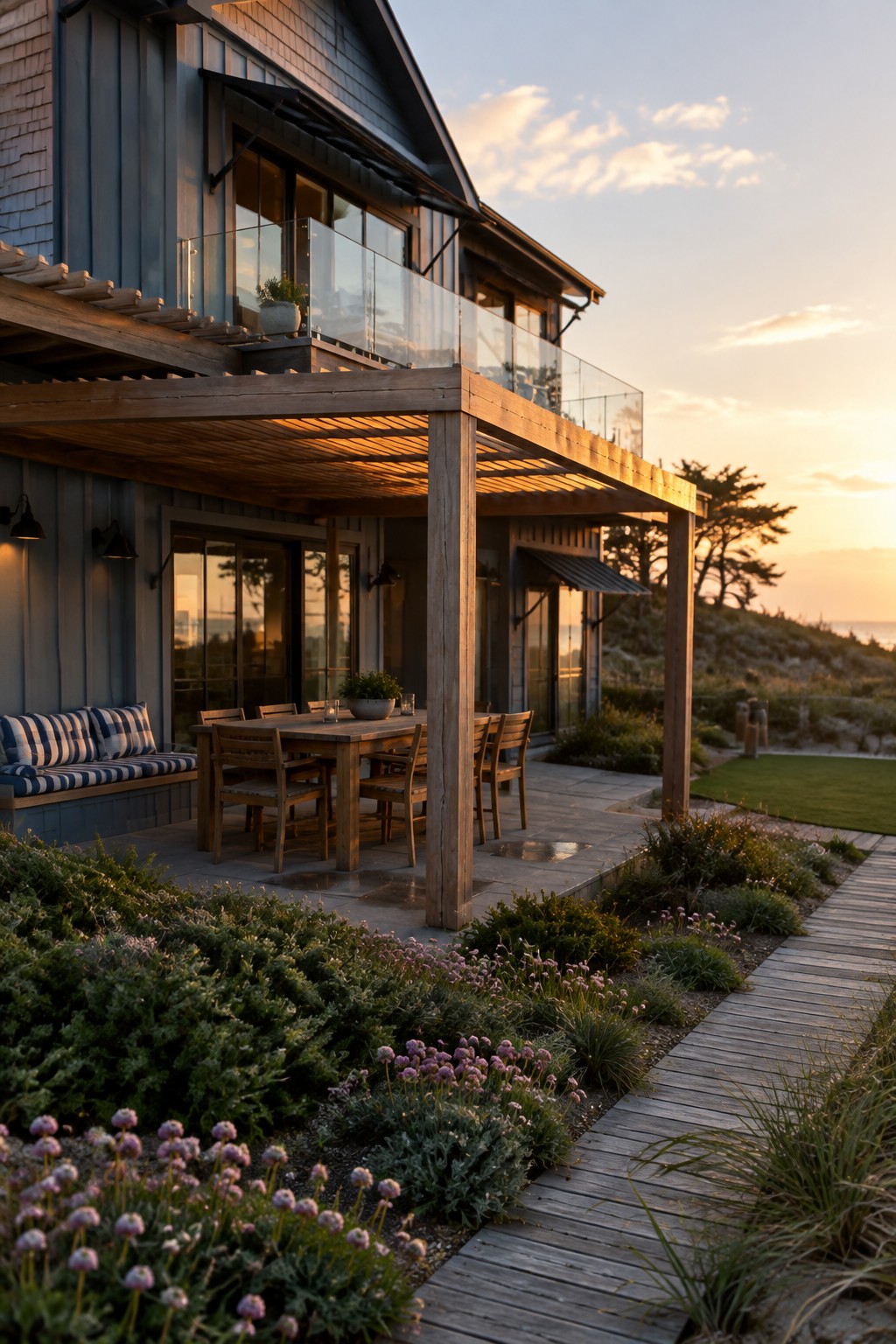
A covered dining area makes a coastal porch more useful beyond the sunniest part of the day. Here, the timber pergola gives the table some shade while keeping the space open to the yard.
This setup works well beside a house with easy access from the kitchen or living room. Choose weather-ready furniture, and leave enough room to pull chairs out without blocking the walkway.
Use Shingles to Add Character to a Modern Facade

Shingle siding brings texture to a modern coastal home without making the exterior feel busy. Here, the upper story uses weathered wood shingles above simple white vertical siding, giving the facade a clear change in material and scale.
This approach works well when you want a contemporary shape to feel a little less stark. Use shingles on one section of the exterior, such as an upper floor or gable, and keep the rest of the materials simple so their pattern can stand out.
Let the Shingle Siding Shape the Exterior
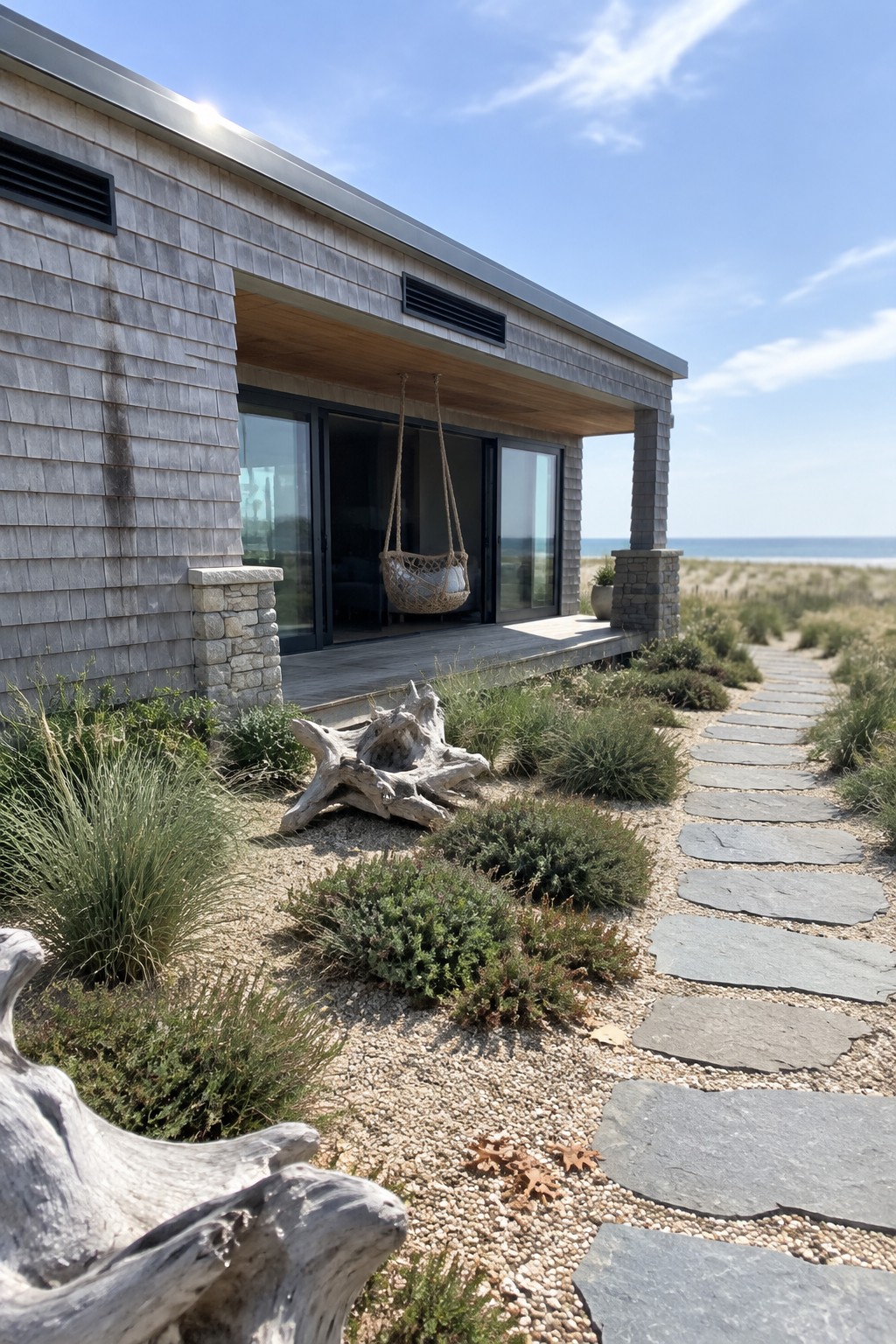
Shingle siding gives this modern coastal home a more relaxed, familiar look than a smooth exterior would. Its texture suits the simple roofline, while dark window frames keep the facade feeling current.
This approach works well on beach homes and other houses that need to sit comfortably in a natural setting. Choose a shingle color that works with the roof and trim, and keep the other exterior materials simple.
Use Wood Shingles Across a Modern Facade

Wood shingles give a modern coastal home a more relaxed exterior without changing its clean shape. Here, the warm shingle siding contrasts with dark trim and broad windows, so the facade feels less stark.
This approach works well on boxy homes that need a softer material on the outside. Use shingles on one or two sections rather than every surface, and keep the lines of the siding neat so the exterior still feels contemporary.
Give a Coastal Home a Strong Gabled Roofline

A prominent front gable gives this shingle-sided home its clear, welcoming shape. The open peak and exposed wood beneath it bring a relaxed character to the facade without relying on extra decoration.
This approach suits coastal homes that need a little more presence from the street. Keep the surrounding siding and trim fairly simple so the roofline stays easy to read, and make sure the gable’s scale fits the rest of the house.
A Recessed Entry Suits a Narrow Modern Home

A set-back front door gives a narrow facade a more defined entrance without adding a porch that takes up extra space. Here, the deep entry recess works with the pale shingle siding to give the modern exterior a little more shape.
This approach can suit compact coastal homes, especially where the front wall has limited width. Keep the entry finish simple and choose durable materials that can handle regular exposure to the elements.
Make the Front Entry a Focal Point

A simple arched entry gives a shingle-sided home a clear point of interest. The curved trim around the doorway adds a traditional touch while keeping the rest of the exterior fairly clean.
This approach works well when the front door sits in a recessed porch. Use trim that suits the scale of the facade, and keep the door finish simple so the entry detail can stand on its own.
Use Shingles to Break Up a Modern Facade

A mix of shingle siding and smooth panels gives a modern coastal exterior a bit more texture without making it feel busy. Here, the shingles run across the upper gable and in bands around the windows, so the large facade has some variation.
This approach works well when you want a contemporary house to feel less stark. Keep the smoother siding in larger areas, then use shingles where they can add interest, such as a gable or a section between windows.
Open Up the Patio to the Pool

A wide opening between the house and patio makes the pool area feel like a natural extension of the living space. Here, folding glass doors connect a covered seating area to the pool deck, so people can move between the two without stepping through a narrow doorway.
This layout works well when the patio has room for a small seating group and a clear path to the water. Keep outdoor furniture back from the doors and pool edge so the route stays easy to use.
Shingle Siding Gives a Modern Home a Textured Facade

Shingle siding is a useful way to give a modern coastal home a less stark exterior. The small wood shingles add a natural pattern across the facade, while simple window shapes keep the overall look contemporary.
This approach works especially well on a clean-lined home with a strong roof shape. Use one shingle tone across most of the exterior for a unified look, and choose a finish that can handle your local weather.
Build a Deck Along the Water
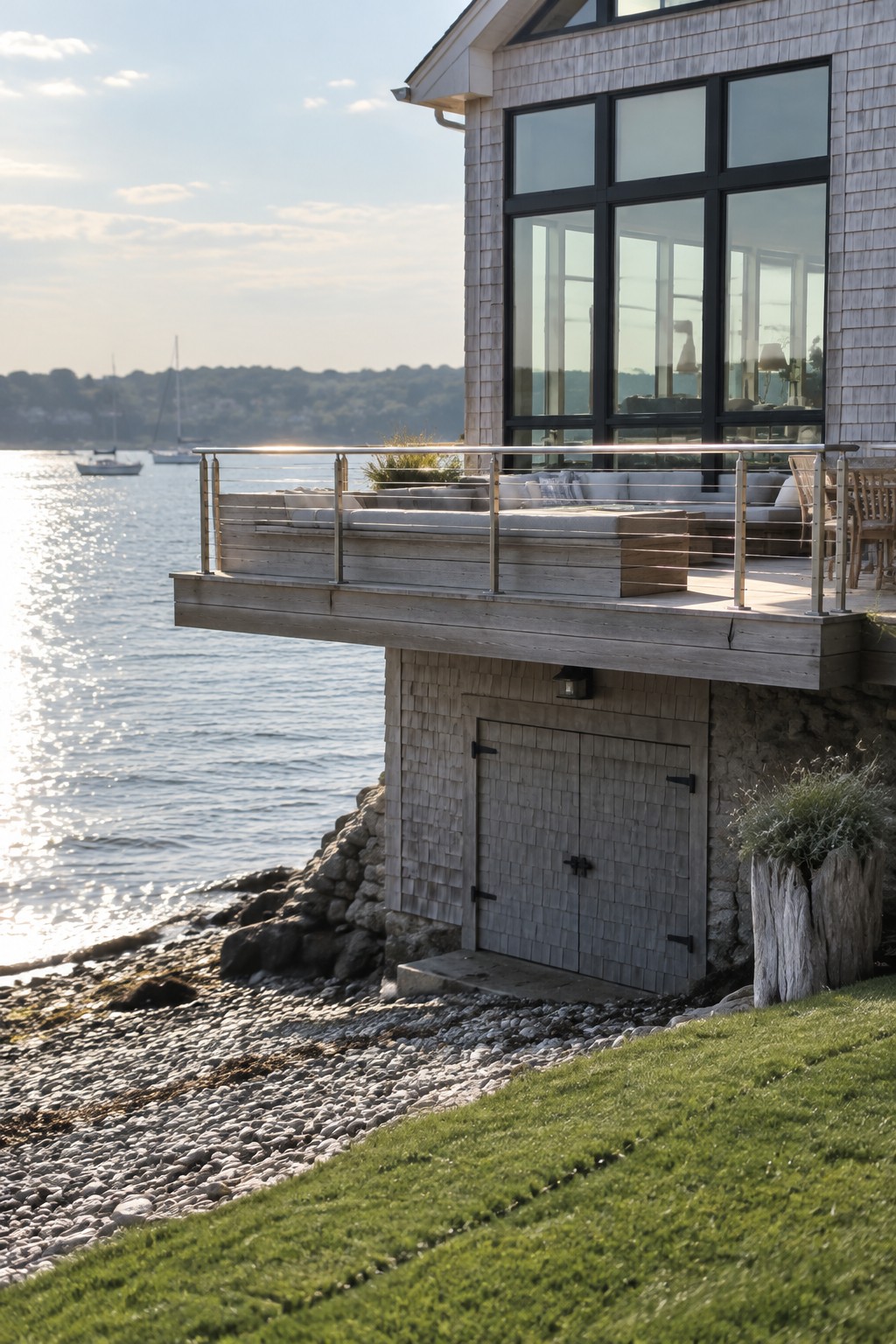
A deck that extends toward the shoreline makes outdoor seating feel like a natural part of the home. Here, the broad wood platform gives the seating area room to work without taking attention away from the shingle-sided exterior.
This layout suits a coastal home with a waterfront view, especially when the ground slopes toward the water. Use sturdy, weather-resistant decking and keep the railing open enough to preserve the view. A simple seating arrangement leaves the deck easy to move through.
Use Dark Shingles for a Contemporary Coastal Exterior

Dark shingle siding gives this modern coastal home a clear connection to traditional seaside houses, while its simple shape and large windows keep the look current. The deep blue color also makes the glass and black trim feel like part of one design.
This approach works well on compact homes where a strong siding color can make the facade feel more unified. Use it across the main exterior, then keep nearby materials and trim restrained so the shingles remain the main feature.
Use a Light Entry to Contrast Dark Shingle Siding

Dark shingles give this coastal exterior a strong, traditional look, while the pale entry surround keeps the facade from feeling too heavy. It’s a simple way to make a modern shingle home feel welcoming without changing the main siding.
Try this contrast around a recessed front door or covered porch, especially on a home with dark siding and black windows. Keep the lighter material close to the entry so it reads as a clear focal point rather than competing with the rest of the facade.
Set Up an Outdoor Kitchen Under a Covered Patio

A covered patio makes an outdoor kitchen more useful, since the roof provides shelter and helps define the cooking area. Here, the built-in grill and counter sit beneath a timber pergola, with a long fire feature nearby for gathering.
This setup works well beside a coastal home where the patio can serve as an extension of the kitchen. Leave enough room to move between cooking and seating areas, and choose finishes that can handle outdoor conditions.
Choose Weathered Shingles for a Coastal Exterior
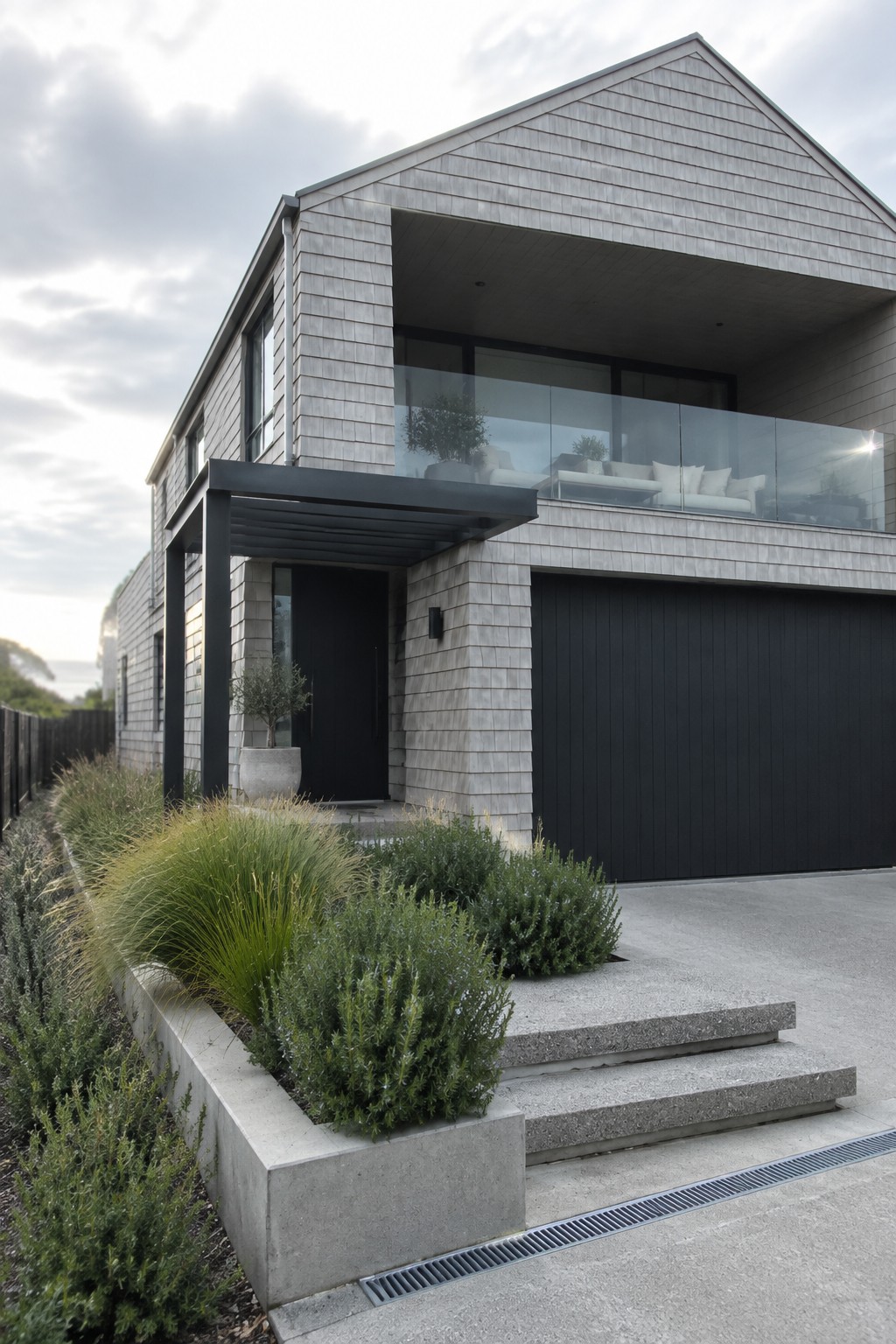
Weathered shingle siding gives a modern coastal home a softer, less formal look. It adds texture across the facade without needing a mix of several cladding materials.
This approach suits simple house shapes, especially when paired with dark trim or a clean-lined entry. Choose shingles in a muted gray or natural tone, and test a sample on the house first since the color can shift in different light.
Narrow Windows Add Rhythm to Shingle Siding
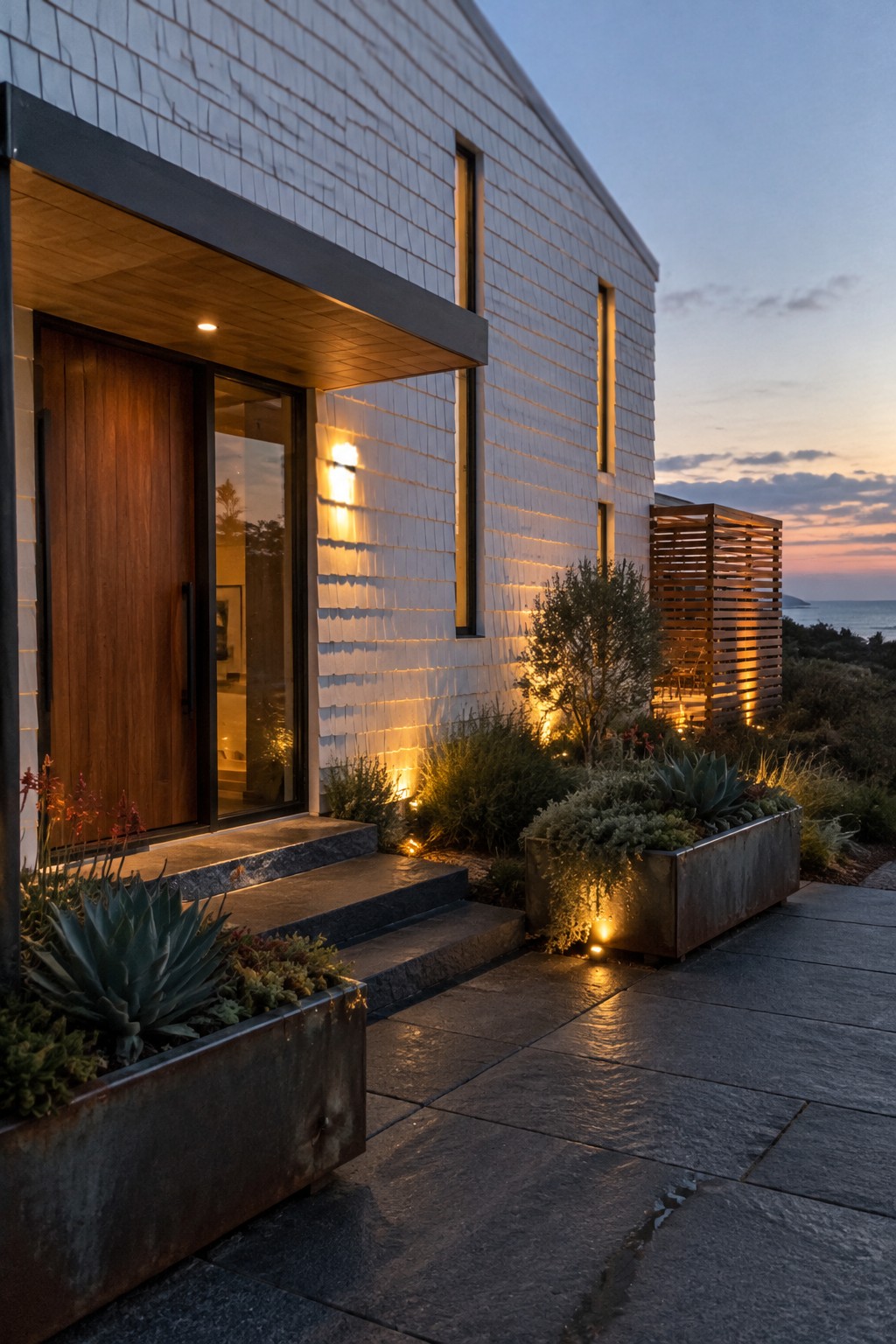
Tall, narrow windows give a shingle-clad exterior a clear vertical rhythm. They break up the broad wall without taking attention away from the siding, and they suit a modern coastal home that favors simple shapes.
This approach works well on a tall gabled facade, especially when the windows are spaced to follow the wall’s proportions. Keep the trim restrained so the openings feel like part of the architecture rather than extra decoration.
Frequently Asked Questions
Q: Are shingles a good choice for a coastal home, or will the salt air wear them down?
A: They can work well, but salty air and strong sun call for durable shingles and regular upkeep. Rinse away salt and check for loose or damaged shingles after major storms.
Q: How can I keep a shingle exterior from looking too traditional?
A: Pair the shingles with clean-lined windows, simple trim, and a restrained color palette. A mix of shingle patterns can add interest without making the facade feel fussy.
Q: What colors suit a modern coastal exterior?
A: Soft gray, warm white, and muted blue all feel at home near the coast. Try a sample on the house first, since sunlight can make a color look brighter than it did on a paint chip.
Q: Can I use shingles on just part of the exterior?
A: Yes. Shingles on a gable or upper story can add texture while keeping the rest of the exterior simple.
