


Textured plaster can make a room feel softer and more settled, especially when coastal light moves across its uneven surface.
I’ve found that the effect works best when the walls have room to breathe and the furniture, fabrics, and finishes don’t compete for attention.
In real homes, the first thing I notice is how a space balances that tactile backdrop with everyday comfort, from easy seating to surfaces that can handle sandy feet.
Natural wood, woven pieces, and quieter colors can bring warmth without making the room feel overly themed.
I’d save the ideas that feel easy to adapt, then test them against the light, layout, and routines of your own home.
Use Textured Plaster As a Focal Wall

A textured plaster wall can give a living room a quieter focal point than patterned wallpaper or a bold paint color. Here, the pale finish extends around the fireplace, making the wall feel like part of the room rather than just a backdrop.
This approach works well in coastal homes where you want a natural look without relying on lots of blue or nautical decor. Keep nearby finishes simple, and test a plaster sample first, since its texture and color can look different as the light changes.
Use Textured Walls To Keep A Bedroom Simple

A textured plaster wall can give a coastal bedroom enough character that the rest of the decor does not need to be busy. Here, the pale finish works with plain bedding and natural materials, keeping the room relaxed without relying on lots of accessories.
This approach suits bedrooms where you want a calm backdrop, especially in a home with warm wood or woven pieces. Keep the wall color close to the bedding, and let the plaster’s subtle texture provide the variation.
Use Plaster for a Unified Kitchen

Textured plaster can give a kitchen a softer, more continuous look than a mix of separate finishes. Here, the same pale material covers the island and range hood, so the larger features feel connected rather than busy.
This approach works well in open kitchens where the island is part of the living space. Use plaster on one or two prominent surfaces, and keep cabinets or shelving in a contrasting material, such as wood, for a practical change in texture.
Use Textured Plaster In the Bathroom

Textured plaster gives a bathroom a softer, less uniform finish than standard tile. Here, it covers the vanity wall, while the shower uses gray stone tile, so the room has a clear change in texture without a busy pattern.
This approach works well on a dry wall behind a vanity, where the finish can be seen up close. Use a suitable bathroom-rated plaster and check the care requirements, especially if the wall gets frequent splashes.
Use a Built-In Plaster Niche for Display

A shallow niche can make a plaster wall more useful without adding shelves that stick out into the room. Its curved shape gives a simple place to display a few everyday pieces, while keeping the wall itself as the main feature.
This idea works well in a dining area or living room where there’s room to build into the wall. Keep the objects inside the niche to a small group, such as a vase and a few books, so the plaster detail stays easy to notice.
Use Textured Plaster In An Entryway
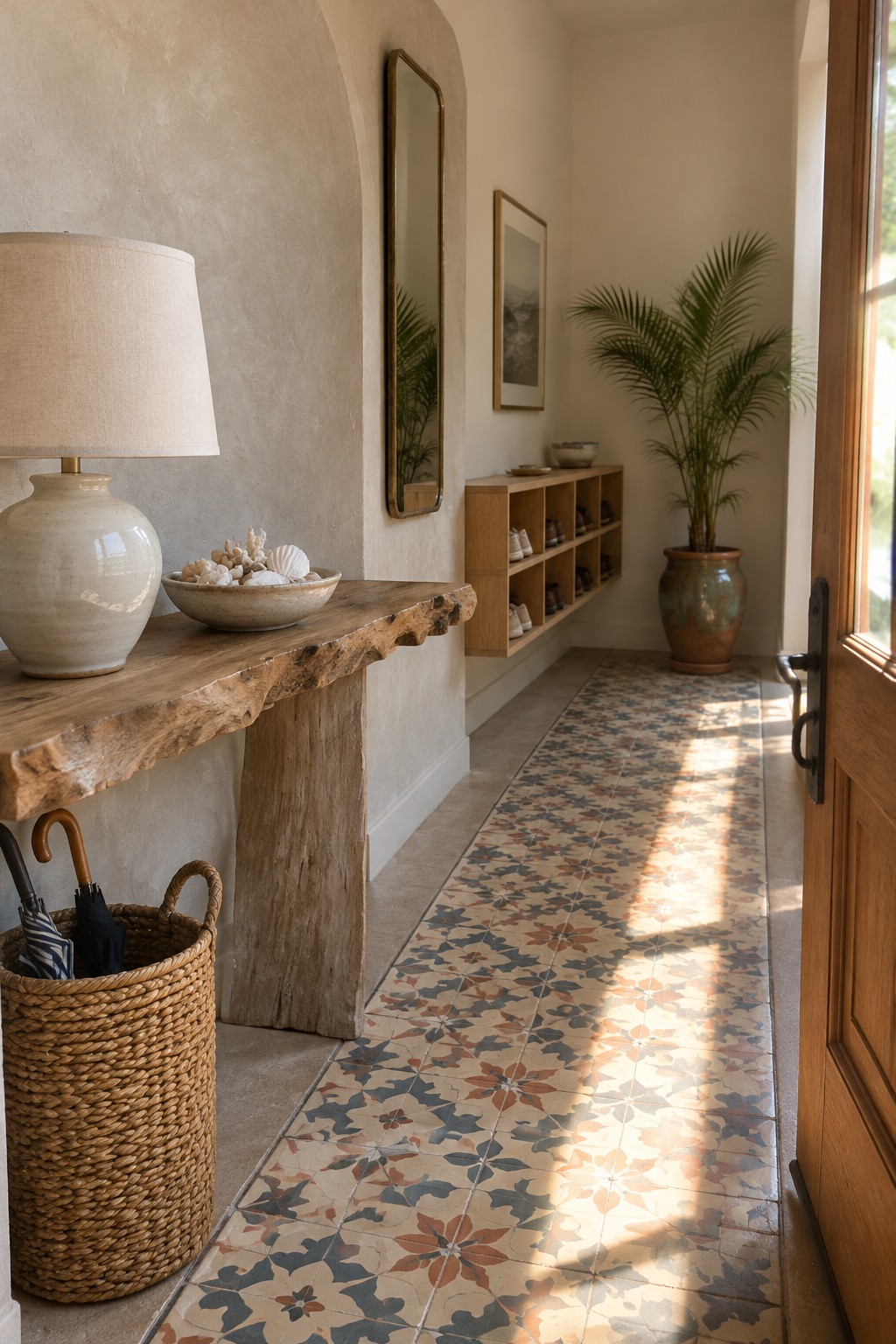
Textured plaster is a practical way to give an entryway character without filling it with extra decoration. Its uneven finish brings interest to a simple wall, while natural wood and stone details suit the relaxed feel of a coastal home.
This approach works especially well in a narrow hall, where there may not be room for much furniture. Keep the wall finish in a warm, quiet shade and let a few useful pieces, such as a slim console or shoe storage, do their job.
Make a Small Home Office Feel Settled
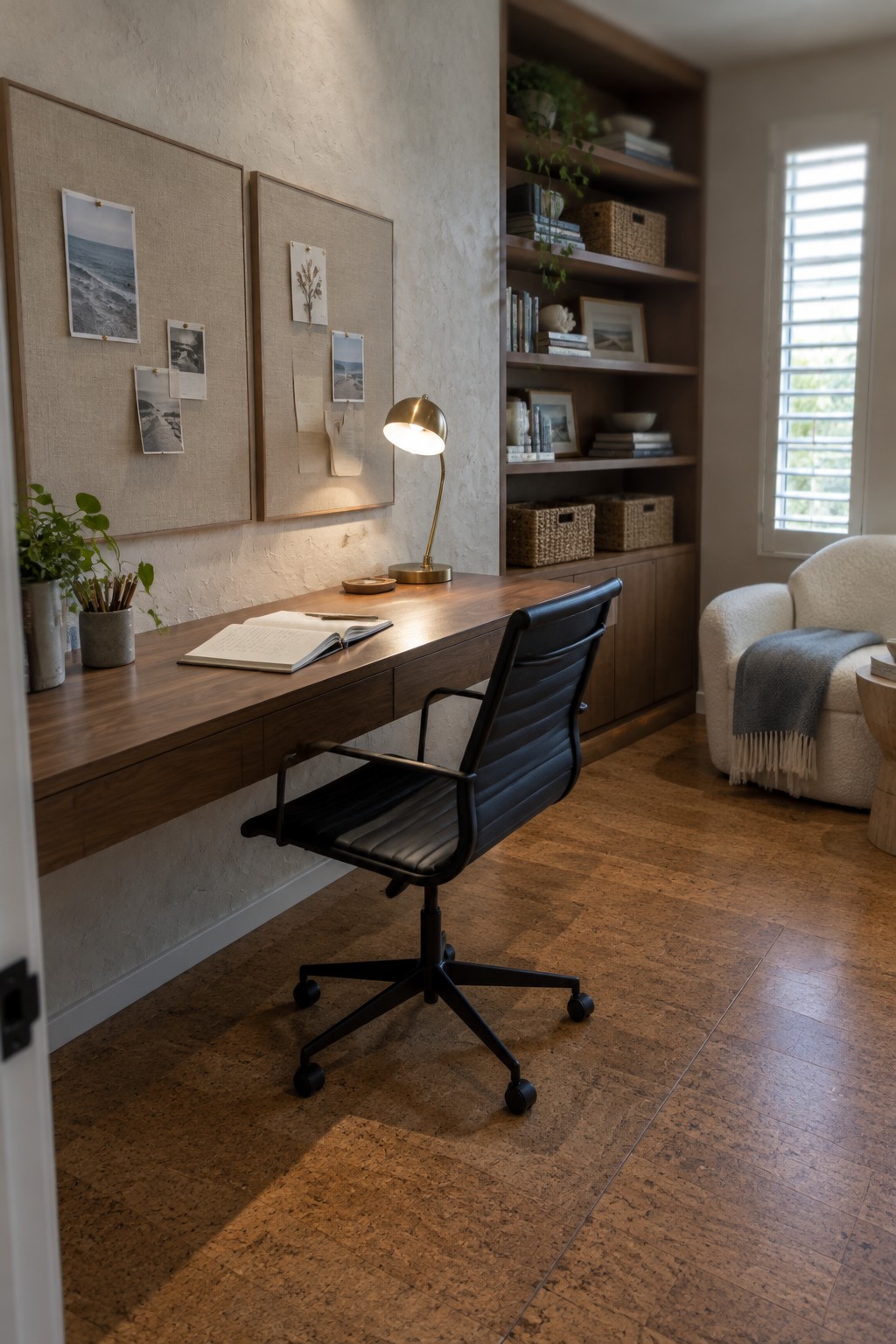
A wall-mounted desk is a useful choice when a home office needs to fit into a smaller room. Its open space underneath keeps the work area from feeling too crowded, while textured plaster gives the wall a little character without needing much extra decor.
Keep the desk close to a window when possible, and choose a chair that can tuck in when the desk is not in use. This kind of setup works well in a spare room or an unused corner, especially when built-in shelves can handle books and supplies.
Use Soft Plaster to Warm a Nursery

Textured plaster can make a nursery feel comfortable without adding busy patterns or bright colors. Its gentle variation gives a neutral room some character, while still leaving the space calm and easy to live with.
This works especially well on a main wall, where it can sit behind simple furniture and a few framed prints. Choose a warm, muted shade, and keep the finish subtle so the room does not feel too rustic.
Make Laundry Storage Part of the Room
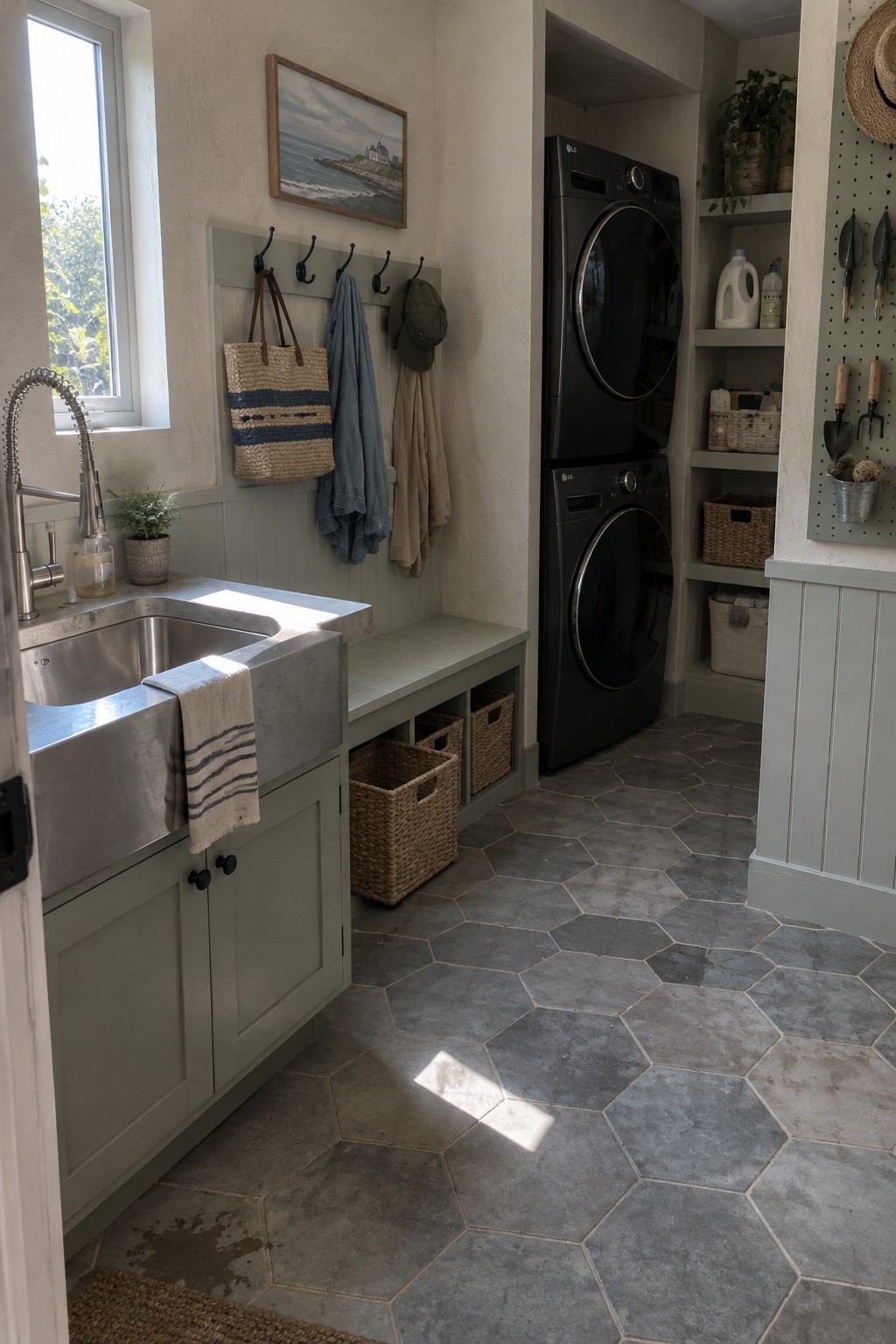
A laundry area can feel much less utilitarian when storage is built into the layout. Here, open shelves and a bench keep baskets close at hand, while the stacked machines use the room’s height instead of taking up more floor space.
This approach suits a narrow utility room or a laundry corner off the kitchen. Use baskets to keep supplies and everyday items sorted, and leave enough clear space in front of the machines for loading and unloading.
Use Plaster to Tie an Entryway Together

Textured plaster makes a useful choice for a narrow entry hall, where a little wall character can keep the space from feeling plain. Here, the pale finish works well alongside simple wood details without needing much extra decoration.
For a similar look, use plaster on the main hallway wall and keep the furnishings fairly slim so the passage stays easy to use. A stair hall is a good place for it, especially when the wall runs up alongside the stairs.
Choose Soft Coastal Colors for the Bedroom

A muted blue bedding palette brings a coastal feel to the bedroom without relying on beach-themed decor. Against the textured plaster wall, the colors feel calm and easy to live with.
Try this approach in a bedroom where you want a restful look. Keep the larger pieces in a few related shades, then use natural textures, such as a woven headboard, for quiet contrast.
Use Plaster Walls To Keep a Living Room Calm

Textured plaster gives a living room enough character that the rest of the decor can stay simple. Here, the warm-toned walls sit quietly behind the TV, while the built-in display niches add a little interest without needing extra wall art.
This approach suits a contemporary coastal home, especially when you want a relaxed room rather than a busy one. Keep the plaster finish subtle, and let a few natural materials, such as wood or woven fabric, do the rest.
Choose Natural Materials for a Coastal Bathroom

Textured plaster gives a bathroom a softer, less polished feel than a smooth painted wall. It works especially well with natural materials, such as the wood vanity and stone-look basin shown here, so the room feels simple without feeling stark.
For a similar look, keep the main finishes quiet and let one or two natural materials stand out. Plaster suits bathrooms with good ventilation, but check that the finish is appropriate for damp areas before using it near a sink or shower.
Use a Banquette to Make Dining More Casual

A built-in banquette makes a dining nook feel relaxed and helps use the space efficiently. It also gives a small dining area a more settled look than a table surrounded by chairs.
A banquette works well along a wall or in a corner, especially where space is tight. Keep the seat cushions simple and choose a table that leaves enough room to slide in and out comfortably.
Make Pantry Storage Easy to Keep Tidy
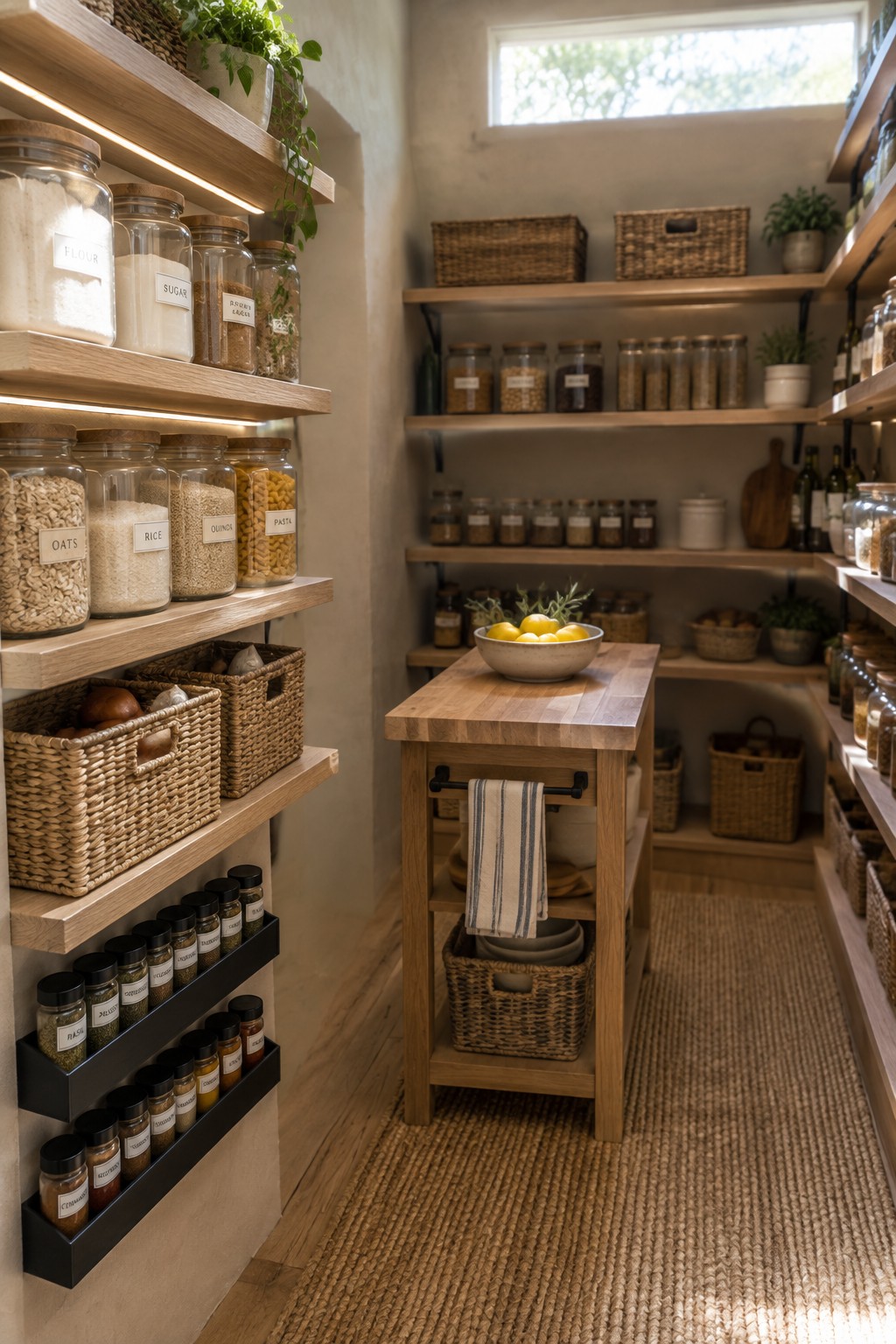
Open shelving keeps everyday pantry goods within reach, while clear jars make it easier to see what needs replenishing. The simple setup feels orderly without hiding everything behind cabinet doors.
Use matching containers for staples you reach for often, and leave a little space between groups so shelves are easy to maintain. This works well in a walk-in pantry, though closed storage may be better for less attractive packages or items you use only occasionally.
Make a Walk-In Closet Feel Like a Dressing Room
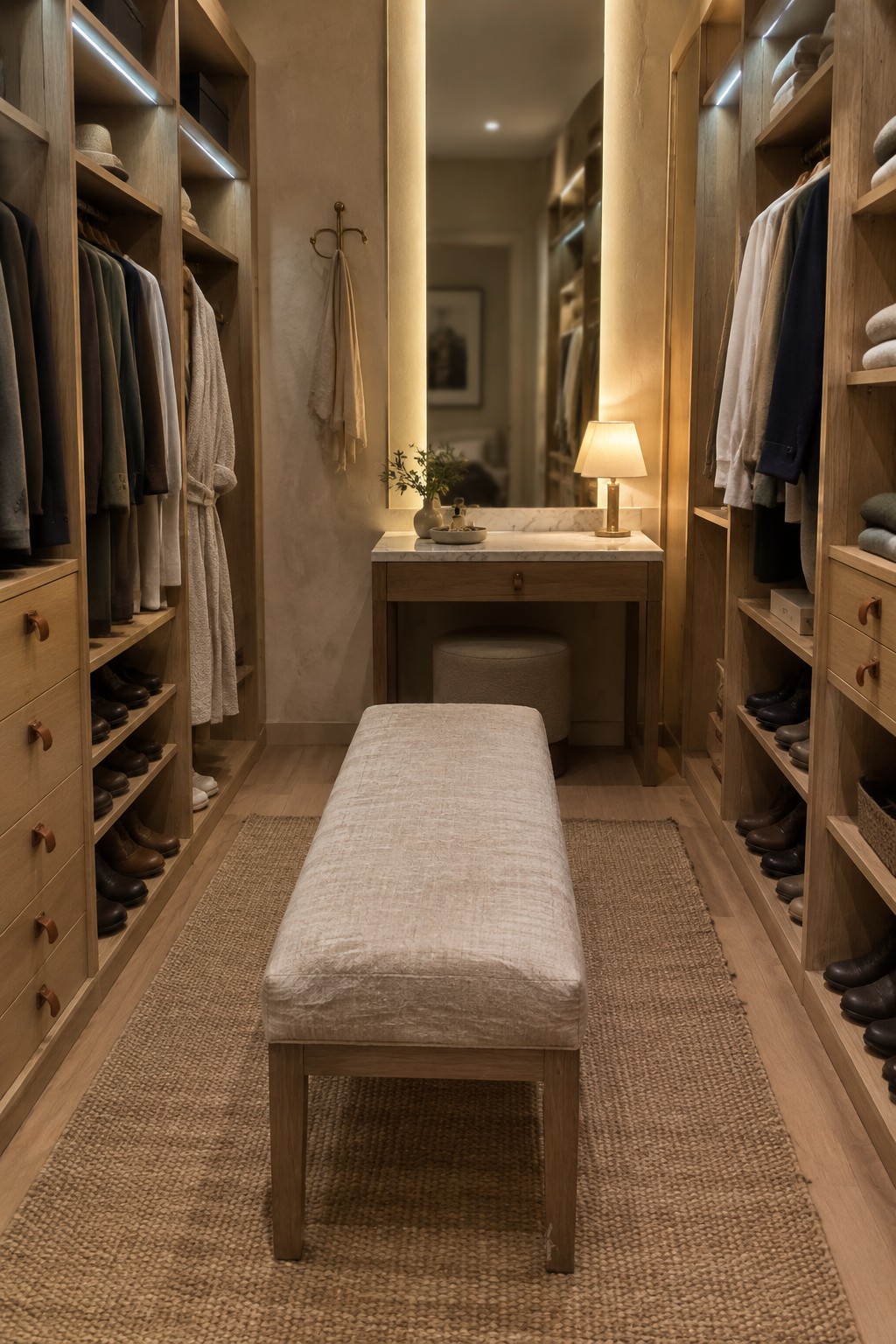
A long bench can make a walk-in closet more comfortable to use. It gives you a place to sit while getting dressed, and the simple shape keeps the center of the room easy to move through.
For a similar setup, leave enough space on both sides of the bench to reach the storage comfortably. A textured plaster wall can suit the closet well, especially in a coastal home where natural wood and woven fabrics keep the finishes from feeling too formal.
Set Up a Worktable for Hands-On Projects
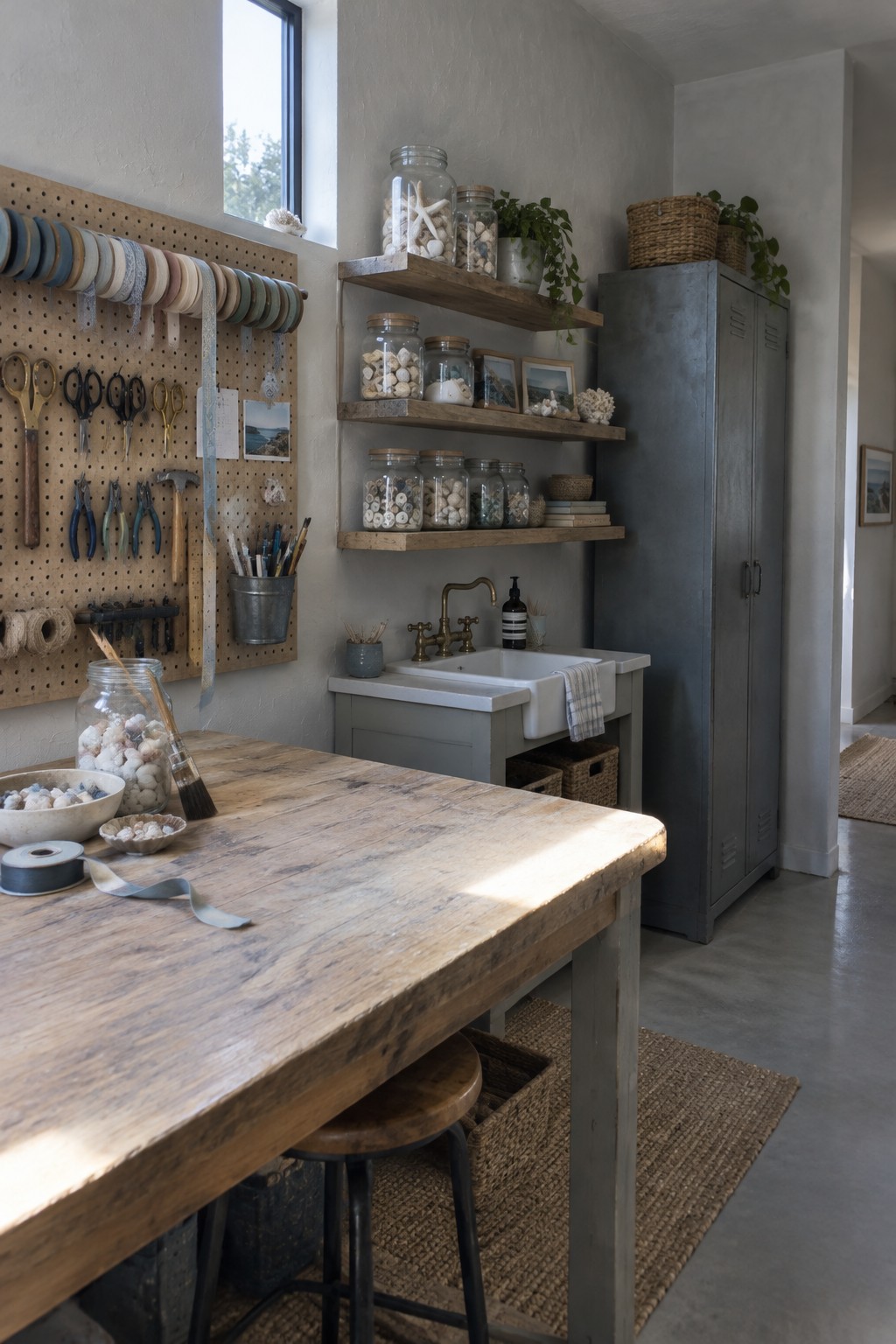
A sturdy worktable makes a craft room easier to use day to day. This broad wooden surface gives plenty of room to lay out materials, cut ribbon, or work on several small projects without crowding.
Choose a table that fits the room and leaves enough space to move around it. A well-used surface will get marks over time, so a durable finish is more practical than one that needs to stay perfect.
Frequently Asked Questions
Q: Will textured plaster walls make a coastal room feel too rustic?
A: Not if you keep the rest of the room simple. Pale plaster, clean-lined furniture, and a few natural materials give the space a relaxed coastal feel without making it look like a farmhouse.
Q: Can I use plaster walls in a bathroom near the coast?
A: Yes, but choose a finish made for damp areas and make sure it’s properly sealed. In a shower or other spot that gets soaked often, tile is usually easier to maintain.
Q: What colors work well with textured plaster?
A: Warm white, sandy beige, and soft gray-blue all suit the subtle movement of plaster. Test a sample in your room first, since coastal light can make a shade look quite different throughout the day.
Q: How do I decorate around a plaster wall without hiding its texture?
A: Keep large artwork and shelving to a minimum, especially on the most textured wall. Let the finish take the lead, then add interest with a woven rug, linen curtains, or a sculptural lamp.
