

Blue and white can make a coastal room feel fresh, but the balance matters more than using the colors everywhere.
I find the look works best when crisp patterns have room to breathe alongside natural textures, warm wood, and comfortable fabrics.
In a real home, the first thing I notice is whether the colors help a room feel calm and connected, or make it feel overly themed.
Small choices, such as a striped cushion, painted cabinet, or patterned tile, can bring in the seaside mood without taking over.
I’d save the ideas that suit the light, layout, and everyday needs of your own rooms, then adapt the details to fit.
Use Blue And White Textiles To Bring In Coastal Color

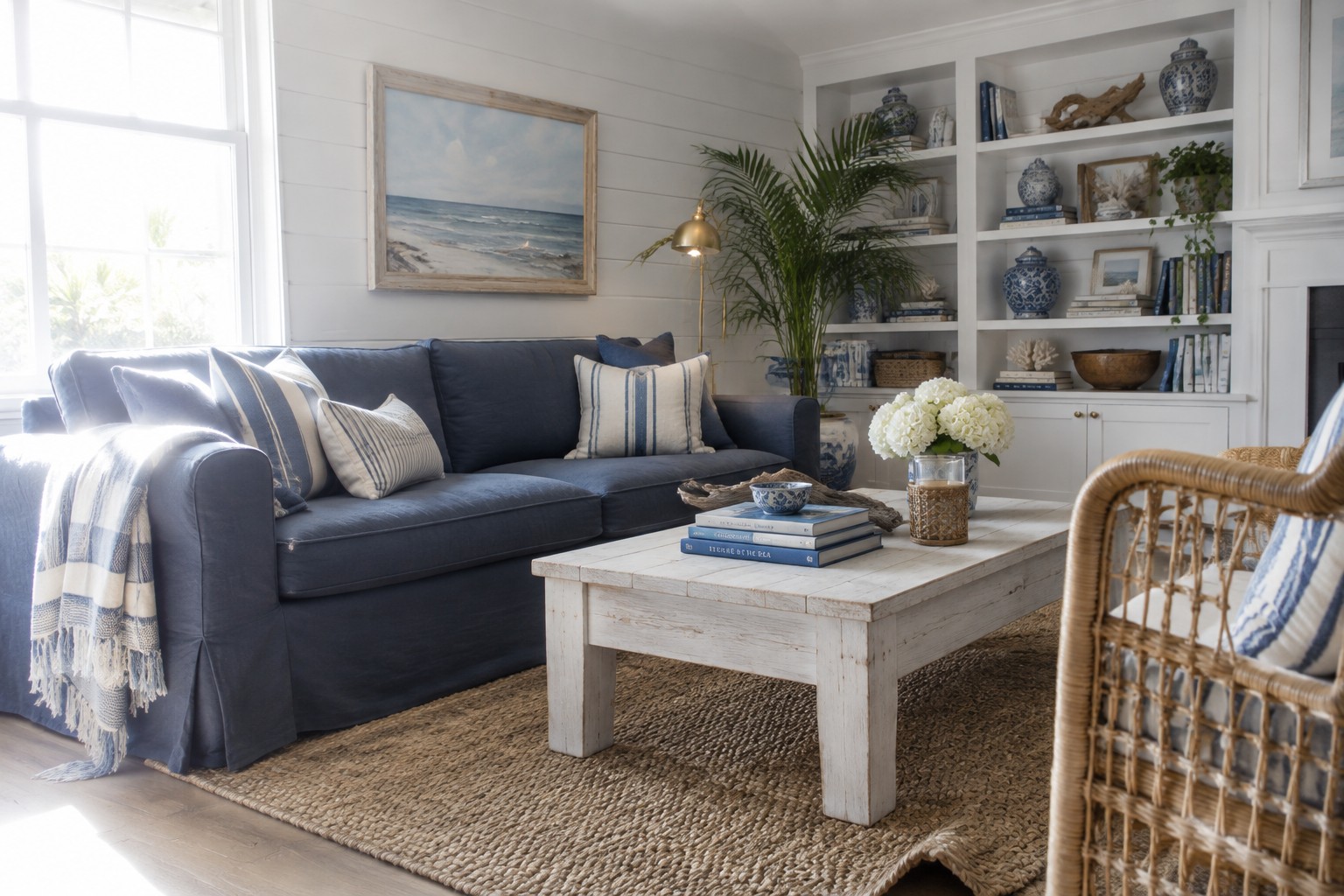
Blue-and-white upholstery and pillows are an easy way to give a living room a coastal feel without changing its basic layout. The mix looks relaxed, and a few different stripe patterns keep the color from feeling too uniform.
Start with a blue sofa or a pair of patterned cushions, then repeat the colors in a throw or a small accessory. This approach suits casual family rooms especially well. Keep the larger pieces fairly simple so the patterns remain easy to live with.
Use Blue And White Bedding For A Coastal Bedroom
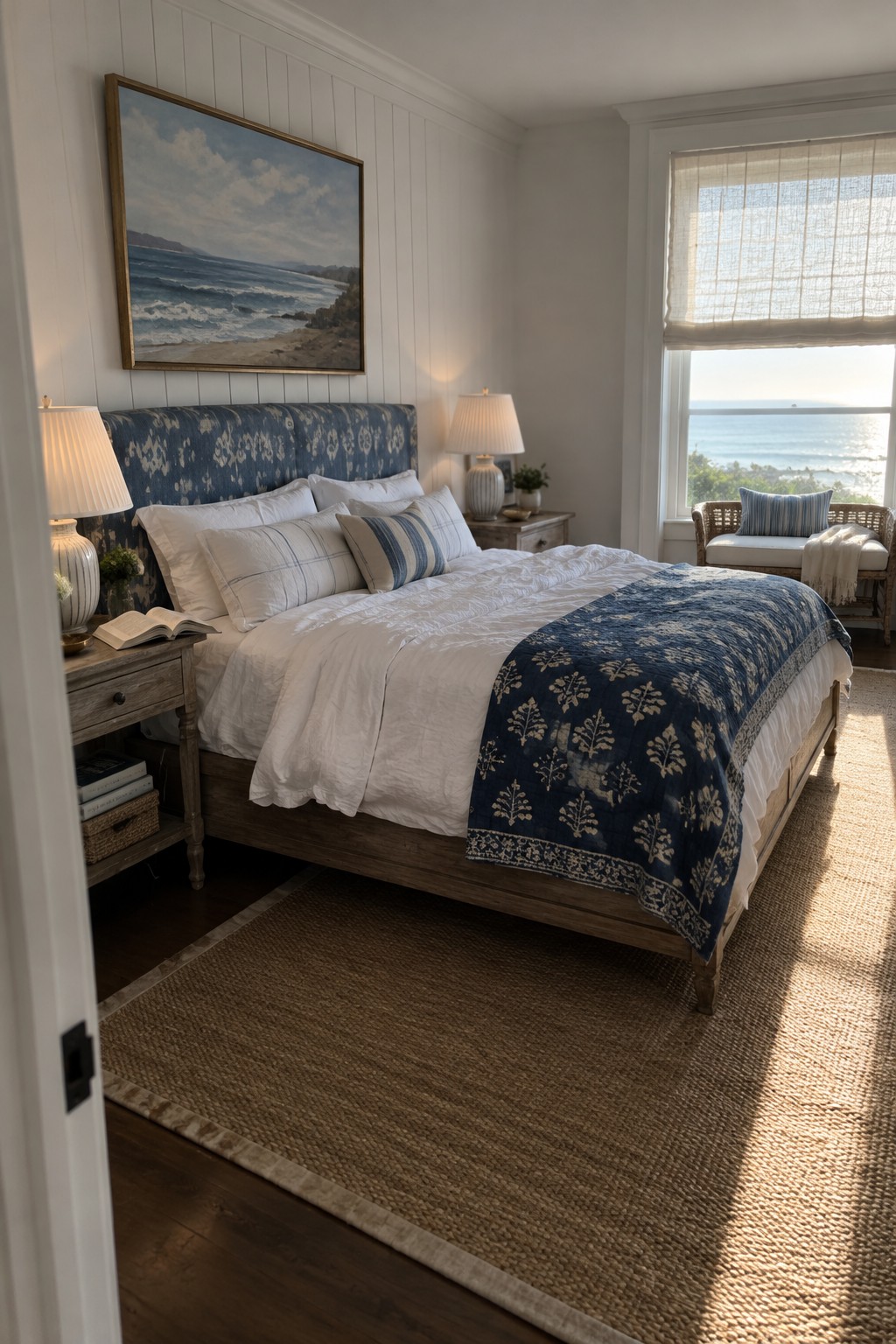
Blue-and-white bedding is an easy way to give a bedroom a coastal feel without making the whole room look themed. A mostly white bed keeps the look simple, while a patterned navy coverlet brings in color and gives the bed a clear focal point.
Try this approach in a room with neutral walls or natural wood furniture, where the blue can stand out without competing with other patterns. Keep the larger bedding pieces quiet, then use one patterned layer for interest.
Use Blue-and-White Tile as a Kitchen Feature
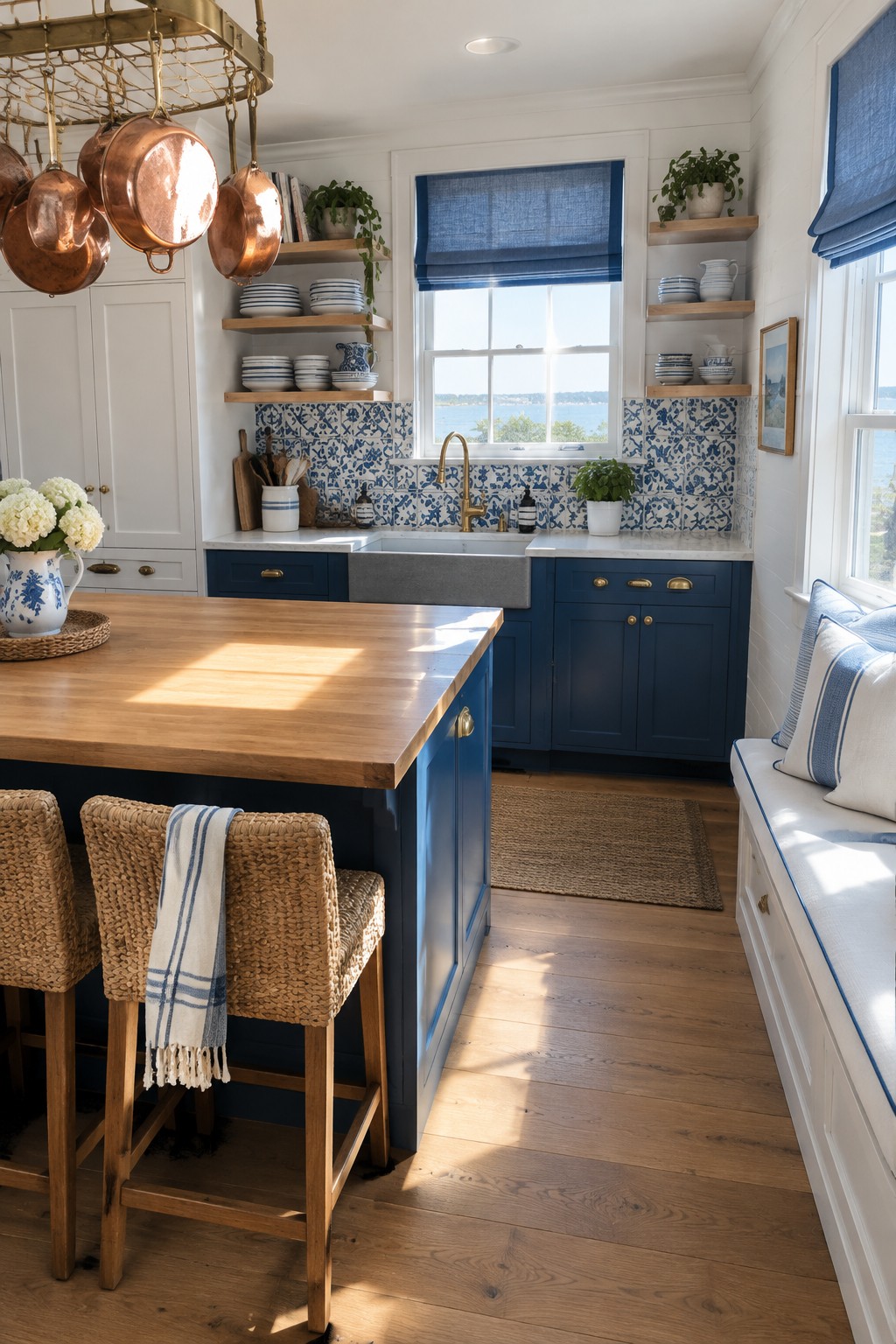
Blue-and-white patterned tile is an easy way to bring a coastal palette into a kitchen without using color on every surface. A backsplash like this stands out against white walls and navy cabinets, while still leaving the room feeling simple and familiar.
Try the tile behind a sink or range, and keep nearby finishes fairly plain so the pattern has room to show. It works especially well in a bright kitchen, but a smaller tiled area can be a good choice if you want just a little color.
Use Blue Tile To Add Color In A Bathroom
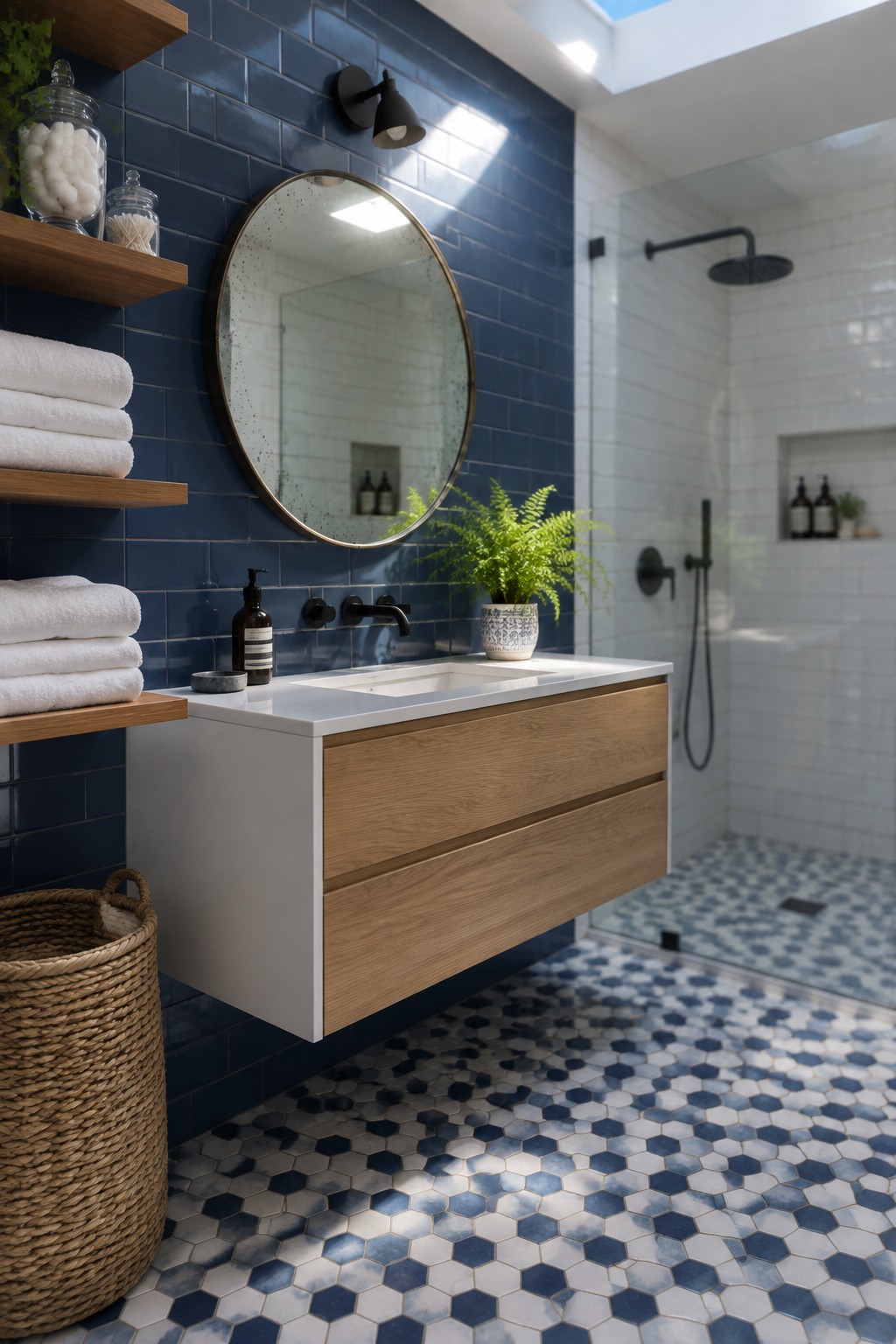
Blue wall tile is an easy way to bring a blue-and-white palette into a bathroom without relying on small accessories. A deep shade around the vanity gives the room a clear focal area, while white surfaces keep the color from taking over.
This idea works well in a bathroom with simple fixtures and natural wood details. Use blue on one wall or in a defined section, and choose a shade you’ll be comfortable seeing every day.
Use Blue-and-White Table Linens In The Dining Room
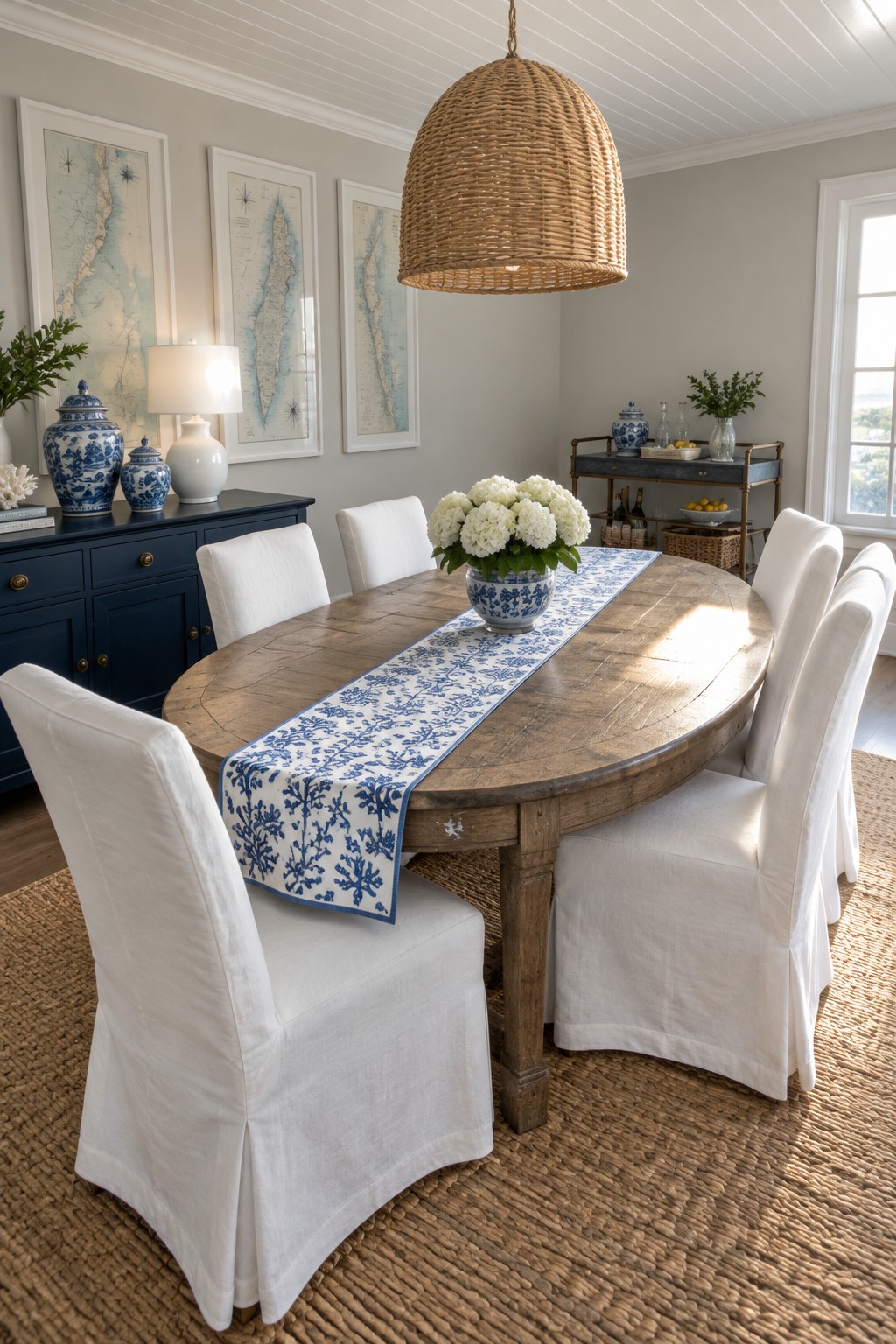
A blue-and-white runner is an easy way to bring coastal color to a dining table without making the whole room feel themed. The pattern stands out against the natural wood, while the white chairs keep the look simple.
Try a runner down the center of an oval or rectangular table, and choose a pattern that suits the rest of the room. It works especially well in a casual dining space; keep other tabletop pieces fairly simple so the fabric has room to show.
Add Blue Wainscoting To An Entryway

Blue wainscoting gives an entryway a clear coastal look without needing much decoration. It also stands up well to the scuffs and bumps that come with a busy hallway.
Use it along the lower half of the walls, then keep the upper walls light so the space still feels open. A built-in bench can make the entry more useful, but the blue paneling works just as well on its own.
Use Blue-and-White Patterns in a Nursery
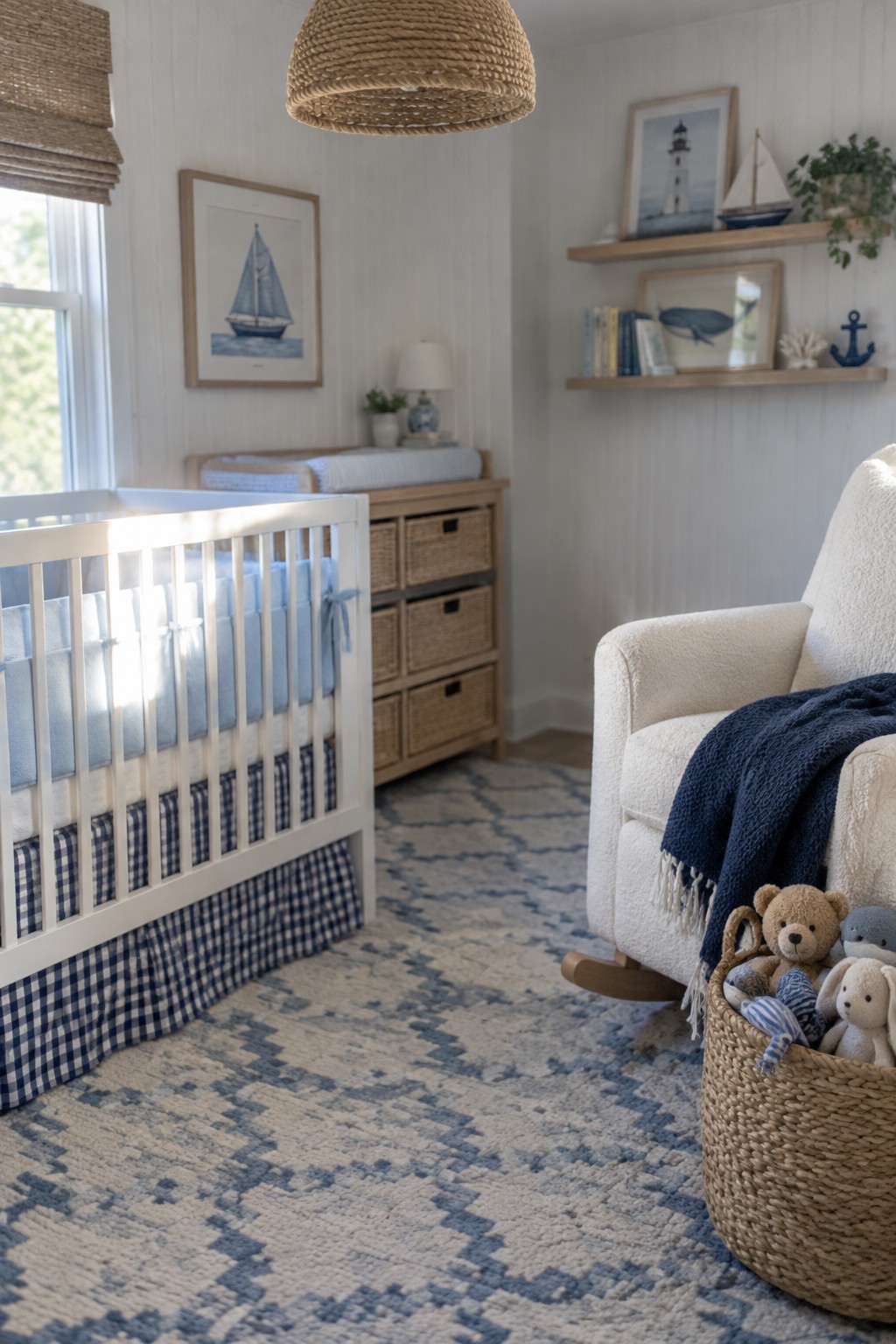
Blue-and-white patterns can give a nursery a coastal feel without relying on lots of themed decorations. Here, gingham crib fabric and a blue patterned rug carry the color in a simple, familiar way.
Try this approach in a nursery with mostly light walls, using a few patterned pieces to bring in blue. Keep the patterns to different scales, such as small checks on the crib and a larger design on the floor, so the room stays easy on the eyes.
Make Laundry Storage Part Of The Room
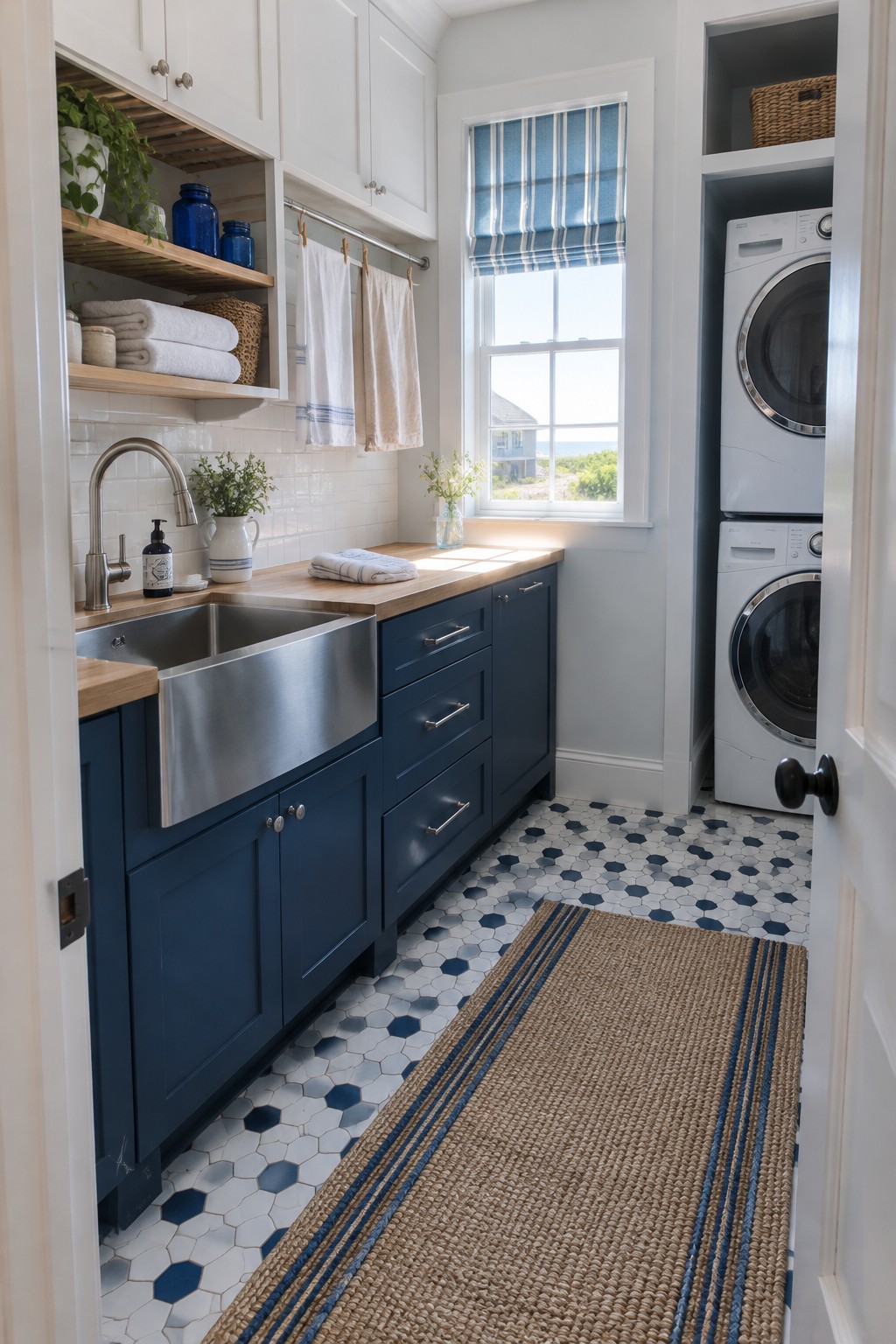
Built-in shelves and cabinets can make a narrow laundry room easier to use without giving up counter space. Here, the stacked washer and dryer sit in a recessed nook, while blue lower cabinets provide closed storage and a work surface nearby.
This approach suits a small utility room where every bit of space matters. If you use blue cabinetry, keep the larger surfaces light so the color feels balanced rather than crowded.
Use Built-In Shelves for Coastal Storage

Built-in shelves make a home office more useful while giving books and a few personal objects a proper place. Painting the shelf backs a deep blue adds coastal color without taking over the room.
This idea works especially well in a small office or a nook beside a window, where floor space is limited. Keep some shelf space open so the storage feels easy to use, not crowded.
Use A Blue Daybed In A Coastal Room

A blue daybed is a useful way to bring coastal color into a room without making it feel like a bedroom. It can serve as a sofa for reading or visiting, while blue-and-white pillows and a throw keep the look easy to change.
This works well in a guest room, den, or narrow space where a full sofa might feel too large. Choose a daybed with a sturdy back and arms, then keep the bedding simple so it still feels like a place to sit.
Use Patterned Blue-and-White Tile on a Bathroom Wall
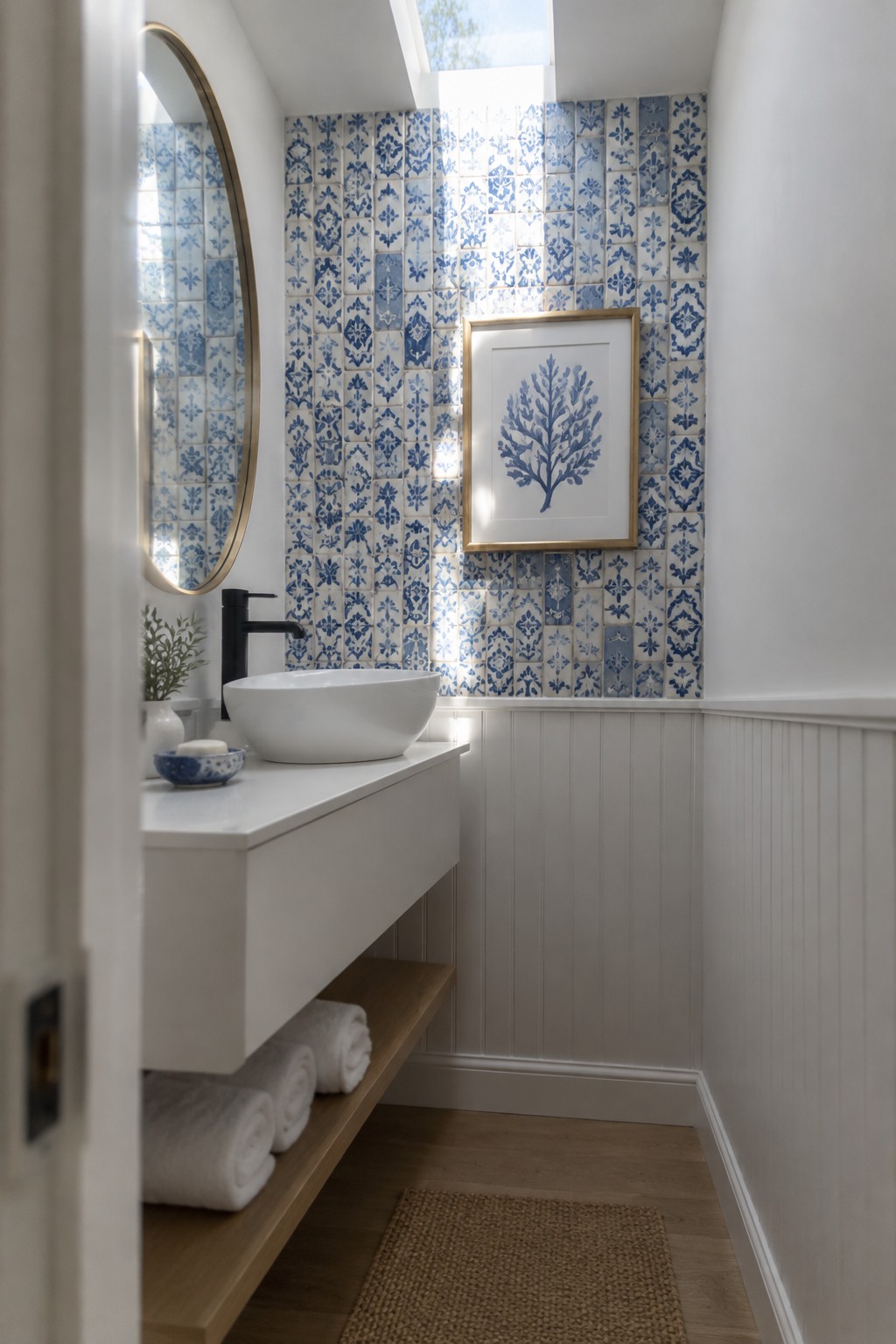
A wall of patterned tile is an easy way to bring a blue-and-white palette into a bathroom. The varied motifs keep the pattern from feeling too uniform, while the white background helps the blue stand out without taking over the room.
This idea works well on one wall, especially in a small powder room where there is less space for other decoration. Keep nearby finishes simple, and choose tile patterns that share a similar range of blues so the wall feels collected rather than busy.
Use A Breakfast Nook For Coastal Dining
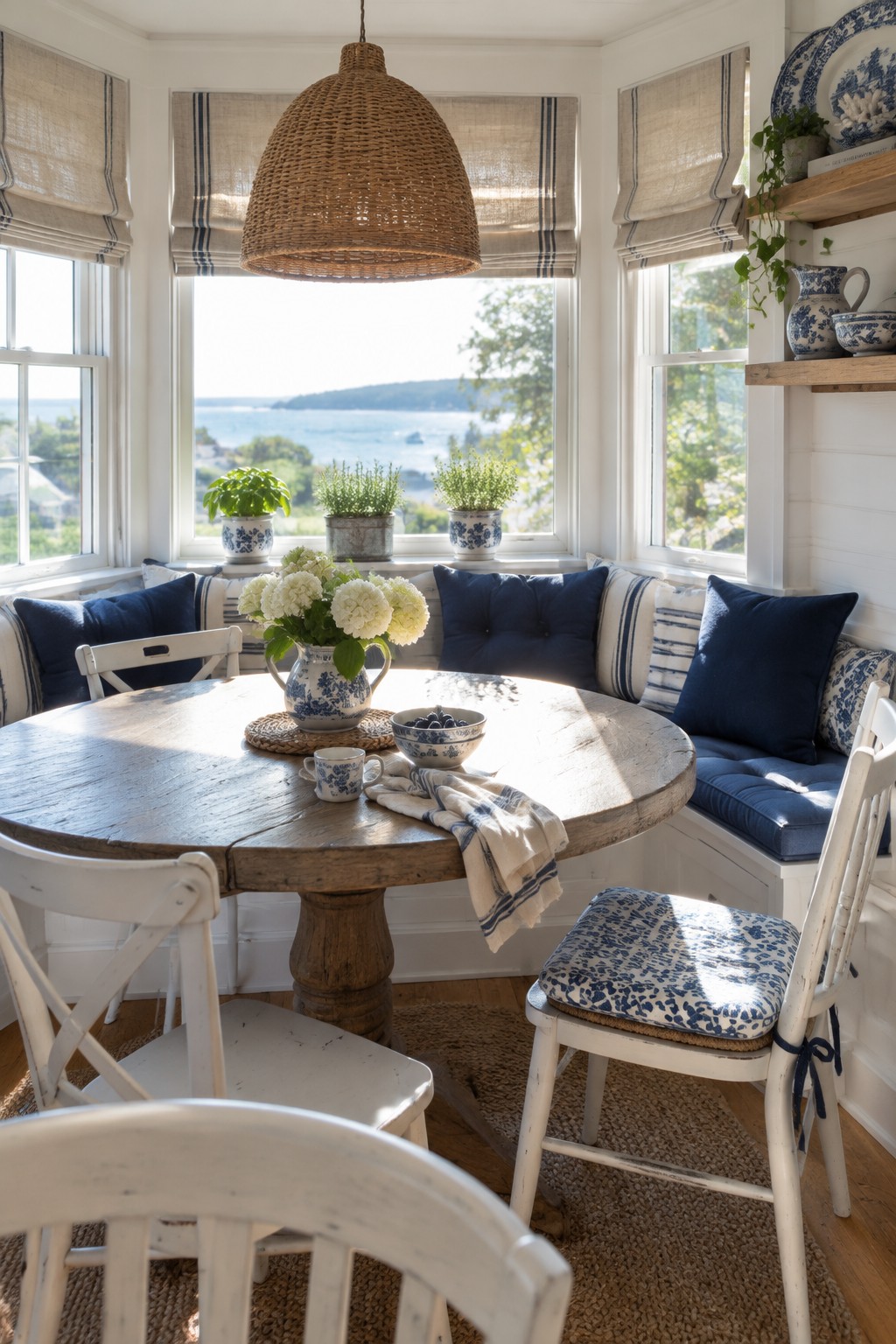
A built-in breakfast nook makes a dining area feel settled and easy to use. Blue cushions and striped pillows bring in coastal color without making the space feel overly themed.
This idea works especially well in a bay window or an unused corner. Keep the seating simple, then use a few blue-and-white accents to tie it into the rest of the home.
Use Navy Built-Ins To Add Coastal Color
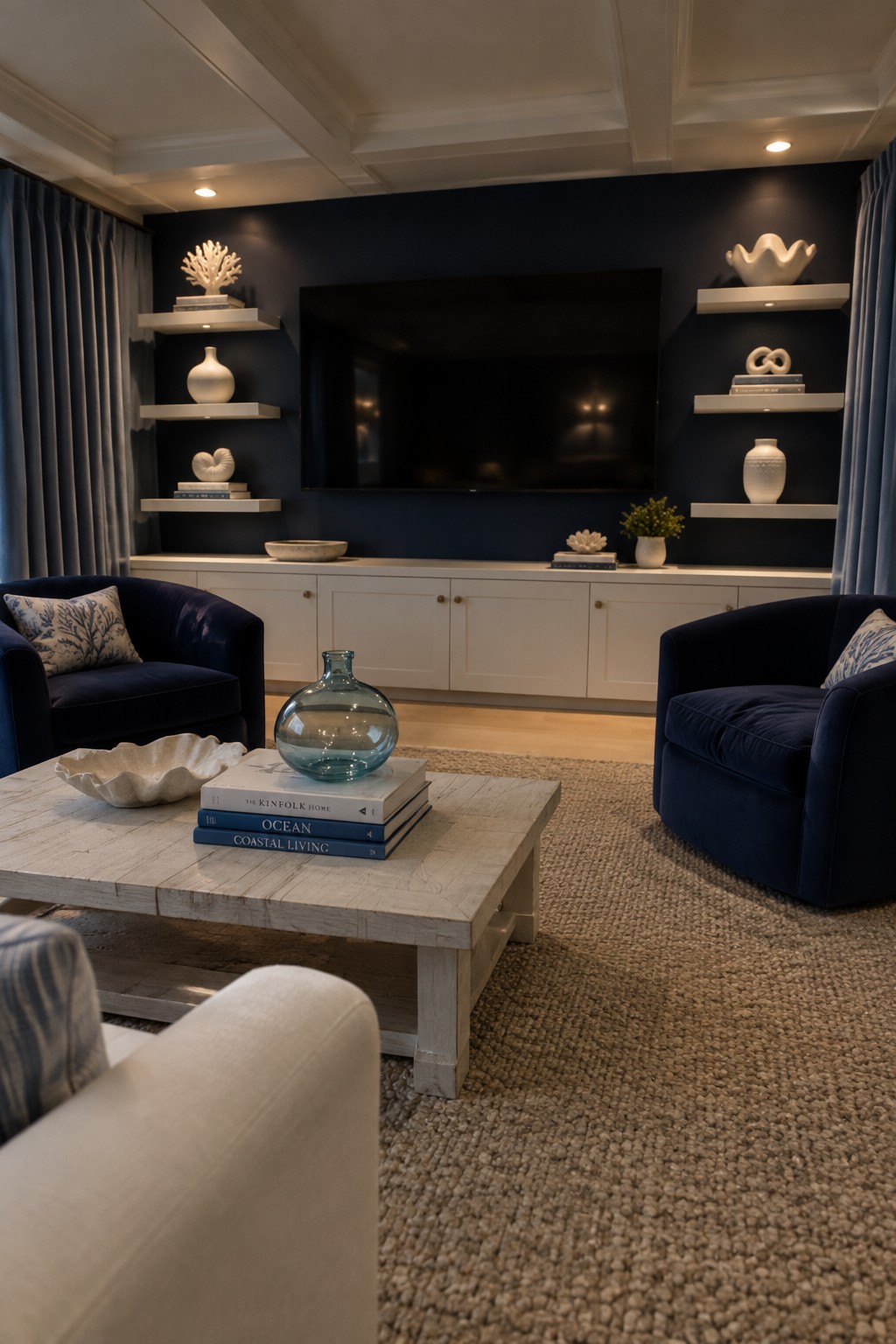
Navy built-ins make a useful feature wall, especially in a living room where storage and display space are needed. Here, the dark cabinetry and shelves bring in coastal color without relying on a busy pattern.
For a similar look, paint the built-ins a deep blue and keep the objects on display fairly simple. White cabinetry below gives the wall some contrast, while a few blue-and-white accents can tie it into the rest of the room.
Use Blue Seating To Set A Coastal Color Scheme
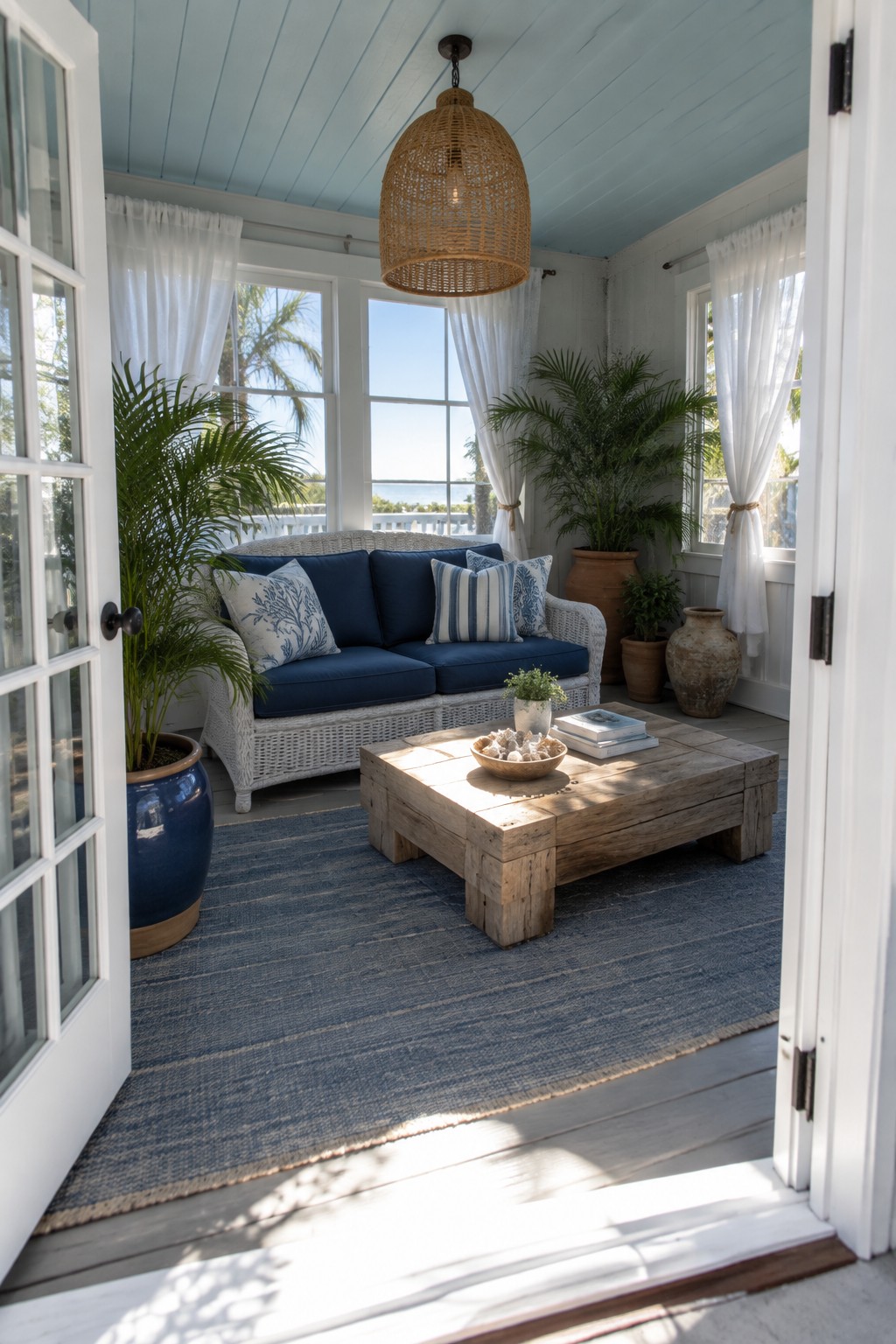
Blue upholstery gives a bright sitting room a clear coastal look without relying on lots of small decorations. Here, a deep blue sofa stands out against its white wicker frame, while patterned cushions bring in a little extra blue and white.
This idea works well in a sunroom or casual living room. Keep the larger pieces simple, then use a few patterned pillows to tie the colors together. A rug in a related blue can help the seating feel settled without adding another busy pattern.
Use Blue Trim To Give A Hallway Coastal Character
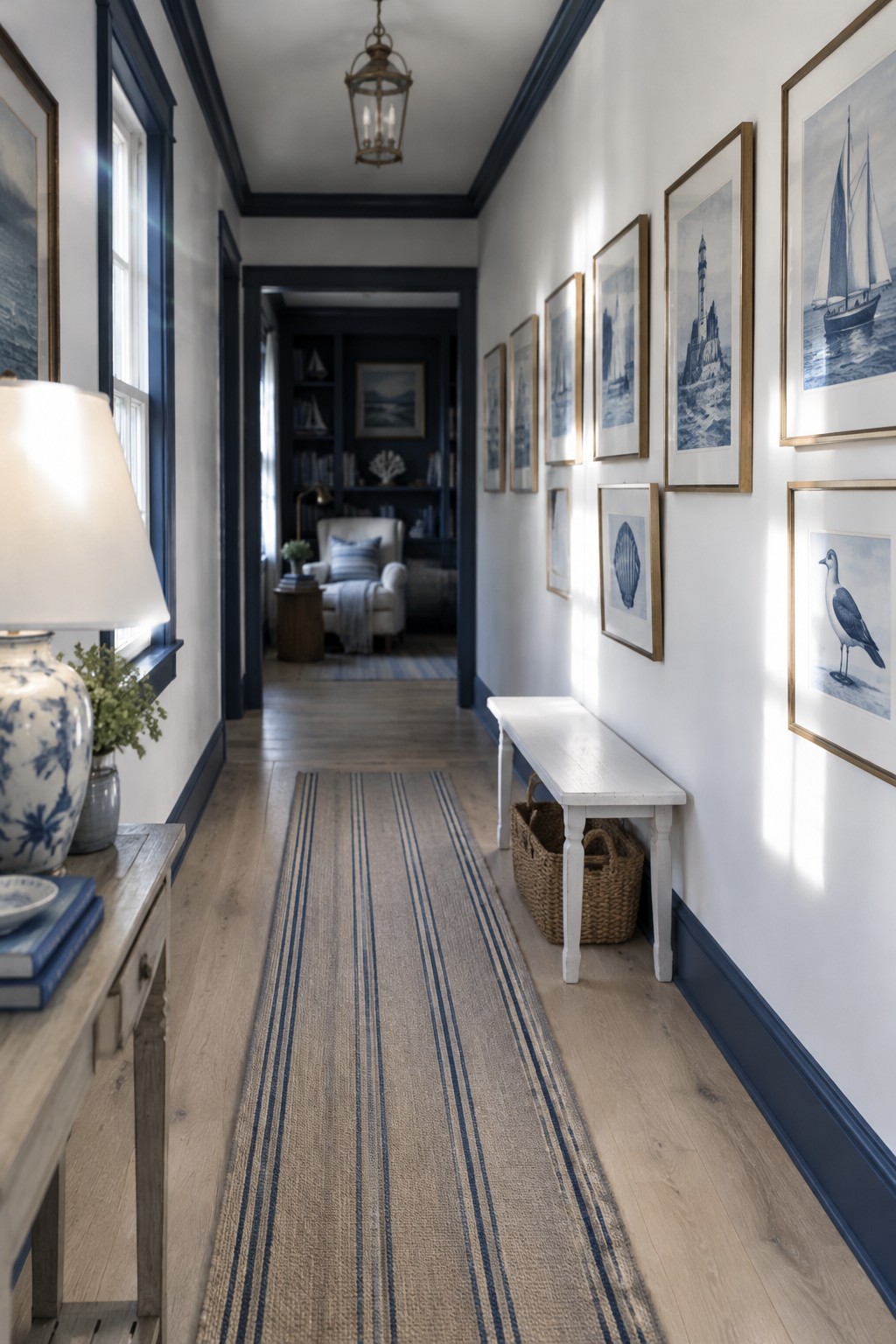
Blue trim gives a narrow hallway a clear sense of style without taking up floor space. Here, dark blue doorways and baseboards set off the white walls, while the coastal prints carry the same colors along the wall.
This approach works well in an entry or long passage where furniture needs to stay simple. Use one shade of blue on the trim, then repeat it in a runner or a few framed prints; too many different blues can make a small hall feel busy.
Use Blue-and-White Tile In A Laundry Room

Blue-and-white patterned tile can make a laundry room feel considered rather than purely functional. Here, the wall tile gives the room its coastal character, while the dark blue cabinetry keeps the pattern from taking over.
This idea works well in a small utility room where one tiled wall can make a clear statement. Keep nearby finishes simple, and choose a pattern you’ll be happy to see every day.
Use Blue Storage Boxes To Organize A Closet
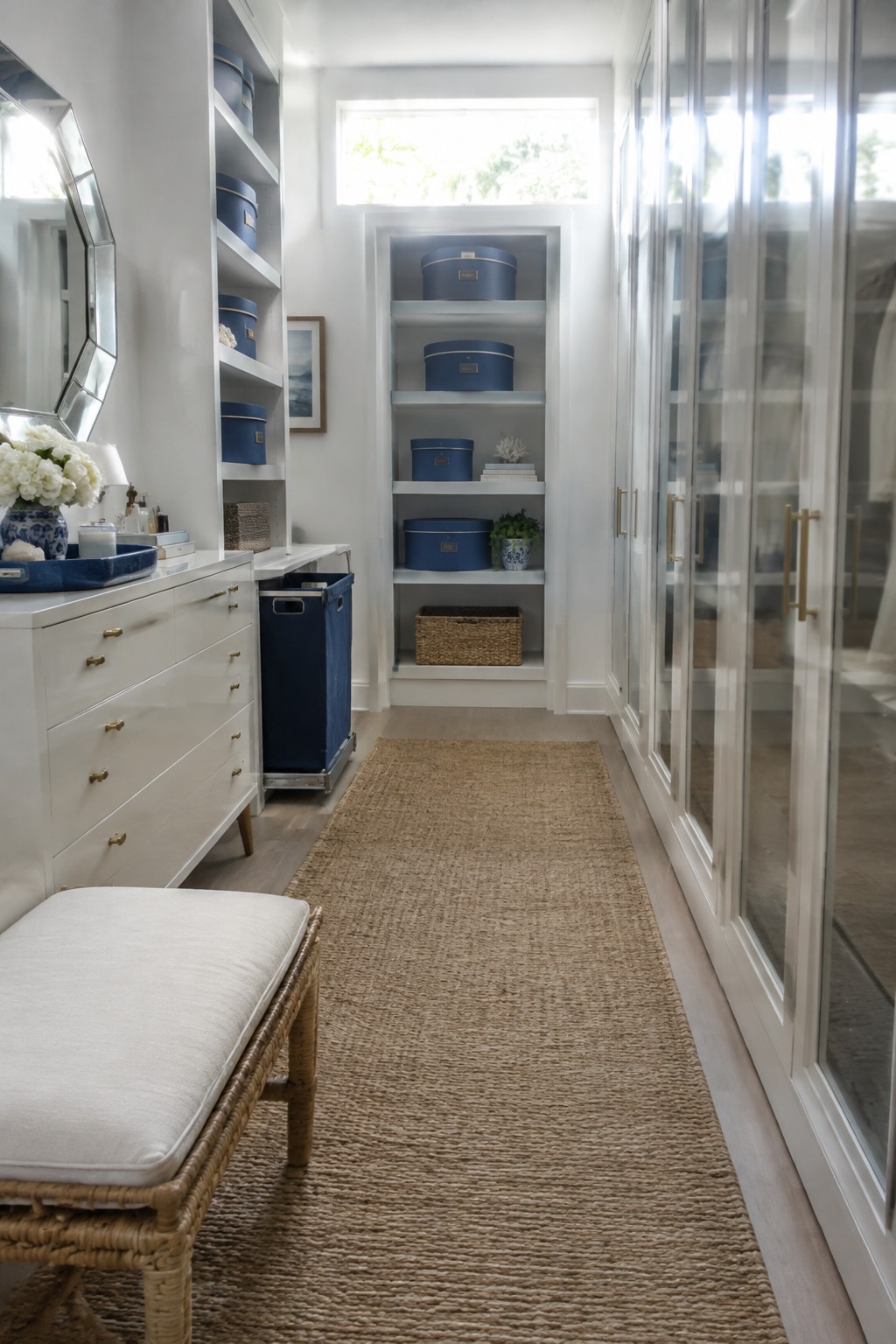
Blue storage boxes make open closet shelves look tidier while bringing in coastal color. Matching boxes are especially useful for keeping everyday items grouped and easy to find.
Use them on shelves or in a narrow closet where loose belongings can quickly look cluttered. Choose a few sizes that fit the shelves, and leave some open space so the storage does not feel crowded.
Use a Blue-and-White Rug to Set the Sitting Area

A blue-and-white rug is an easy way to give a small sitting area a coastal feel without painting every wall or adding lots of pattern. Here, the woven rug brings the room’s blue tones down to floor level and gives the white chaise a clear place to sit.
This approach works well in an attic nook or other compact room where a large rug can help define the seating spot. Choose a pattern with some variation in color, and keep the nearby upholstery fairly simple so the space does not feel busy.
Frequently Asked Questions
Q: How do I keep a blue-and-white room from feeling too cold?
A: Add warm wood, woven baskets, or natural-fiber rugs to soften the crisp colors. Even a few small touches can make the room feel relaxed and welcoming.
Q: Can I mix different shades of blue?
A: Yes. Pair a deep navy with softer blues, then use white to give the eye a place to rest. The mix feels more collected than matching every shade exactly.
Q: What’s an easy way to bring in a coastal feel without using seashells everywhere?
A: Try striped pillows, a blue-and-white patterned lamp, or artwork inspired by the water. A few thoughtful details go further than filling every surface with beach-themed decor.
Q: Will blue-and-white decor work in a small room?
A: Absolutely. Keep larger pieces light, then use navy or patterned accents in smaller doses. White walls and curtains can help the space feel open.
