

Coastal homes often get their first impression from the balance between the main siding color and the trim around windows, doors, and roof edges.
I find that a soft blue or sandy neutral can feel very different once it meets a crisp white, deep navy, or weathered gray trim.
The right pairing should suit the home’s siding, roof, and architectural details, rather than rely on color alone.
I’d test a few shades in changing daylight, since sun and sea-facing light can shift how paint reads across the facade.
These combinations offer useful starting points to adapt to your home’s materials, setting, and character.
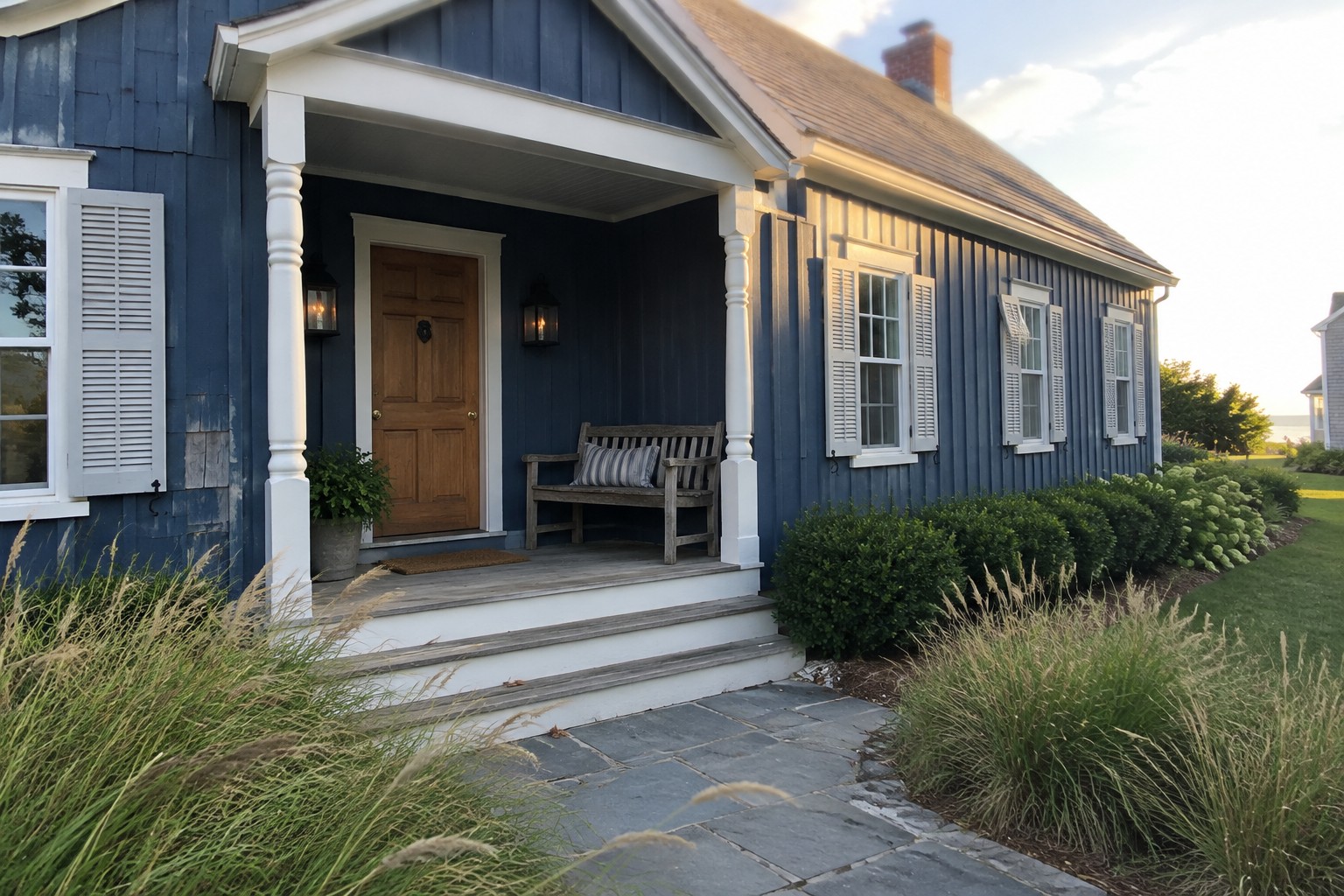
Use White Trim to Highlight a Coastal Blue Exterior

White trim gives blue siding a crisp, classic look without making the color feel too bold. Here, the white porch details and window trim pick out the home’s lines and give the entry a clear focal point.
This approach suits coastal cottages and traditional homes, especially when you want a blue exterior that still feels familiar. Choose a warm white if the siding leans gray or muted, and use it consistently on the porch and windows.
Use Soft Coastal Siding for a Welcoming Exterior

Soft blue-green siding gives a coastal home a relaxed look without relying on bright beach colors. Dark window and door trim adds clear contrast, while the pale siding keeps the facade feeling light.
This approach suits cottages and newer homes alike. Try a muted blue-green or sea-glass shade, then sample it in different daylight before painting the whole exterior, since these colors can shift between blue and green.
Use Dark Trim to Define a Coastal Exterior
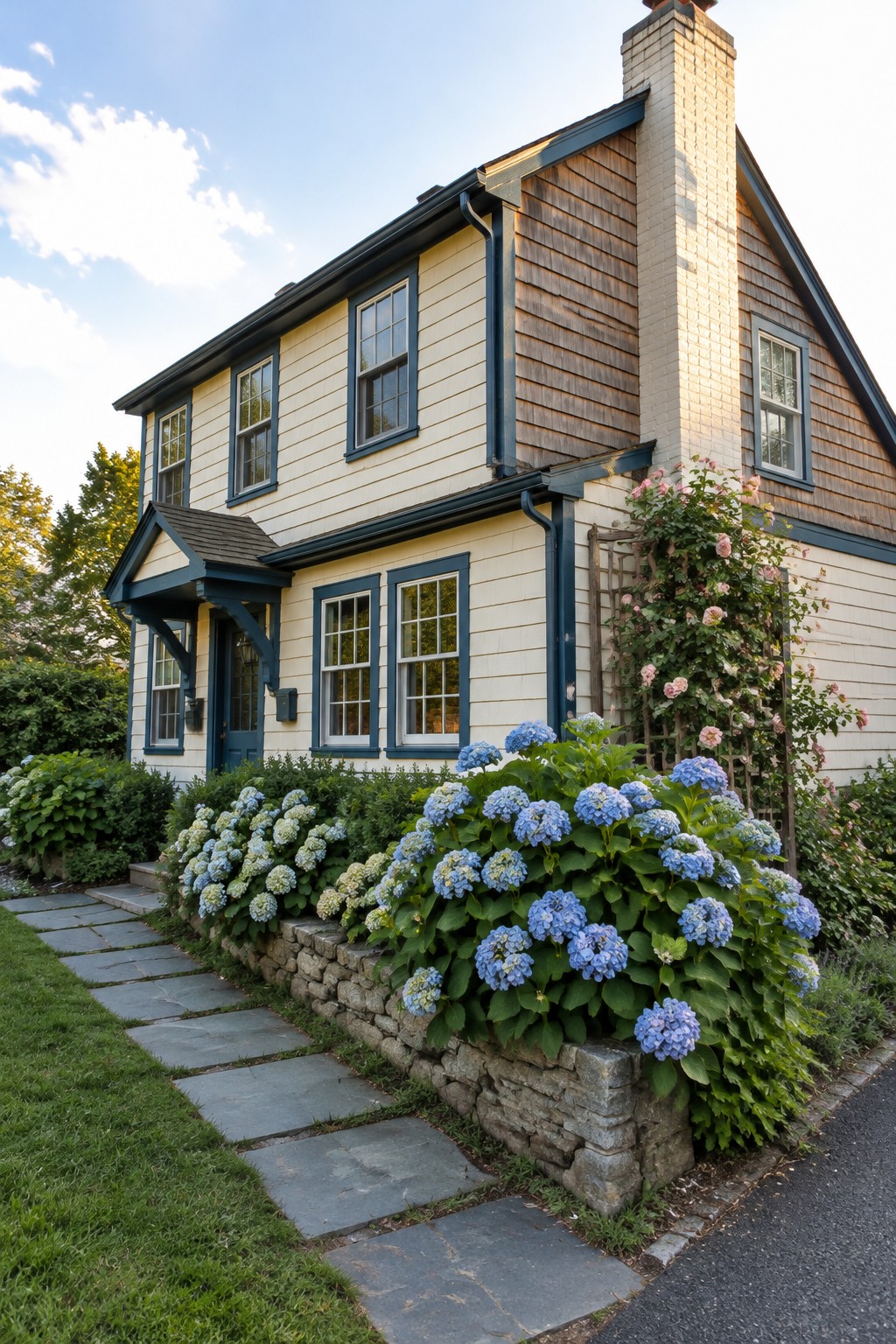
Deep blue trim gives this light coastal facade a clear outline without making the house feel too formal. It works especially well on a home with simple siding and traditional windows, where the darker color can pick out the roof edges and window frames.
For a similar look, use the trim color consistently across the windows, gutters, and porch details. Keep the main siding lighter so the contrast reads clearly, and test paint samples in different daylight before committing.
Use Teal Trim To Give A Coastal Entry Character
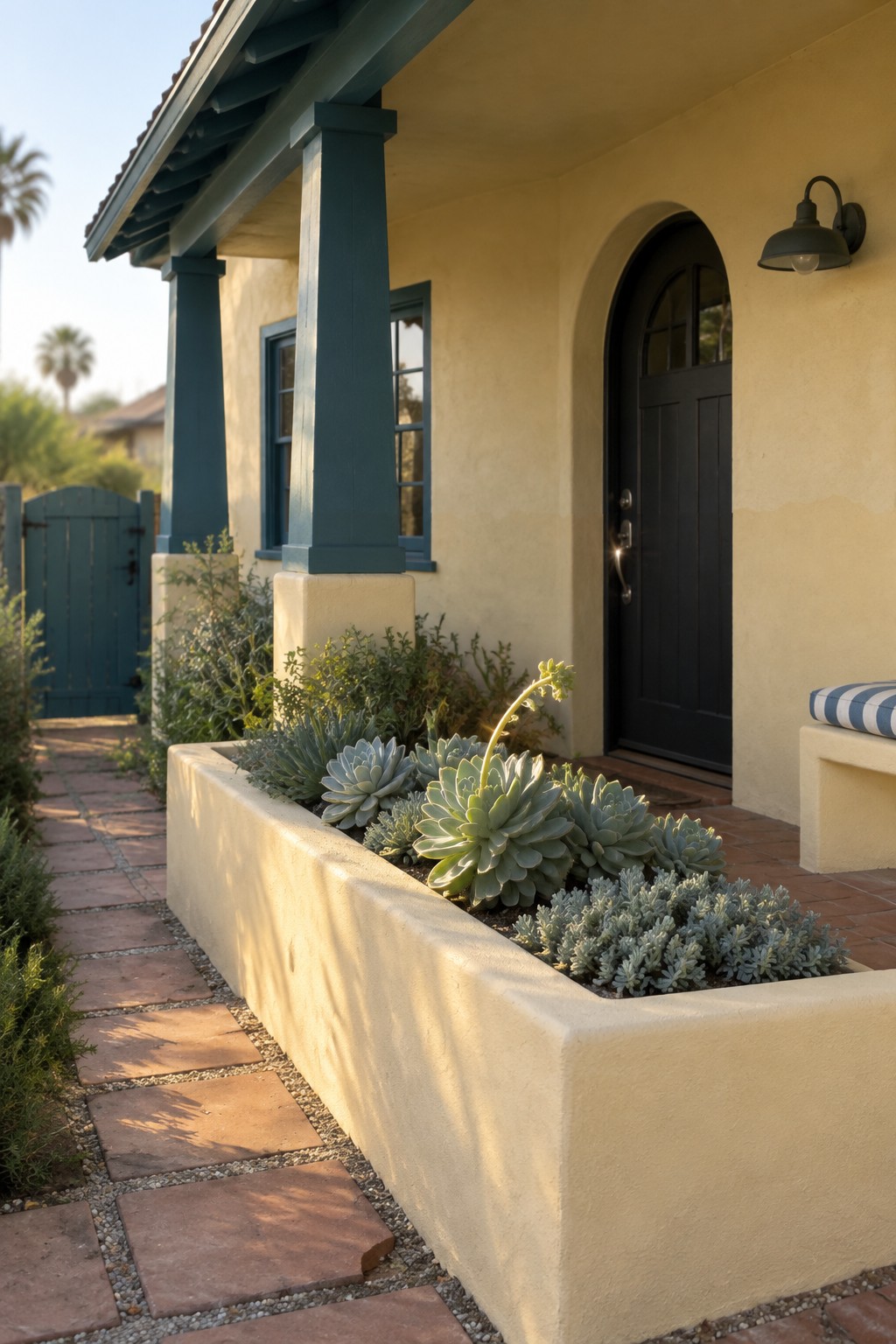
Teal-painted porch posts and window trim bring a clear coastal feel to a warm stucco exterior. The color gives the entry definition without taking over the soft, sandy wall color.
This approach suits homes with simple, traditional details. Use the same teal on a few exterior features for a connected look, and test it in different light before painting, since deep blue-green shades can shift noticeably.
Use Weathered Gray Siding for a Coastal Exterior

Weathered gray siding gives a coastal home a relaxed, lived-in look without relying on bright beach colors. White porch trim brings out the lines of the facade and keeps the muted siding from looking too dark.
This approach suits cottage-style homes, especially when you want a softer exterior palette. Try a warm gray rather than a cool one, and test it beside the trim outdoors before painting, since gray can shift noticeably in different light.
Choose Soft Pink Stucco for a Coastal Exterior
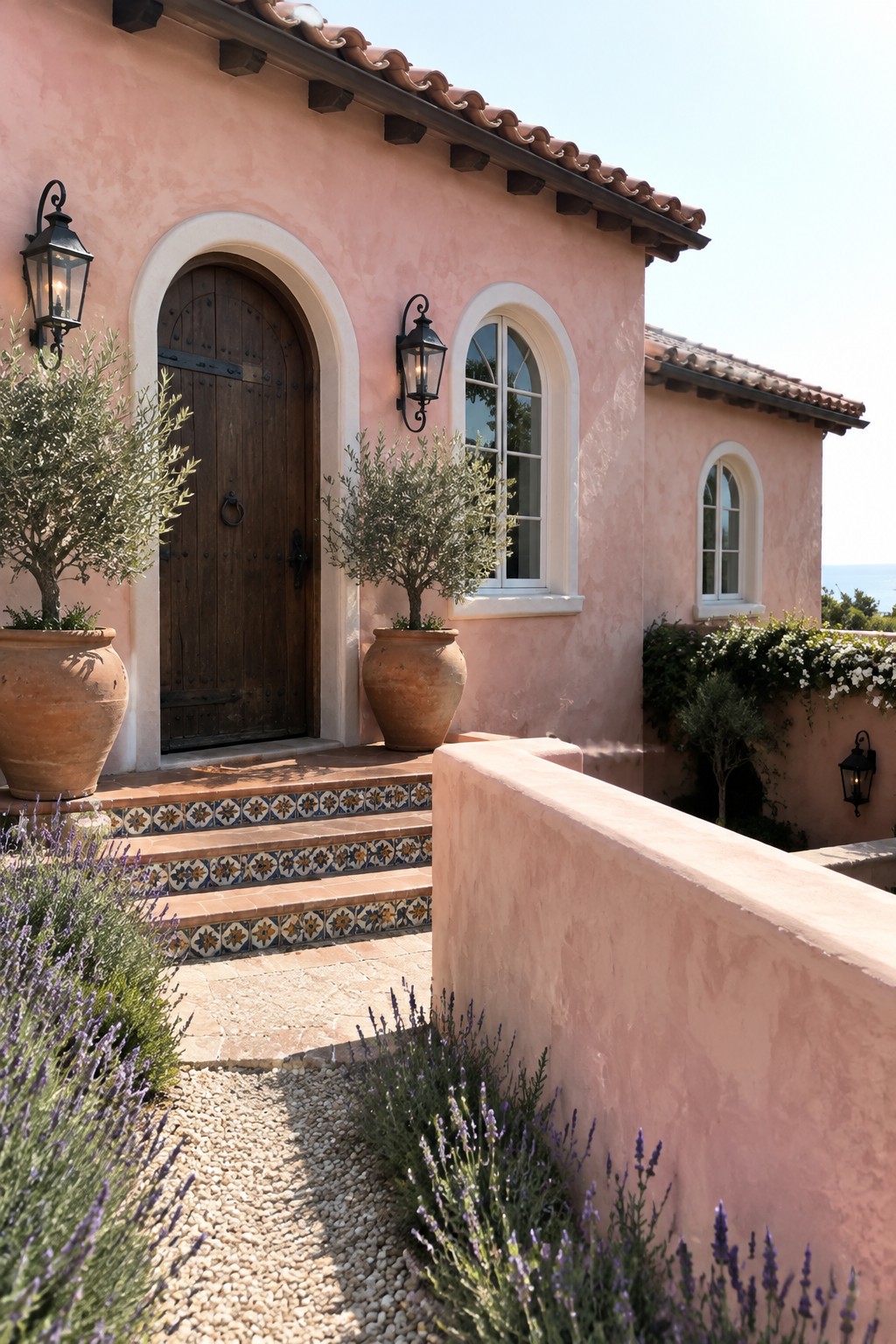
A pale pink stucco exterior gives a coastal home a softer look than bright white, while still feeling light and relaxed. Cream-colored arches around the entry and windows add a clear contrast without making the facade feel stark.
This color works well on Mediterranean-style homes, especially with terracotta roof tiles. Keep the trim close to ivory or warm white so it stands out gently against the stucco.
Try a Pale Blue Exterior With Dark Shutters
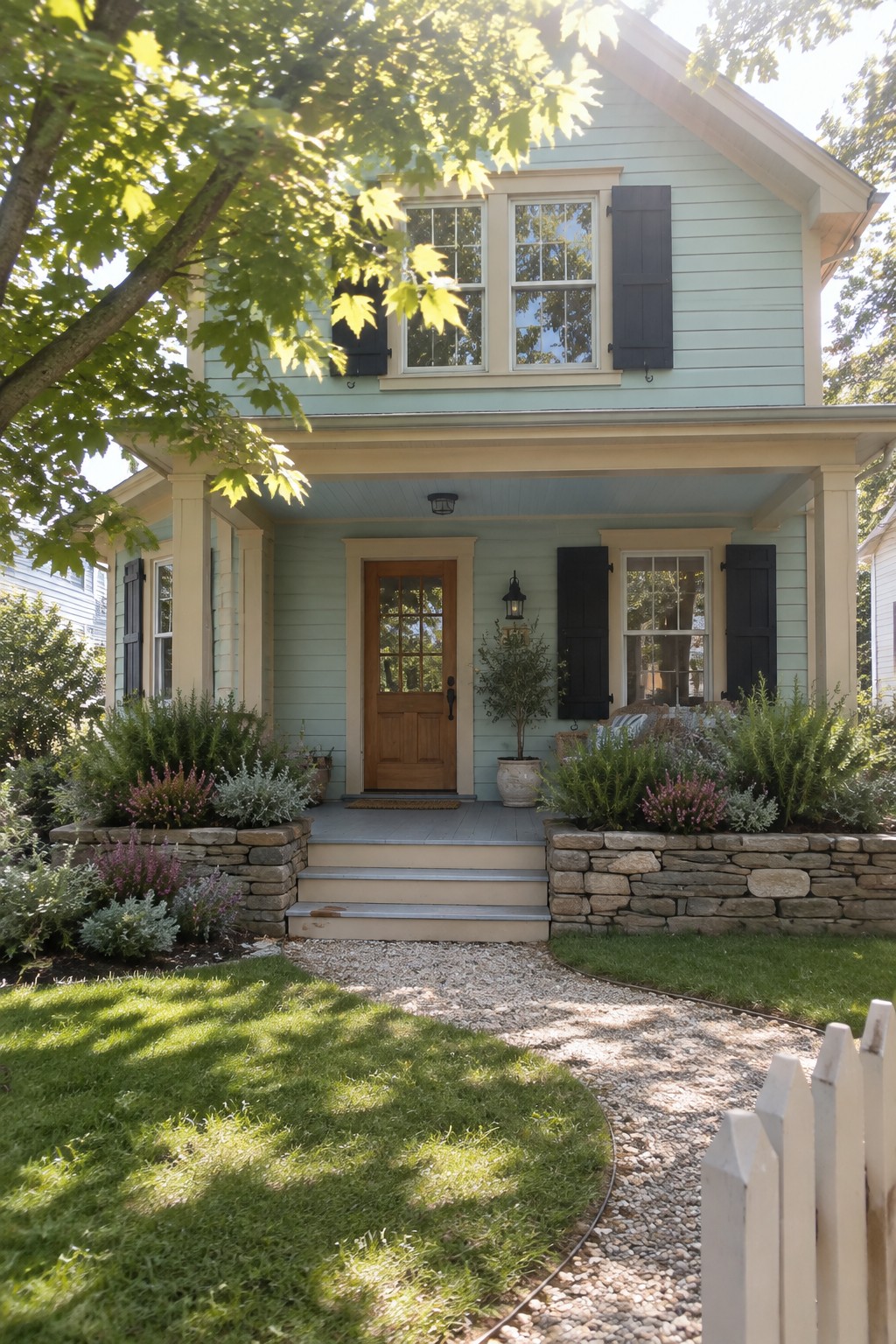
A pale blue exterior feels relaxed and coastal, while dark shutters give the windows a clear outline. The contrast adds character without making the house feel overly formal.
This color scheme suits a traditional home with simple siding and balanced windows. Use warm white for the porch posts and trim to keep the darker accents from taking over.
Use Dark Trim to Define a Covered Patio
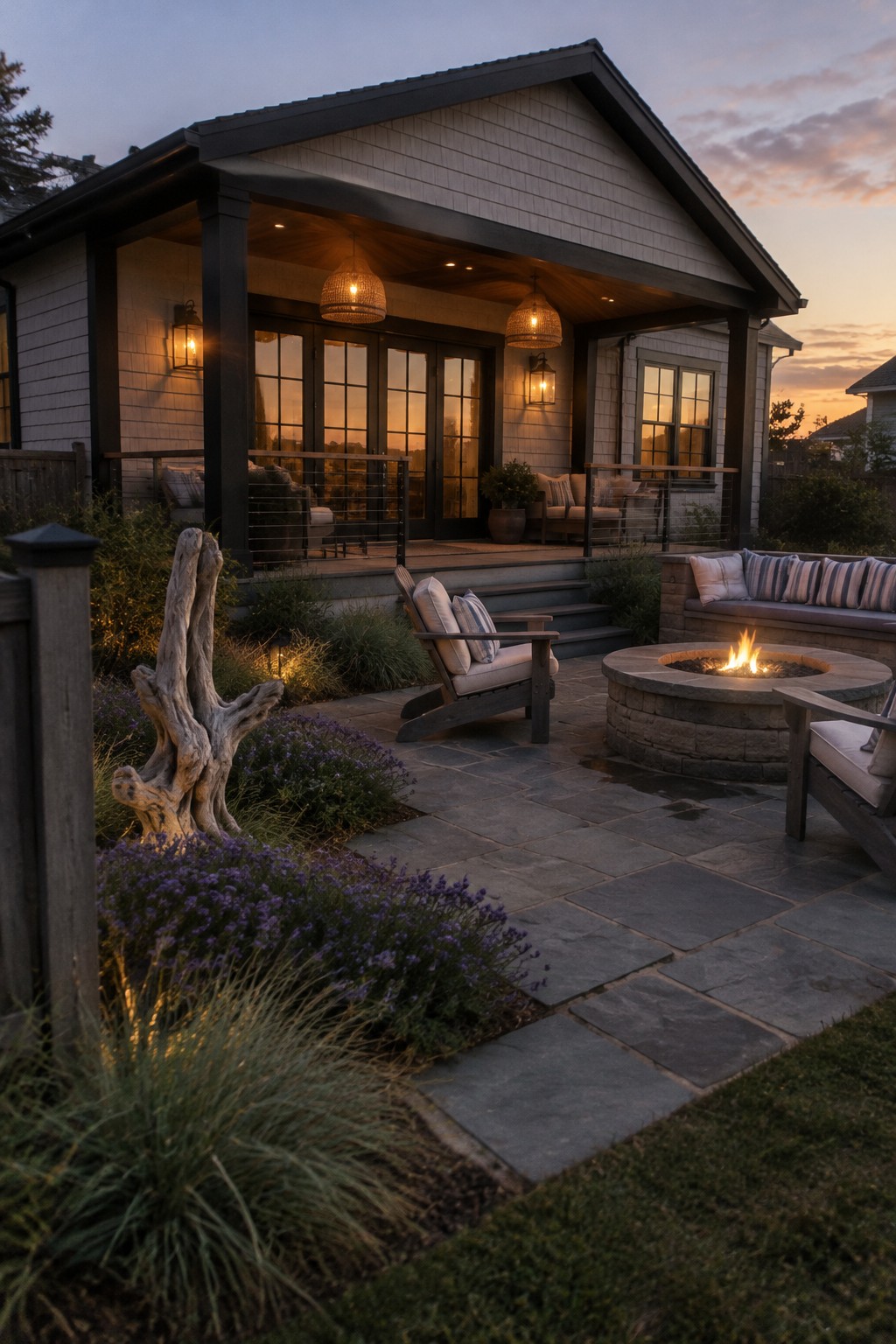
A dark frame around a covered patio can give the space a clear shape and make the lighter siding stand out. Here, the dark posts and roof edge carry through to the railing, so the patio feels connected to the house rather than tacked on.
This approach works well on coastal homes with pale shingles or siding. Repeat the dark color on a few exterior details, but keep it to trim and structural elements so the facade does not feel too heavy.
Use a Recessed Entry to Add Coastal Character
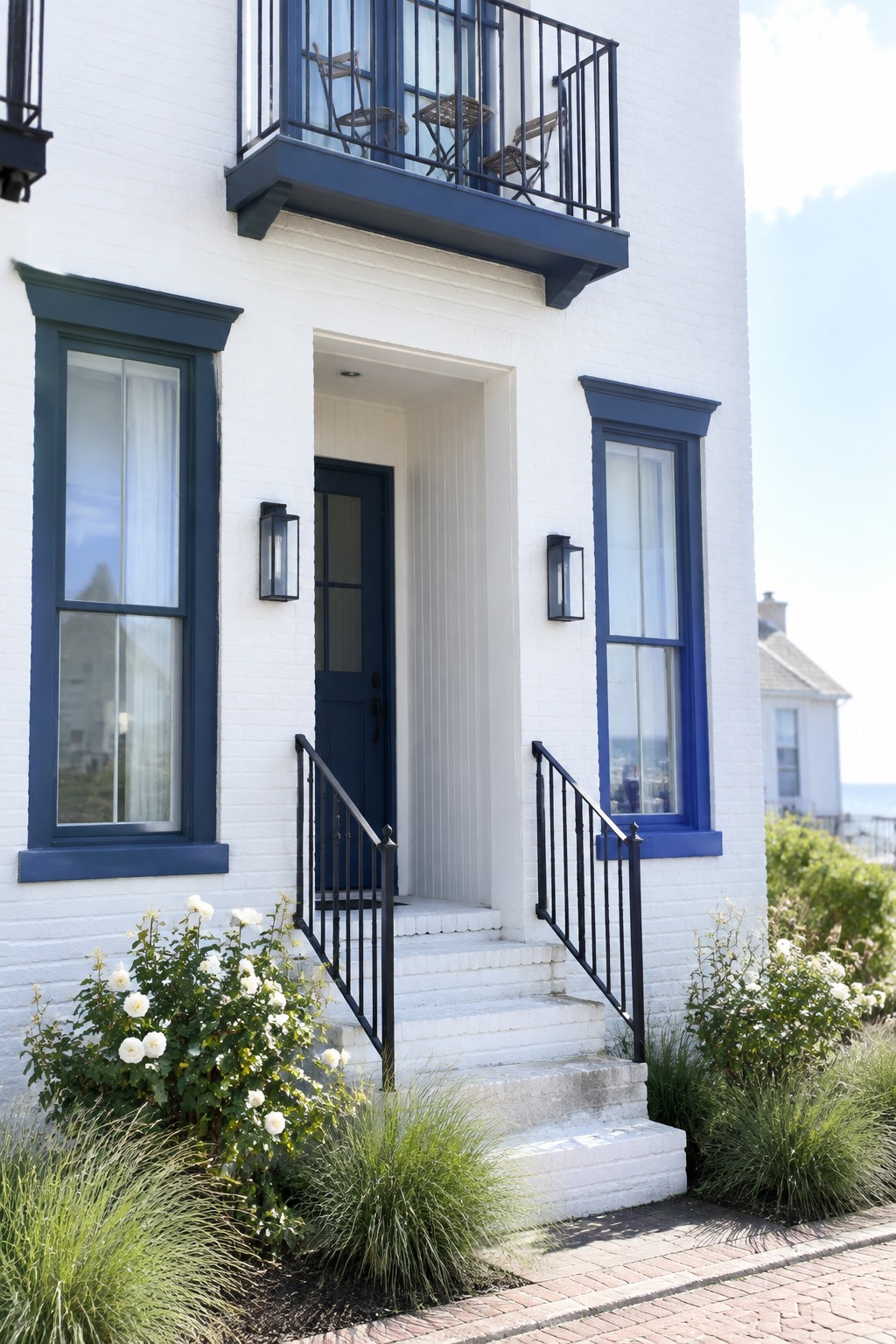
A recessed front door gives a coastal exterior a little more shape while keeping the facade simple. Here, the white brick and dark blue door and window trim make the entry easy to spot without adding extra decoration.
This approach suits narrow homes where the front door sits close to the street. Paint the door and nearby trim in the same deep color, and keep the surrounding walls light so the entry remains clear and welcoming.
Use Green Siding for a Softer Coastal Look

Muted green siding gives this coastal home a quieter alternative to the usual blue or white exterior. White window trim keeps the color crisp, while the vertical boards add a simple, traditional feel.
This shade works well on cottages and homes near the water, especially when you want color without a bold look. Test a sample in different light before painting, since green can read more gray or more yellow depending on its surroundings.
Use Dark Blue Siding for a Modern Coastal Exterior

Deep blue siding gives this home a strong coastal look without relying on the usual pale shades. The warm wood at the entry and beneath the roof adds contrast, while the simple facade keeps the color from feeling too busy.
This approach works well on modern homes with clean lines and generous windows. If you use a dark exterior color, consider where the facade gets shade and choose a durable finish that won’t show wear too quickly.
Use Sage Green Trim on a Coral Coastal Exterior

Coral siding gives a coastal home a cheerful look, while sage green trim keeps the color scheme easy on the eyes. The contrast is clear without feeling too sharp, especially on a traditional facade with simple window shapes.
Use the green on shutters and doors to tie the exterior together. It works well on cottages and older homes, though testing the colors in different light is worthwhile since coral can look much brighter in direct sun.
Use a Deep Green Door on a White Coastal Exterior
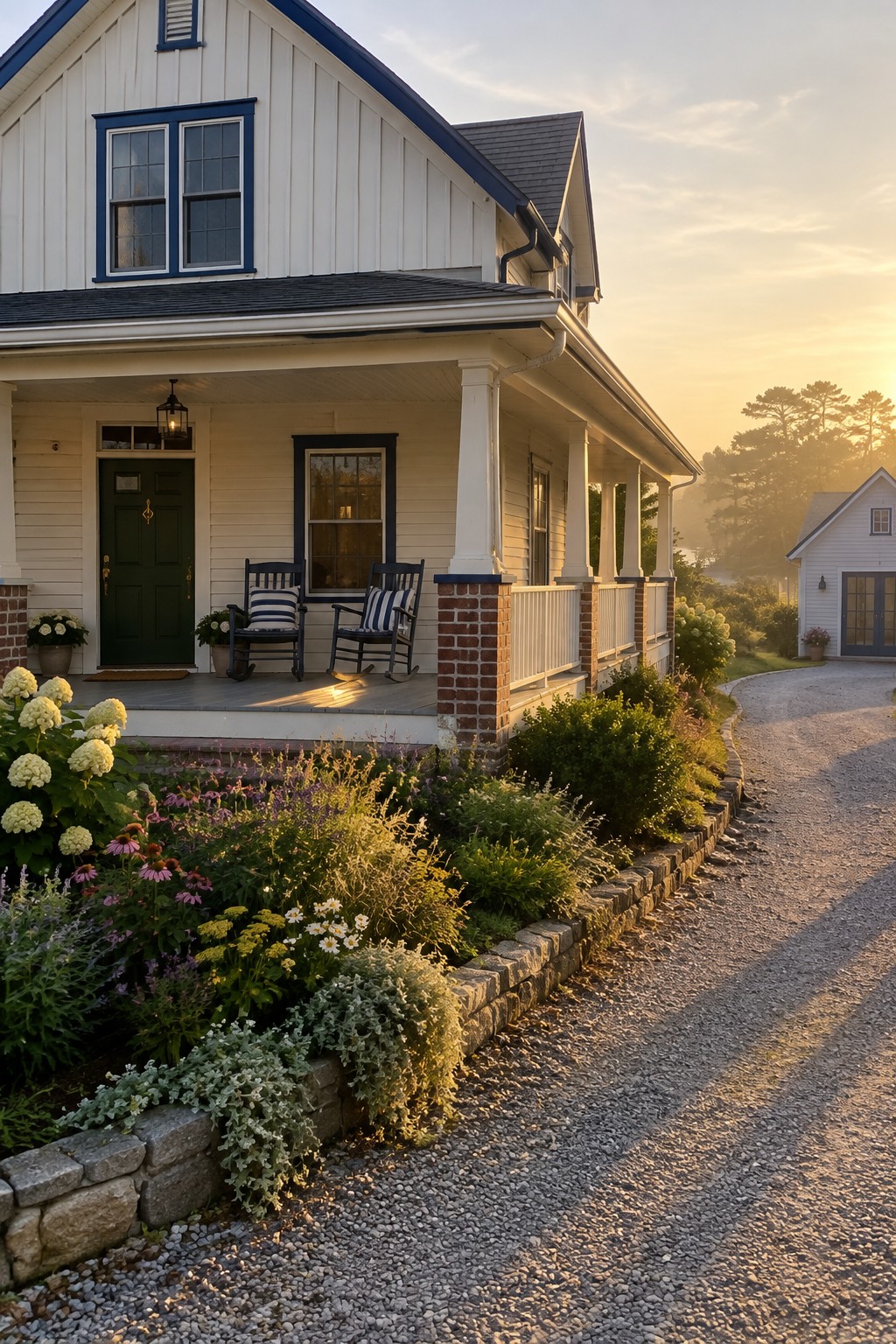
A deep green front door gives a white coastal home a little color without changing the calm look of the siding. It also makes the entry easy to spot, especially when the trim and porch details stay simple.
This works well on traditional homes with a covered porch. Try the color on the door first, then repeat it on shutters or small accents only if the facade needs more contrast. The image shows a dark green door set against white siding and dark blue trim.
Make a Covered Patio Work for Outdoor Dining

A covered patio can make outdoor dining comfortable in more than one kind of weather. Here, the roof extends from the house to shade a dining table, while the open sides keep the space connected to the yard.
For a similar setup, place the table where it has room to pull out chairs without blocking the path through the patio. A ceiling fan can help on warm days, and durable furniture is worth choosing for a spot exposed to sea air.
Use Light Siding and White Trim for a Coastal Exterior

Light gray siding and crisp white trim make a coastal exterior feel fresh without relying on bright color. The contrast gives the windows and entry a clear outline, while the muted siding keeps the overall look easy on the eyes.
This approach suits traditional homes with simple siding and well-spaced windows. Choose a soft gray or blue-gray, then use white on the window frames and corner boards; a very cool gray can feel stark, so test a sample in different light first.
Use Yellow Trim to Brighten a Coastal Exterior

Yellow trim gives this simple coastal exterior a clear point of contrast. Against the pale aqua siding, it brings attention to the windows and roof edge without needing extra ornament.
This color idea suits a modern cottage or a small seaside home with clean lines. Use yellow on a few strong architectural details, and test a sample in different light before painting the whole house, since bright yellow can look more intense outdoors.
Use Muted Green Trim on a Light Coastal Exterior

Muted green trim gives a light-sided coastal home a little more character without making the facade feel too stark. Here, the green picks out the porch details and windows, while the pale siding keeps the overall look easy on the eyes.
This approach suits older cottages and homes with plenty of decorative trim. Choose a subdued green rather than a bright one, and test it beside the siding in different light before painting. A darker front door can add contrast, but the trim is the main color accent.
Use Gray Siding for a Modern Coastal Exterior
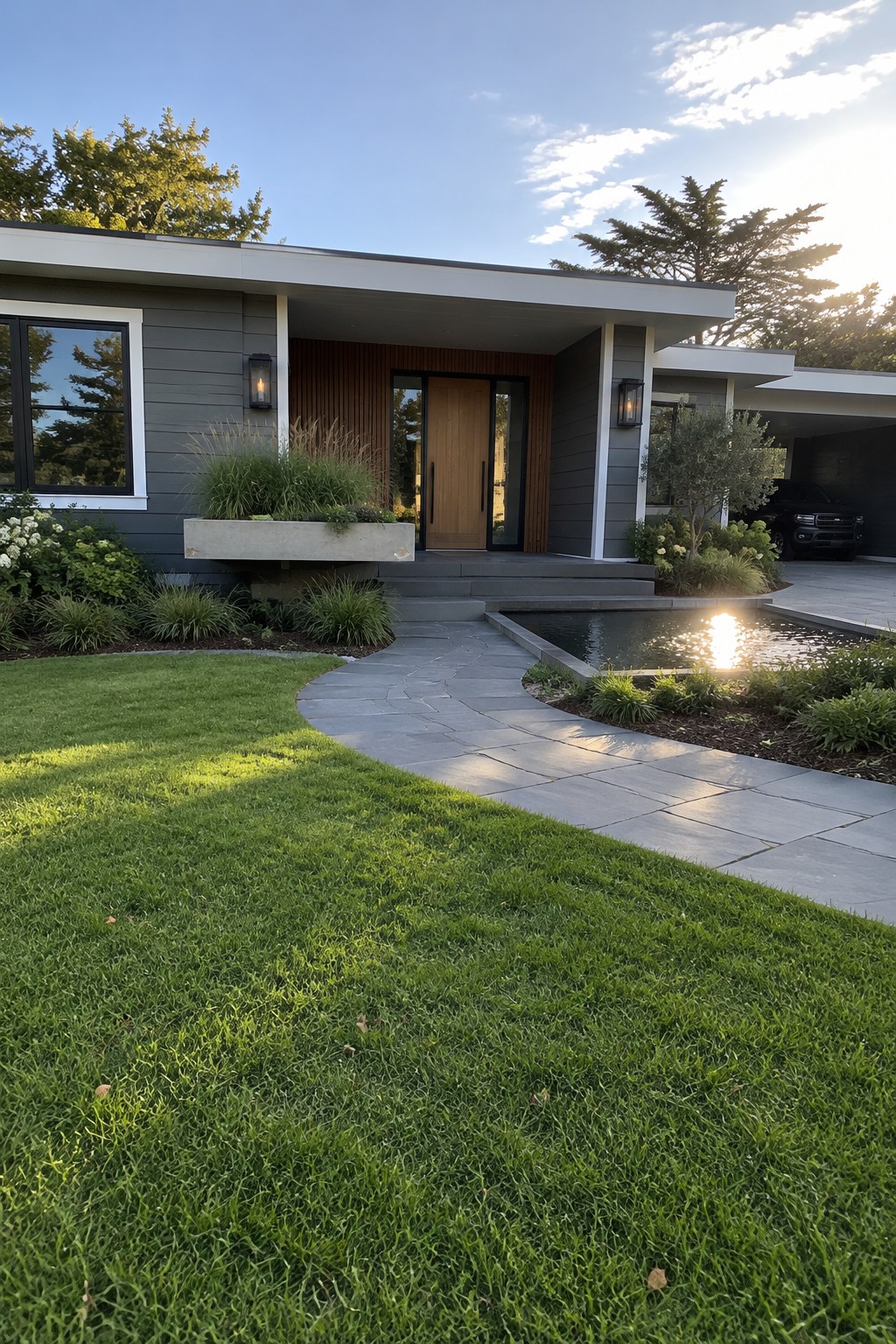
Gray siding gives a modern coastal home a quieter look than the usual bright white, while crisp white trim keeps the facade from feeling too dark. Here, the simple horizontal boards let the wood entry door stand out without adding another strong color.
This approach suits homes with clean lines and a mix of natural materials. Choose a soft, muted gray and test it in different light before painting, since cooler grays can look blue in some settings.
Create a Cozy Seating Area on a Small Patio
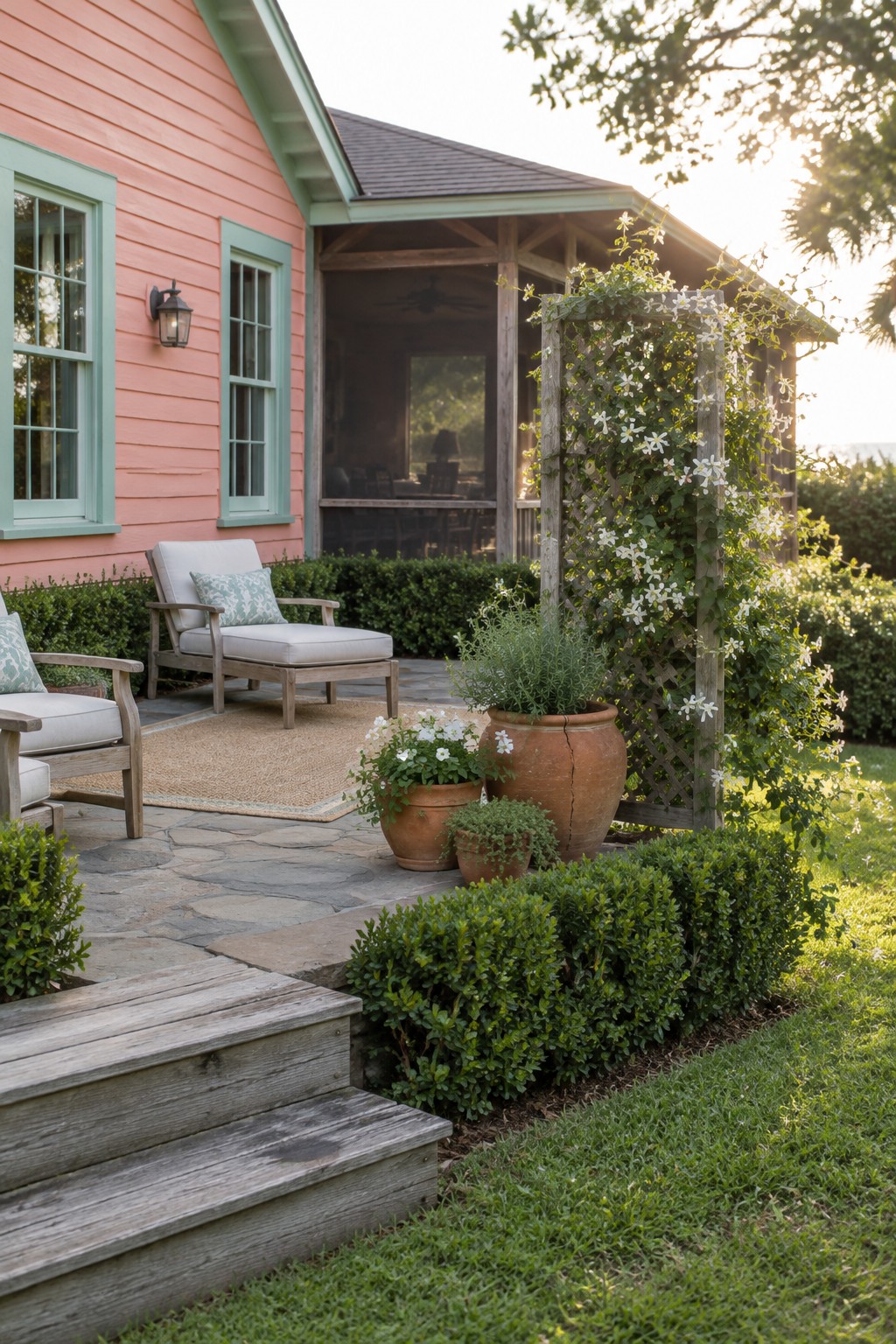
A small patio can feel like a proper outdoor room when the seating is arranged for conversation. Here, two cushioned chairs face inward on a simple rug, making the paved area feel comfortable without needing a large dining set.
Try this setup beside a covered porch or along the house, where chairs can stay fairly protected. Leave enough open space to walk through, and use a rug sized to sit under the front legs of the chairs so the arrangement feels connected.
Use Pale Green Siding for a Soft Coastal Look
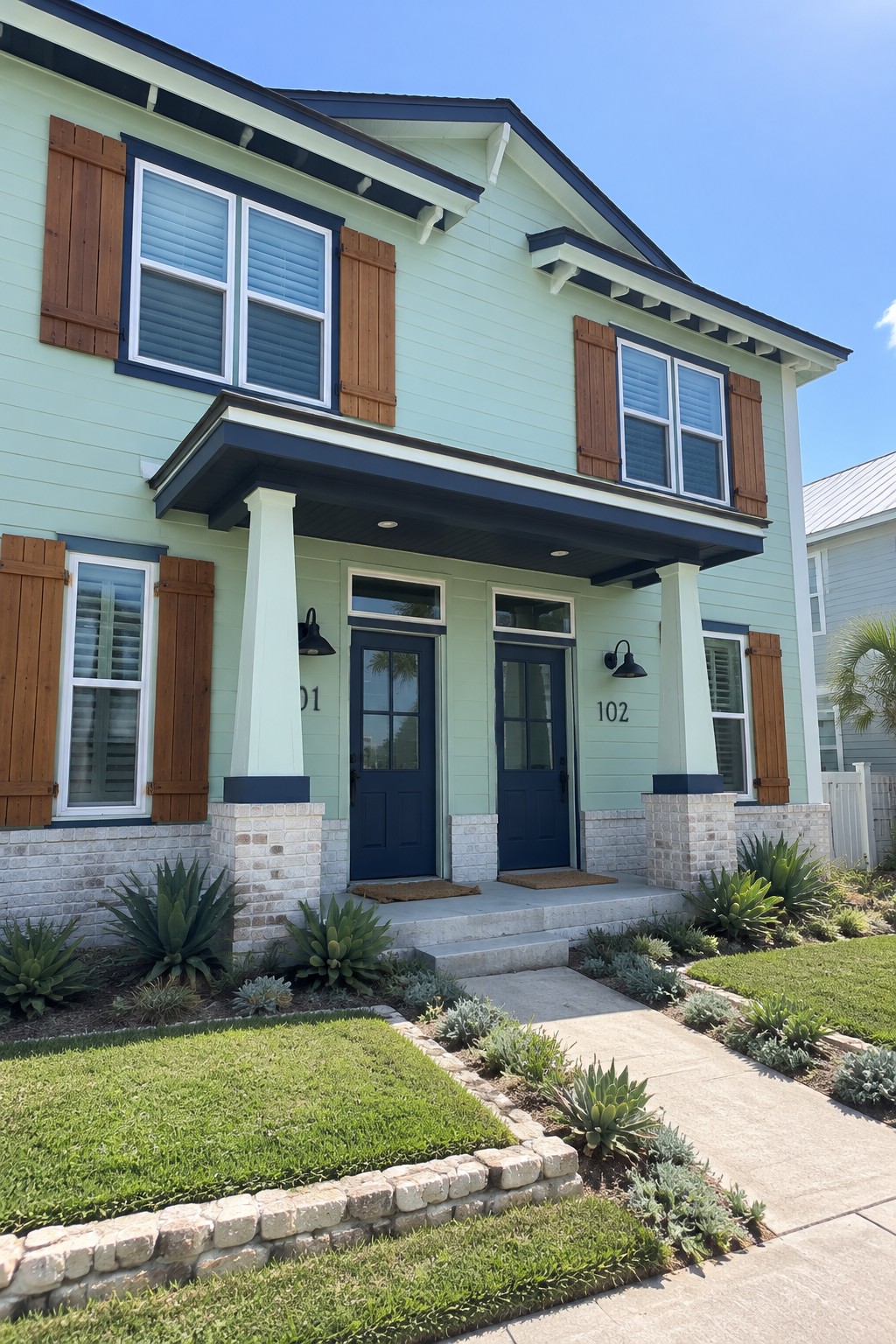
Pale green siding gives a coastal exterior a little more color than white while still feeling calm and easy to live with. Here, dark navy trim and doors set off the light siding, and the wood shutters keep the facade from looking too uniform.
This approach suits cottages and homes with simple siding, especially when you want a coastal feel without a bright blue exterior. Try the green on the main walls and keep trim in a darker, more defined shade. Check paint samples in both sun and shade, since pale greens can shift noticeably.
Use a Flowering Arbor to Mark a Garden Entrance

A flowering arbor gives a garden path a clear entrance and makes the walk to the porch feel more considered. The climbing white flowers bring color around the wooden structure without requiring a large garden bed.
This idea works well beside a patio or at the start of a short path. Choose a sturdy arbor and a climbing plant suited to your climate, and leave enough room for people to pass comfortably as the vine fills in.
Frequently Asked Questions
Q: What trim color works best with a coastal blue exterior?
A: Crisp white trim gives most blues a fresh, classic feel, while warm white softens the contrast. Try a sample beside the siding first, since a white that looks bright in the store may seem stark in full sun.
Q: Can I use dark trim on a beach-style house?
A: Yes. Charcoal or deep navy trim can make pale siding feel sharper and more modern. Keep the rest of the exterior simple so the darker details don’t overwhelm it.
Q: How do I test paint colors before painting the whole house?
A: Paint large sample patches on more than one side of the house, then check them in morning and afternoon light. Coastal light can shift a color more than you’d expect.
Q: Do coastal paint colors have to be blue and white?
A: Not at all. Soft sage, sandy beige, and muted coral can feel just as at home by the water, especially with a clean, contrasting trim color.
