

In a coastal yard, I notice the paths first because they shape how the whole space feels and where people naturally walk.
A clear route from the house to a gate, garden bed, or seating area makes the landscape easier to use, while plants along the edges soften the hard lines.
Native species can also make a yard feel rooted in its setting, and they often cope better with local weather and soil once established.
I’d pay close attention to how walkway width, surface, and planting height work together, especially in narrow side yards or exposed spots.
Some details may be worth adapting to your own property, where a simple path and well-chosen plants can bring order without making the garden feel too formal.
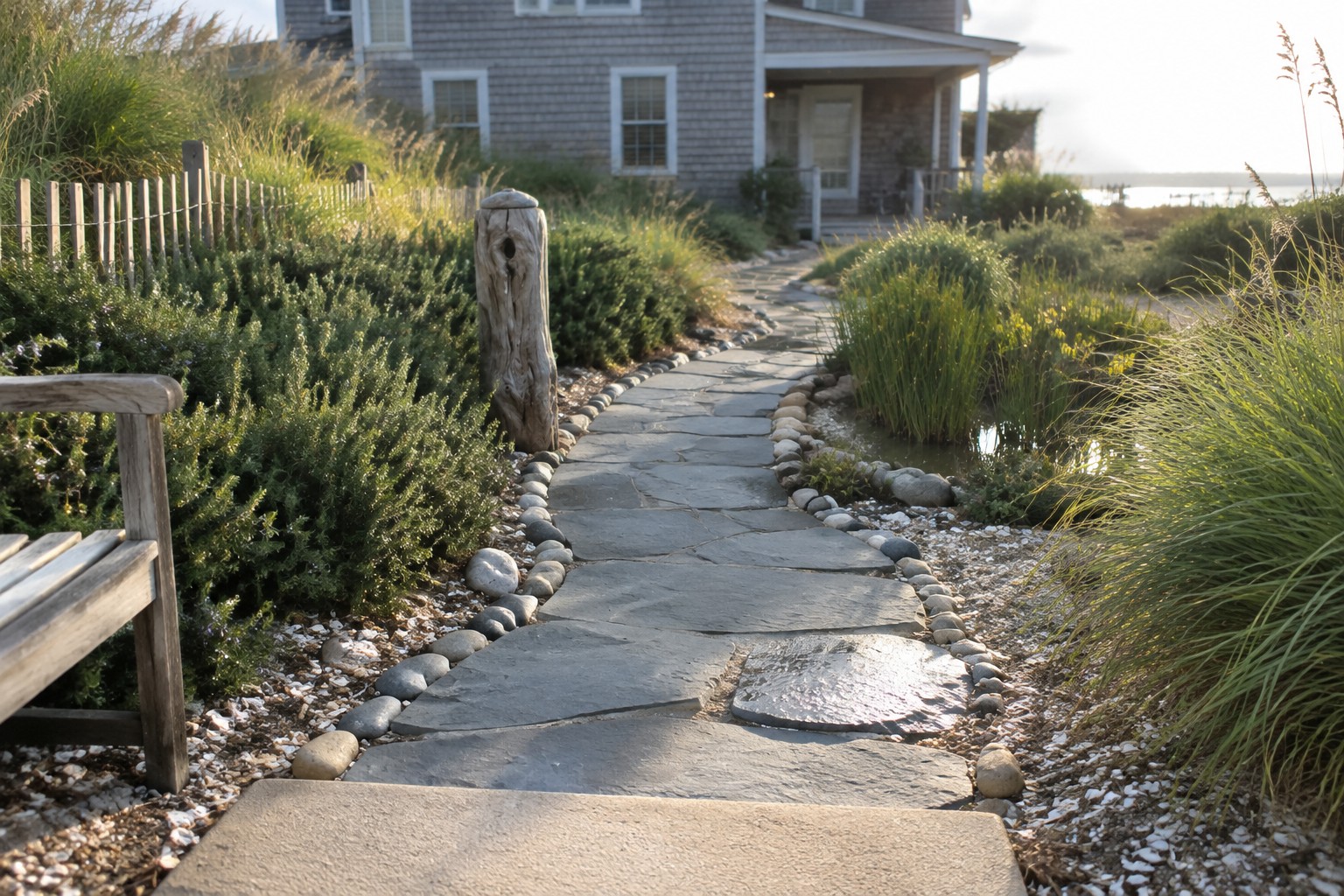
Use Broad Stepping Stones for a Coastal Garden Path

Large, irregular stepping stones make a garden path easy to follow without making it feel too formal. The pale gravel between the stones and the rounded edging help define the route while keeping the planting close to it.
This approach works well in coastal gardens and other informal yards. Set the stones firmly and keep their spacing comfortable for walking, especially where the path curves or slopes.
Define a Coastal Garden With a Gravel Path
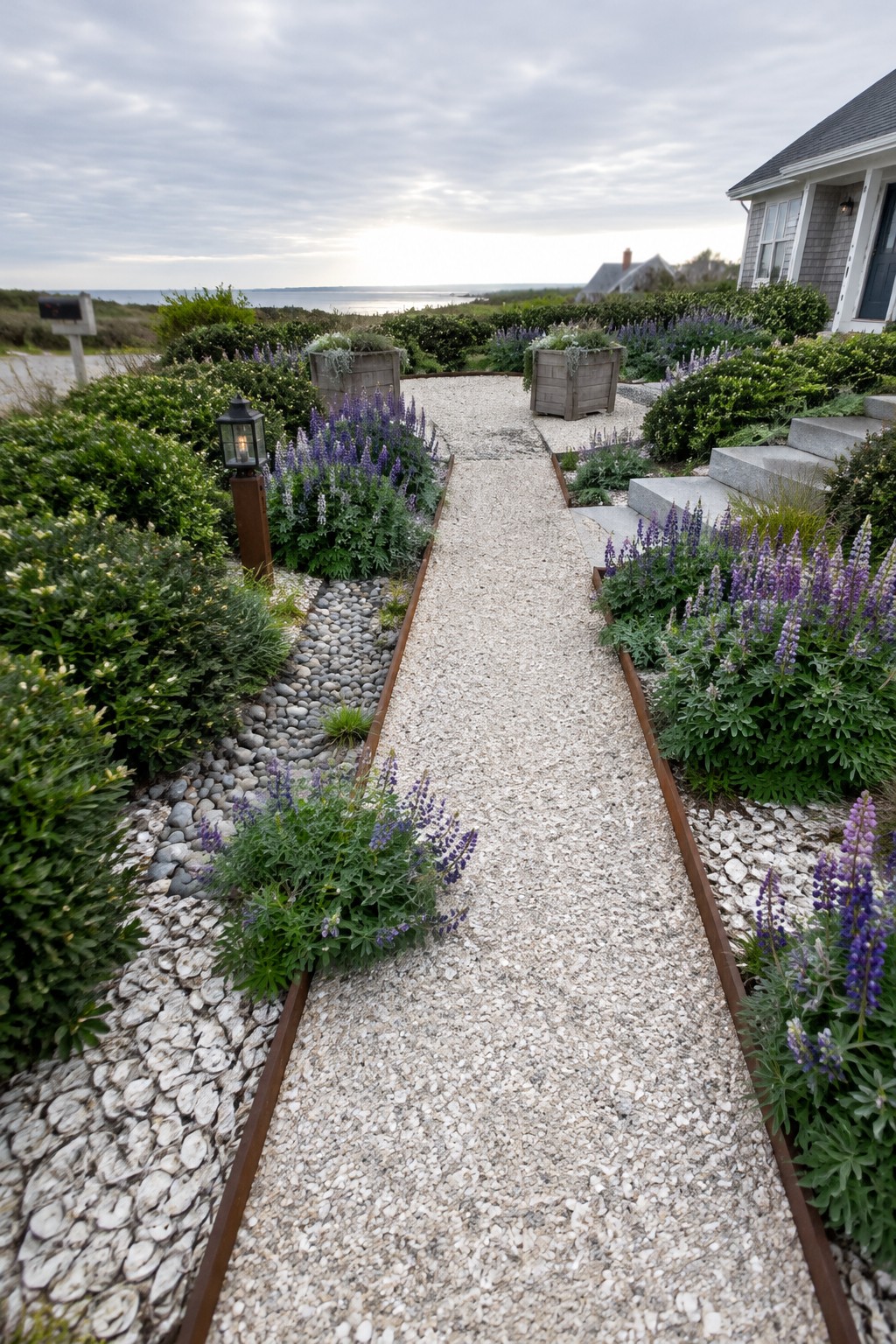
A gravel path gives a coastal garden a clear route through the planting without making it feel too formal. Steel edging keeps the walkway tidy, while flowering plants along the sides bring color close to the path.
For a similar look, choose compact gravel that drains well and use sturdy edging to keep it in place. This approach suits sandy coastal yards, but leave enough room for comfortable walking and avoid plants that spread quickly into the path.
Let a Stepping-Stone Path Guide the Garden

A stone path gives a garden a clear route without covering it in hard paving. The spaces between the stones let gravel and planting remain part of the design, which suits a relaxed coastal garden.
For a similar path, choose stones with a comfortable walking surface and leave enough room between them for an easy stride. Border it with grasses or other plants suited to your climate, and keep growth trimmed back where people walk.
Make a Clear Garden Path

A defined path makes a garden easier to use and gives planting beds a tidy shape. Here, concrete slabs create a direct route through the planting, while smaller stepping stones provide a softer edge.
For a coastal garden, choose durable paving that can handle damp, salty conditions, and leave enough room to walk comfortably. Low-growing ground cover can fill the gaps, but keep it trimmed back so the path stays clear.
Use Stone Slabs to Mark a Garden Path

Large stone slabs set into pale gravel make a coastal walkway easy to follow without turning it into a solid paved strip. The open gravel lets the path feel lighter and gives native grasses room to grow alongside it.
Use broad, evenly spaced stones where people regularly walk, such as the route to a front door. Choose a gravel color that suits the surrounding stone and keep the slabs level for steady footing.
Use a Stone Path to Connect the Garden to the Beach

A simple stepping-stone path makes it easy to move through a coastal garden without cutting across the planting beds. The broad stones give the walkway a clear direction, while the gaps between them keep the route from feeling too formal.
This approach works well in sandy yards where a solid paved path might feel out of place. Set the stones firmly and leave enough room for comfortable steps, then plant native grasses along the edges to help the path sit naturally in the landscape.
Add a Clear Path Through the Garden

A defined walkway makes a coastal garden easier to use and gives the planting a clear shape. Here, the gravel path leads toward a small seating area, while low plants and clipped shrubs keep its edges easy to see.
Use a firm, well-draining surface that suits the home and local conditions. Keep the path wide enough for comfortable walking, and choose plants that stay low along the edges so they do not spill across it.
Use Stone Steps to Connect the Garden to the Path

Stone steps lead down through the planted garden to a flagstone landing, making the route easy to follow. They also help manage a sloped yard without making the walkway feel separate from the planting around it.
For a similar layout, keep the steps wide and use a steady rise so they are comfortable to walk on. A sturdy handrail is useful on steeper slopes, especially where stone can get slippery.
Use Garden Lighting to Mark the Path

Low, warm lighting along a garden path makes it easier to find your way after dark and gives the walkway a clear edge. Here, small lights glow beside the stepping stones and gravel, so the route stays easy to follow without lighting every part of the garden.
Use low-voltage fixtures along one side of a path or tuck them into a nearby planting bed. Keep the light soft and spaced out, especially in a coastal garden where you may want to preserve a dark view toward the water.
Use River Stones to Edge a Gravel Path
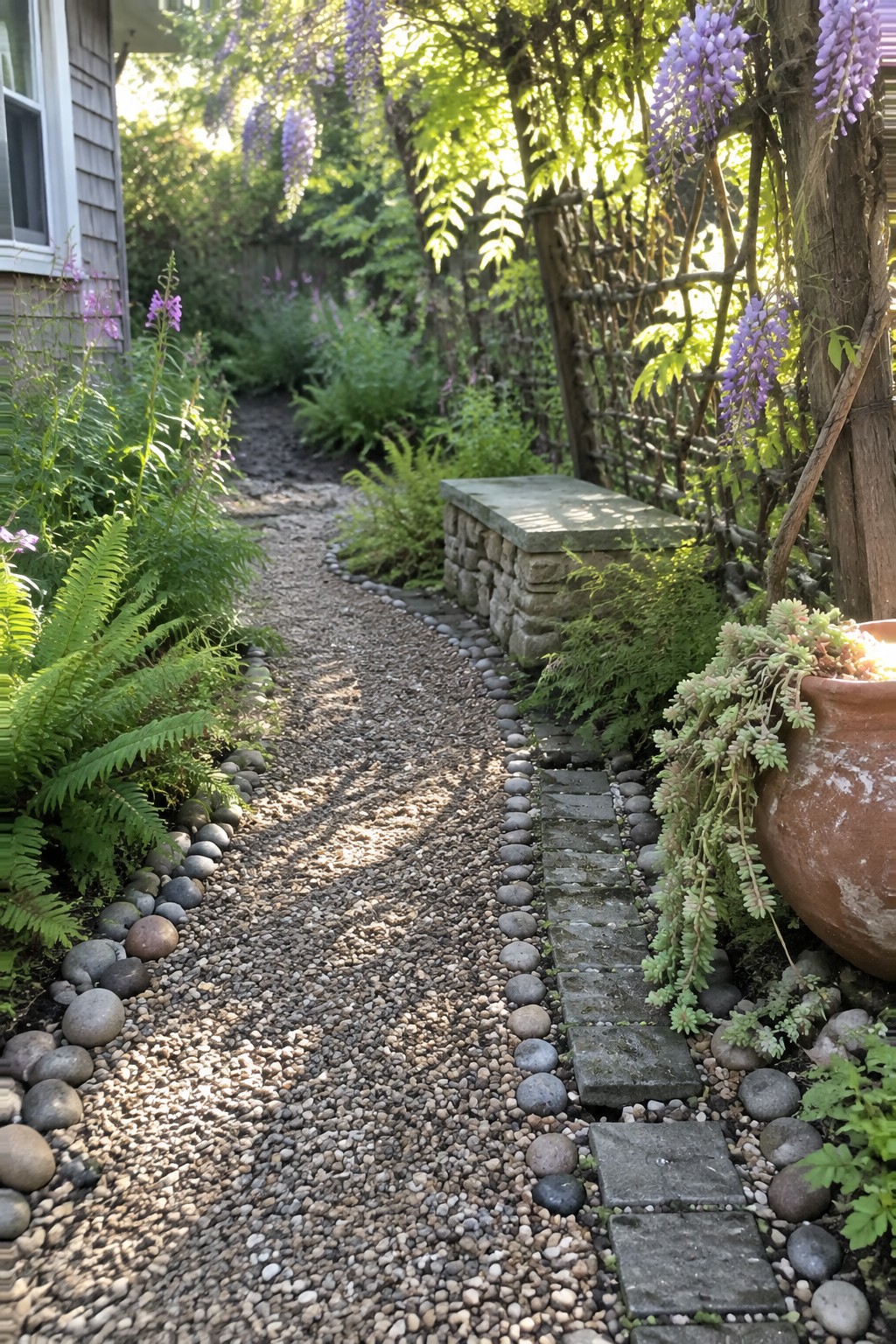
A gravel path is easy to fit into a planted garden, and a border of larger river stones helps keep the loose material in place. The mix of small gravel and smooth stones also gives the walkway a clear edge without making it feel formal.
Use this approach on a narrow side yard or a winding garden path. Set the edging stones close together, and choose gravel that is comfortable to walk on and easy to replenish.
Add Subtle Lighting Along a Garden Path
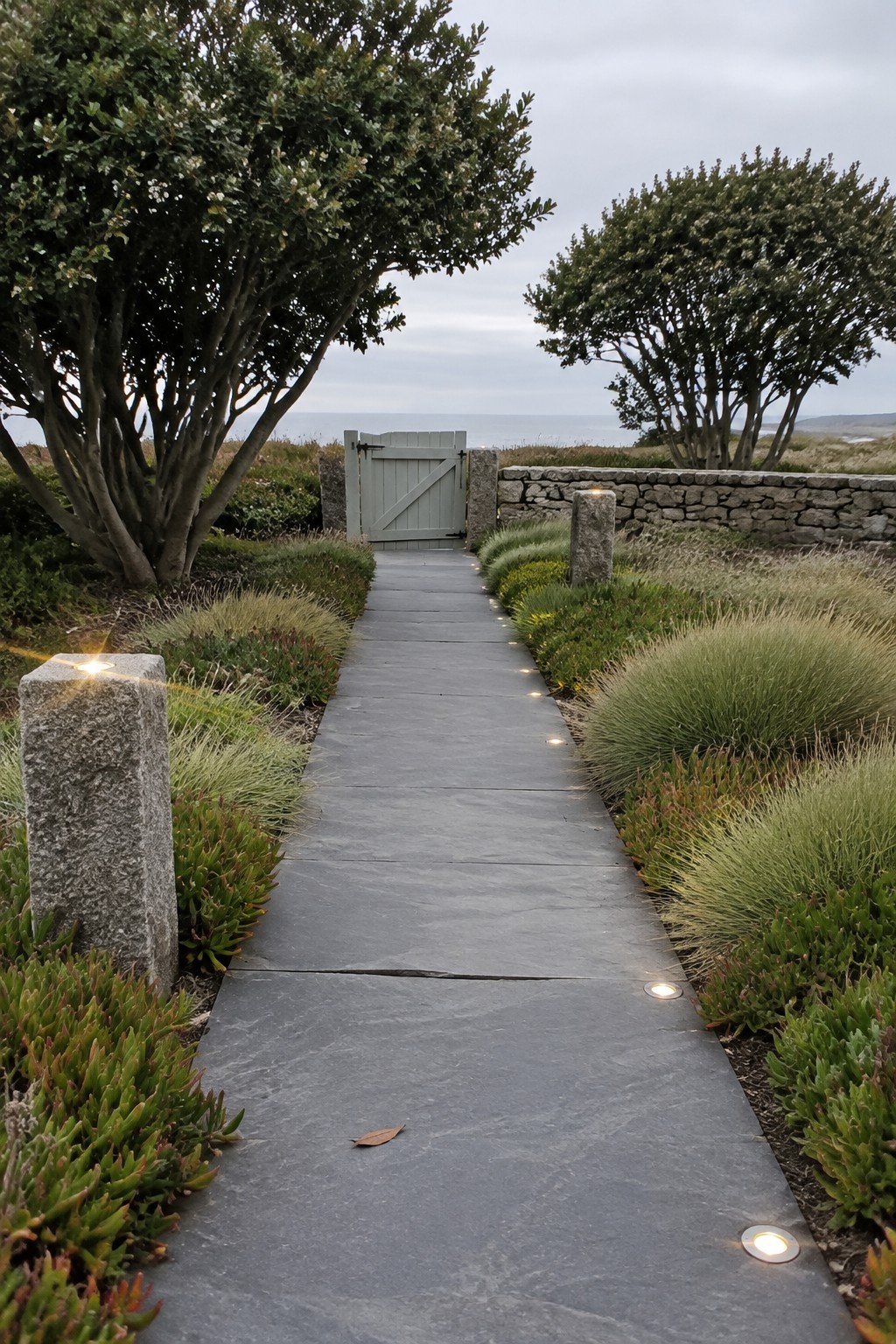
Small in-ground lights help make a garden path easier to use after dark without taking attention away from the planting. Here, the lights sit beside a slate walkway, keeping the route clear as it leads toward the gate.
This approach works well on coastal paths where low plants line the edges. Choose fixtures made for outdoor use, and space them far enough apart to guide the way without making the path too bright.
Use Irregular Stone Slabs for a Coastal Path
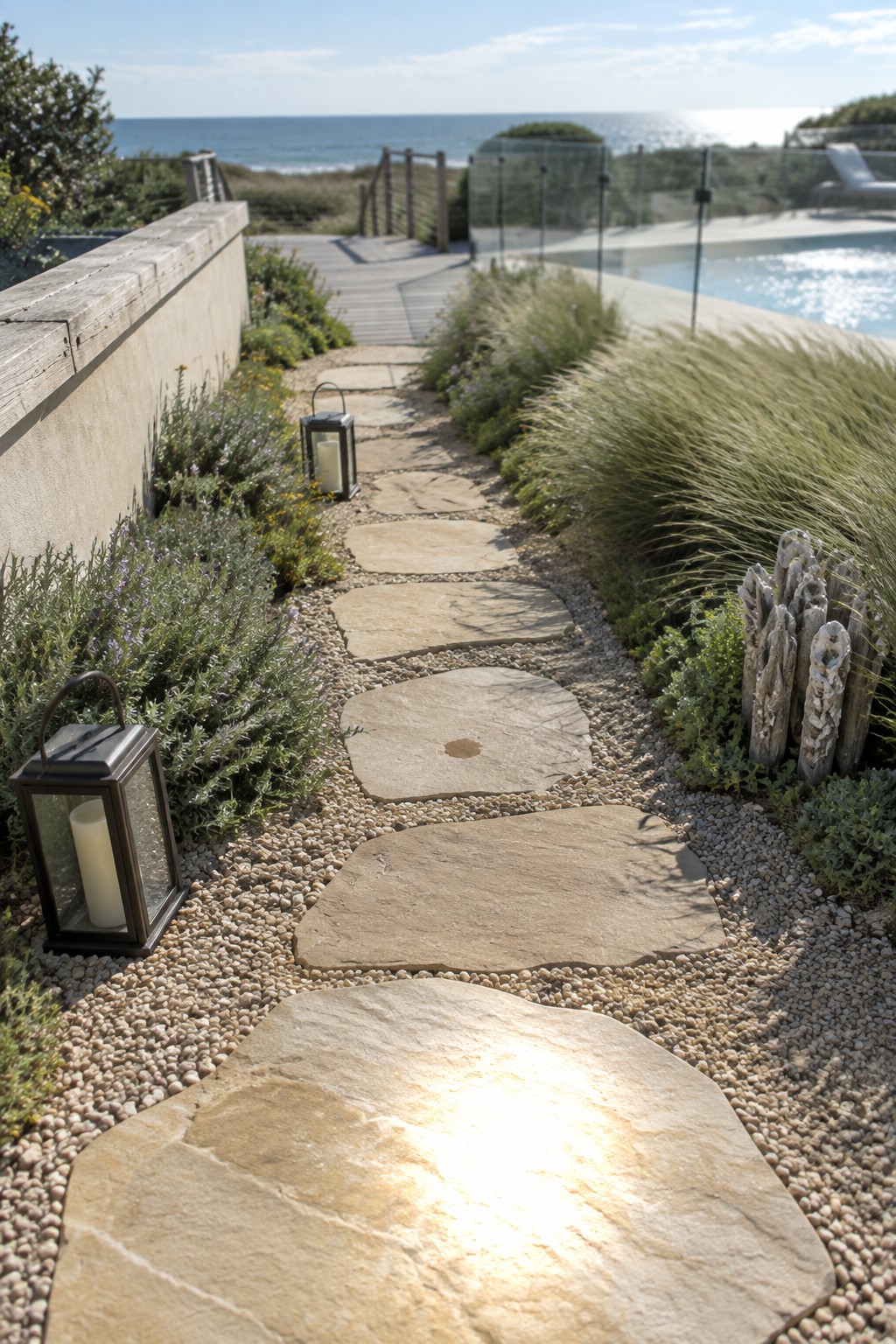
Large, uneven stone slabs make a garden path easy to follow while keeping it relaxed rather than formal. Set in gravel, they offer a firm walking surface and suit a coastal garden where gravel and native grasses are already part of the landscape.
Leave enough room between stones for a comfortable stride, and keep the route clear where it meets a deck or pool area. Choose stone with a textured surface so it is less slippery when damp.
Use a Winding Stone Path to Lead Through Coastal Planting
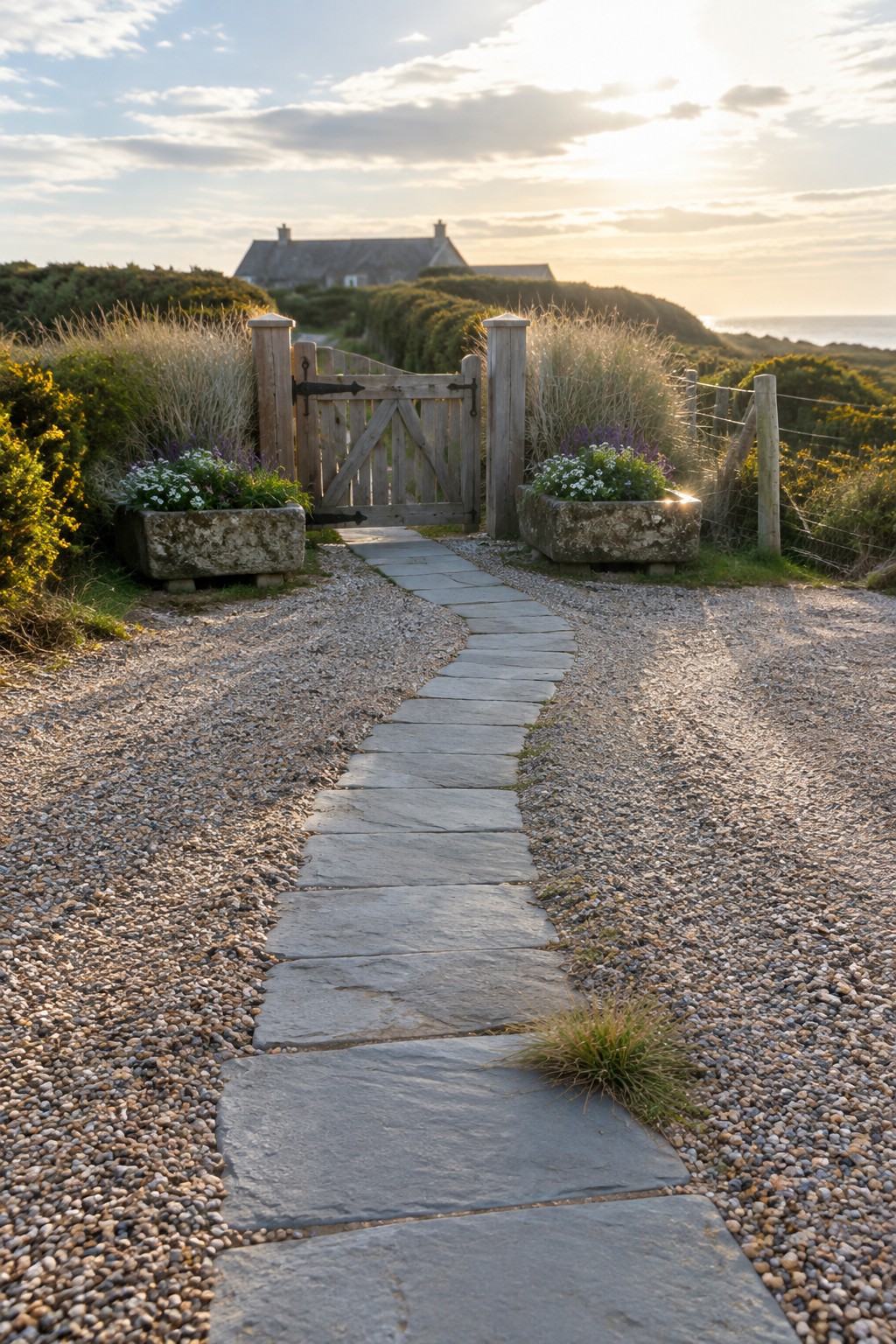
A winding path of broad stone slabs gives a coastal garden a clear route without making it feel too formal. The gentle curve also suits an informal planting style, where grasses and low flowers can grow close to the edges.
For a similar path, set the stones firmly into gravel and leave enough room for a comfortable stride. This approach works well in a seaside garden where you want to guide visitors through the planting toward a gate or entrance.
Use Brick Bands to Define a Garden Walkway

Brick borders give a gravel walkway a clear shape without making it feel too formal. The narrow strips of brick also help the path feel connected to the garden, while leaving plenty of room for plants along its edges.
This approach suits a coastal yard where a permeable surface is useful and a straight route makes the garden easier to cross. Lay the bricks level with the path, and keep the width comfortable enough for everyday use.
Use a Boardwalk to Lead Through Coastal Planting

A raised wooden walkway gives a coastal garden a clear route while keeping foot traffic off the plants. Here, the boardwalk curves through the planting, making the path feel like part of the garden rather than a separate strip of pavement.
This approach works well in sandy or marshy areas where a defined route helps protect native grasses. Use weather-resistant boards and leave enough width for comfortable walking. Keep the planting beside the path suited to local soil and salt exposure.
Add an Archway to Mark the Garden Path
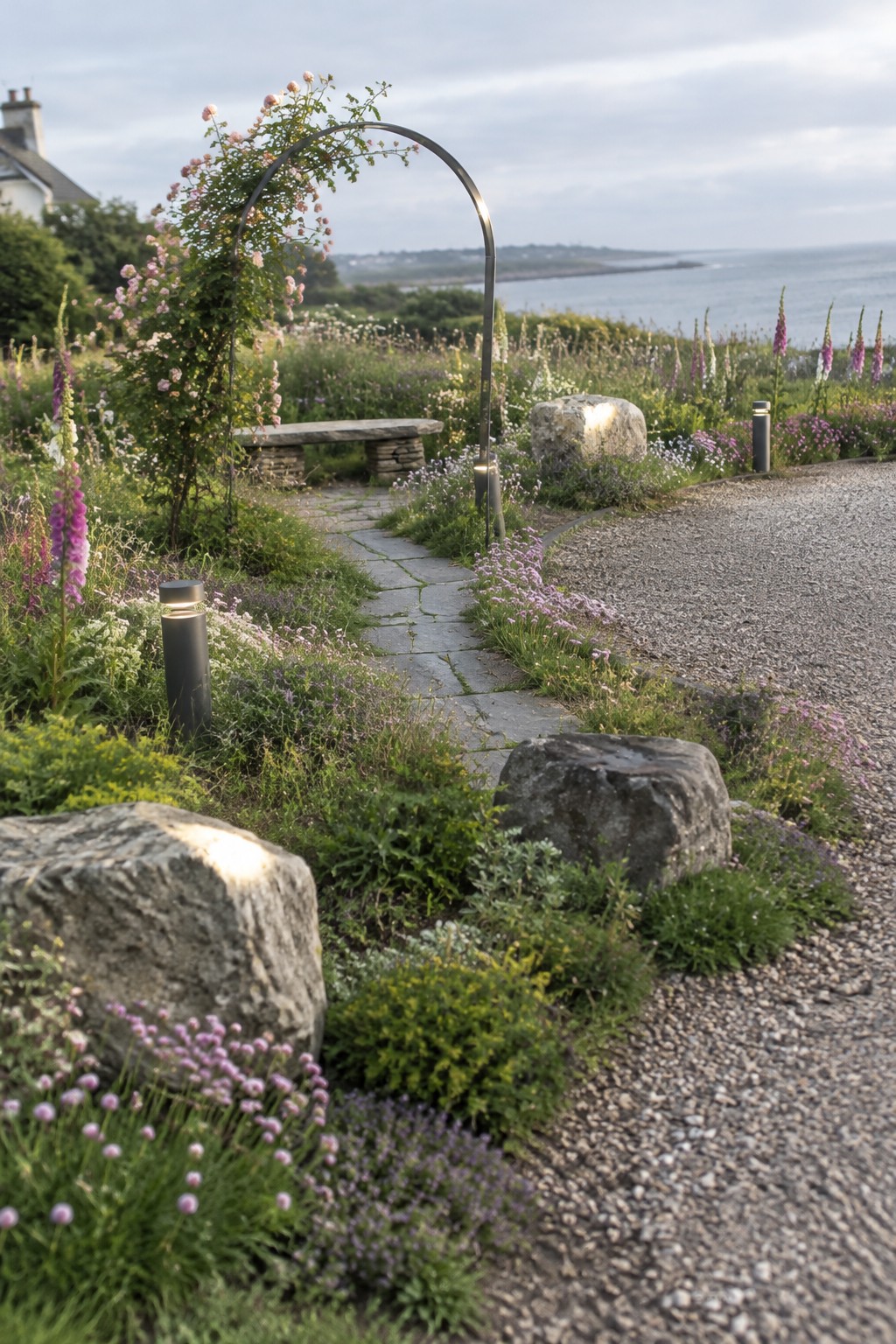
A simple arch can give a garden path a clear starting point and make the walk feel like part of the planting. Here, a climbing rose covers the metal frame, so the structure blends into the garden rather than looking separate from it.
Use an arch where a path enters a garden or turns toward a seating spot. Choose a sturdy frame and a climber suited to your coastal conditions, and leave enough room for people to pass without brushing against the plants.
Use a Curved Timber Edge to Shape a Garden Path

A curved timber border gives a gravel path a clear shape while keeping it distinct from nearby planting. It works especially well in a coastal garden, where a winding route can feel more natural than a straight walkway.
Use sturdy, weather-resistant wood and set it securely along the path. The same approach can define a small stream or planting bed, but leave enough room for the timber to age and check it now and then for wear.
Use a Narrow Water Feature Beside the Garden Path

A slim run of water beside a stone walkway gives a coastal garden path a clear edge and a quieter pace. It also brings a small water feature into the garden without taking up much room.
This works best where the path has enough space for a narrow basin alongside it. Keep the water feature simple and choose sturdy materials that suit the home and garden; a clear walkway should still be easy to use and maintain.
Frequently Asked Questions
Q: What’s a good walkway material for a coastal yard?
A: Gravel, crushed shell, and permeable pavers all let rain drain through instead of pooling on the path. Choose a surface that feels comfortable underfoot and stays put in windy, sandy conditions.
Q: How wide should a garden walkway be?
A: Make the main route wide enough for two people to walk side by side, especially near an entry or patio. Smaller paths between planting beds can be narrower, as long as you can pass without brushing against plants.
Q: Which native plants work well beside a coastal path?
A: Look for low-growing natives that handle salt spray and sandy soil, such as beach grass or locally native groundcovers. Keep taller plants back from the path so they don’t spill over and make the walkway feel cramped.
Q: How can I keep sand and mulch from washing onto the walkway?
A: Add a low, tidy border along the path and avoid piling loose mulch right at its edge. A strip of groundcover can also help hold the soil in place.
