

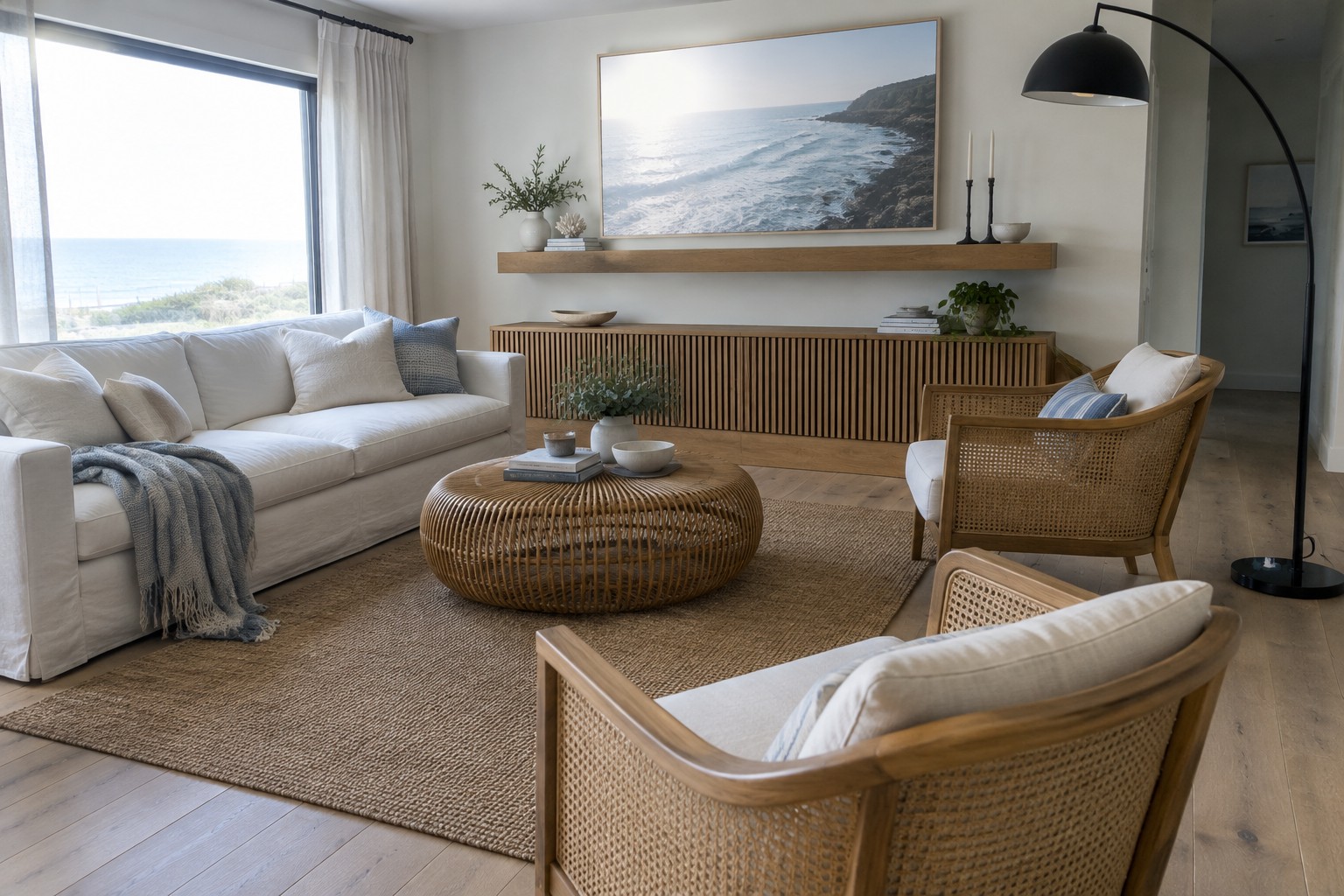
Coastal homes can feel fresh without relying on pale walls and beach-themed details, especially when natural wood brings warmth to clean, simple forms.
I tend to notice the balance first: whether the wood softens the crisp lines or makes a room feel too heavy.
Good coastal design also has to work day to day, with practical layouts, durable finishes, and enough texture to keep uncluttered spaces from feeling bare.
Some of these ideas use wood in small touches, while others let it shape the whole room, and both approaches can be adapted to different homes.
I’d save the details that suit your space and test them against its light, layout, and existing materials.
Use Natural Wood to Warm Up a Coastal Living Room
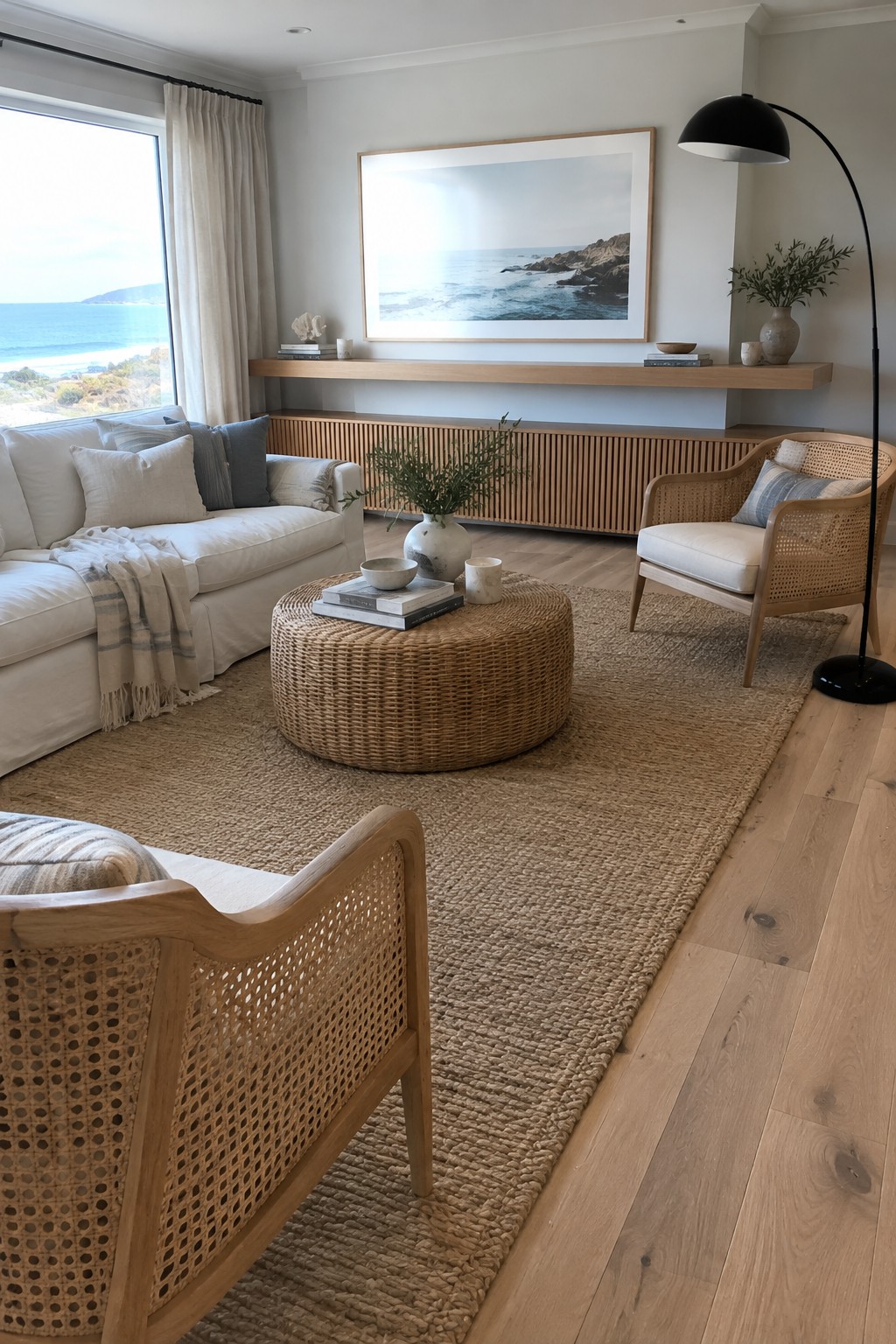
Natural wood can keep a coastal living room from feeling too pale or plain. A wood-slat radiator cover is one practical way to bring in that texture while giving a long wall a more finished look.
This idea suits a room with light upholstery and simple finishes. If you add a wood detail like this, repeat its tone in one other piece, such as a chair frame, so it feels connected to the rest of the room.
Use A Wood Island As The Kitchen’s Main Workspace

A large wood island gives a kitchen a practical center for meal prep and casual dining. Its simple shape also suits a coastal home, where natural materials can keep clean-lined cabinetry from feeling too stark.
If you have room, choose an island with seating on one side so it can serve as both work surface and everyday gathering spot. A light wood finish works especially well with pale cabinets and counters, but keep the stools tucked in to leave a clear path through the kitchen.
Use Natural Wood For A Coastal Bedroom

A wood headboard is an easy way to bring a natural feel into a coastal bedroom without relying on seashells or nautical patterns. A simple vertical-slat design gives the bed a clear focal point while keeping the room calm.
Try this idea with light or medium wood and mostly plain bedding. It suits both modern and relaxed bedrooms, though a large headboard looks best when the surrounding wall stays fairly simple.
Use Built-In Shelving To Add Bedroom Storage
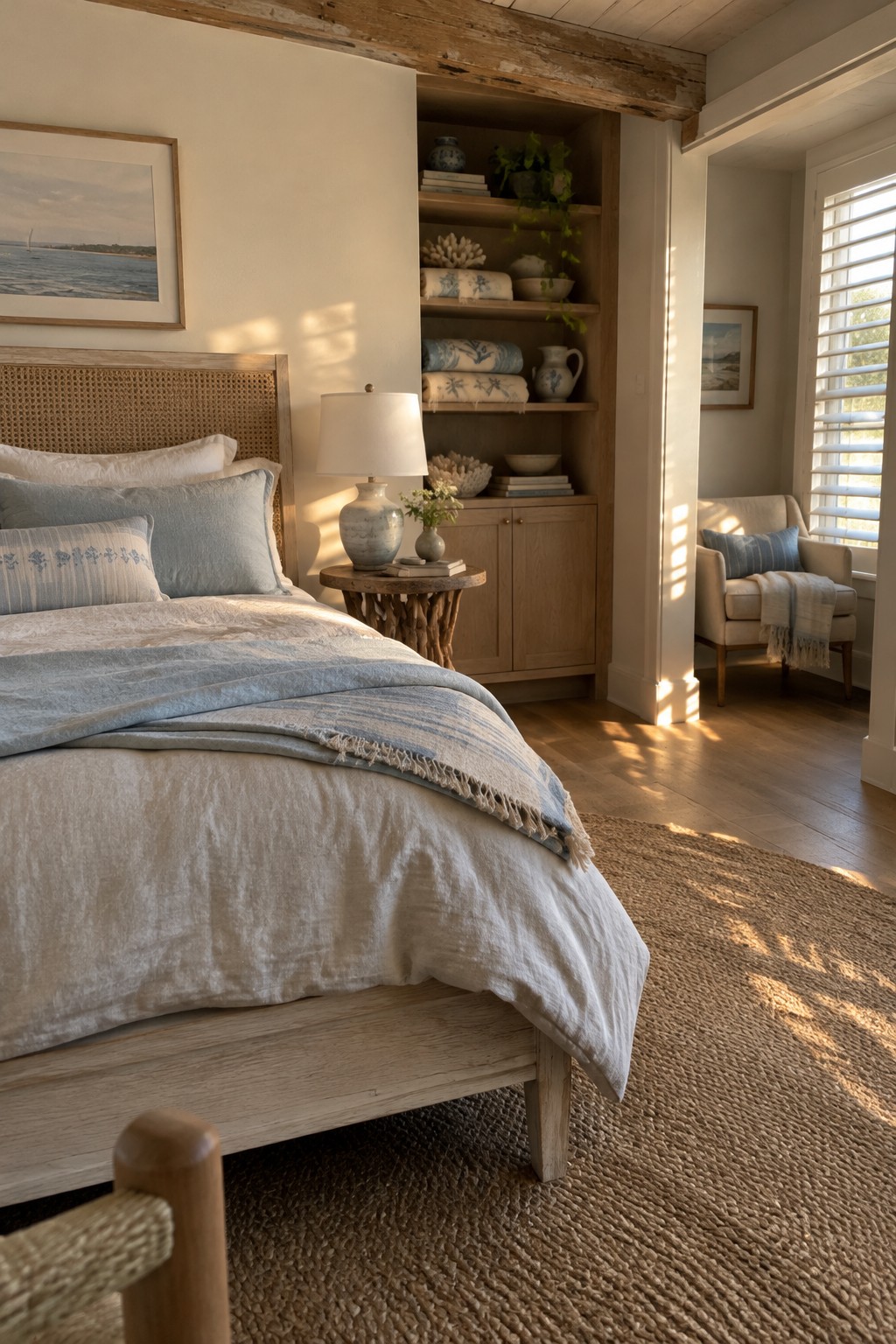
Built-in shelving makes good use of wall space and gives a bedroom a place for books and everyday items without adding another large piece of furniture. Here, open shelves above closed cupboards keep the storage useful while leaving the room feeling settled.
This approach works especially well in a bedroom with an alcove or an unused stretch of wall. Keep the lower cupboards for clutter and the open shelves for a few things you reach for often.
Use Wood Cabinetry in a Coastal Bathroom
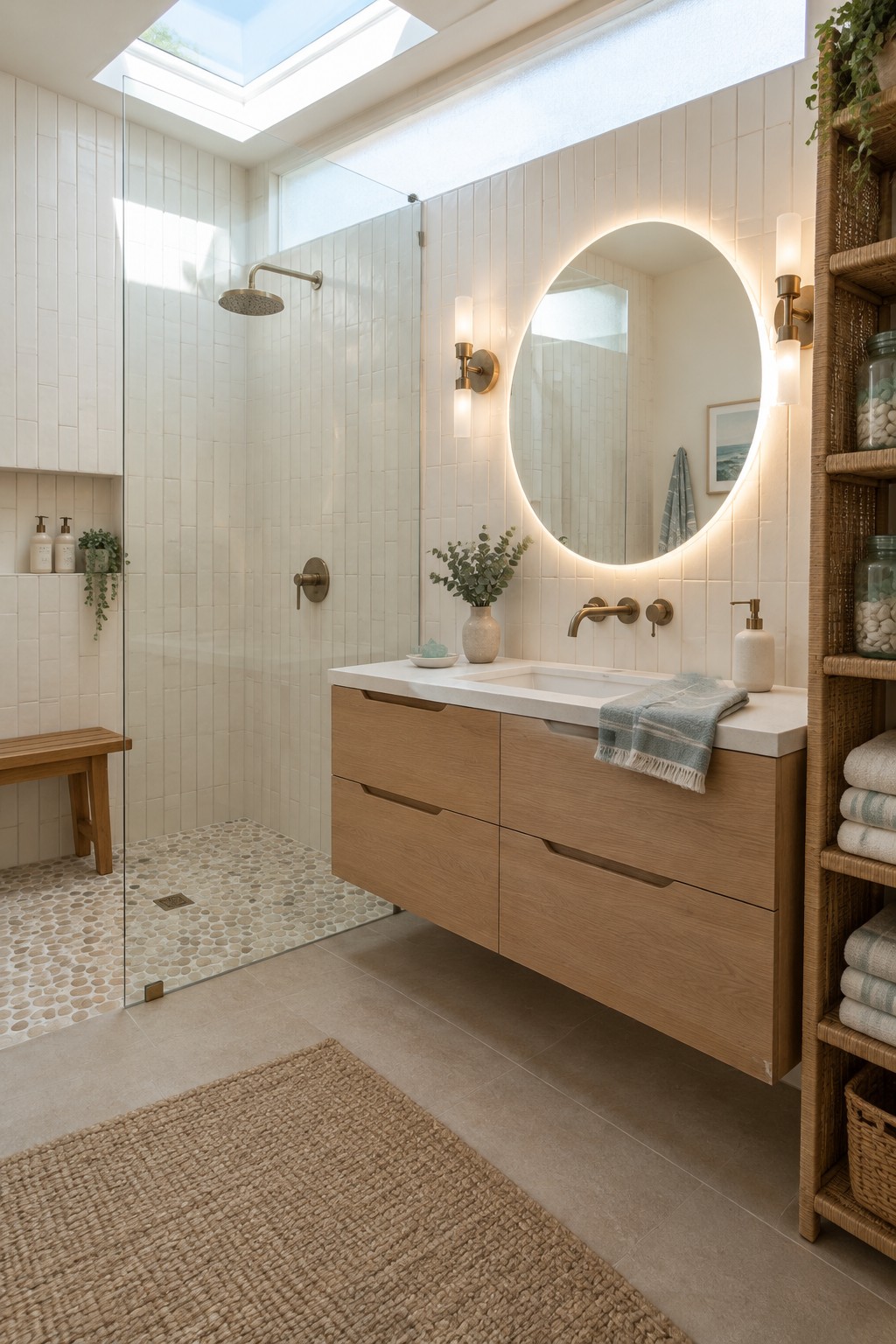
Natural wood cabinetry brings a softer, more relaxed feel to a bathroom. Here, the simple wood vanity adds warmth without taking attention away from the clean, pale surfaces.
This approach works well in bathrooms with light tile and stone, where too much white can feel a little stark. Choose a practical finish that can handle moisture, and keep the cabinet lines simple.
Choose a Natural Wood Dining Table
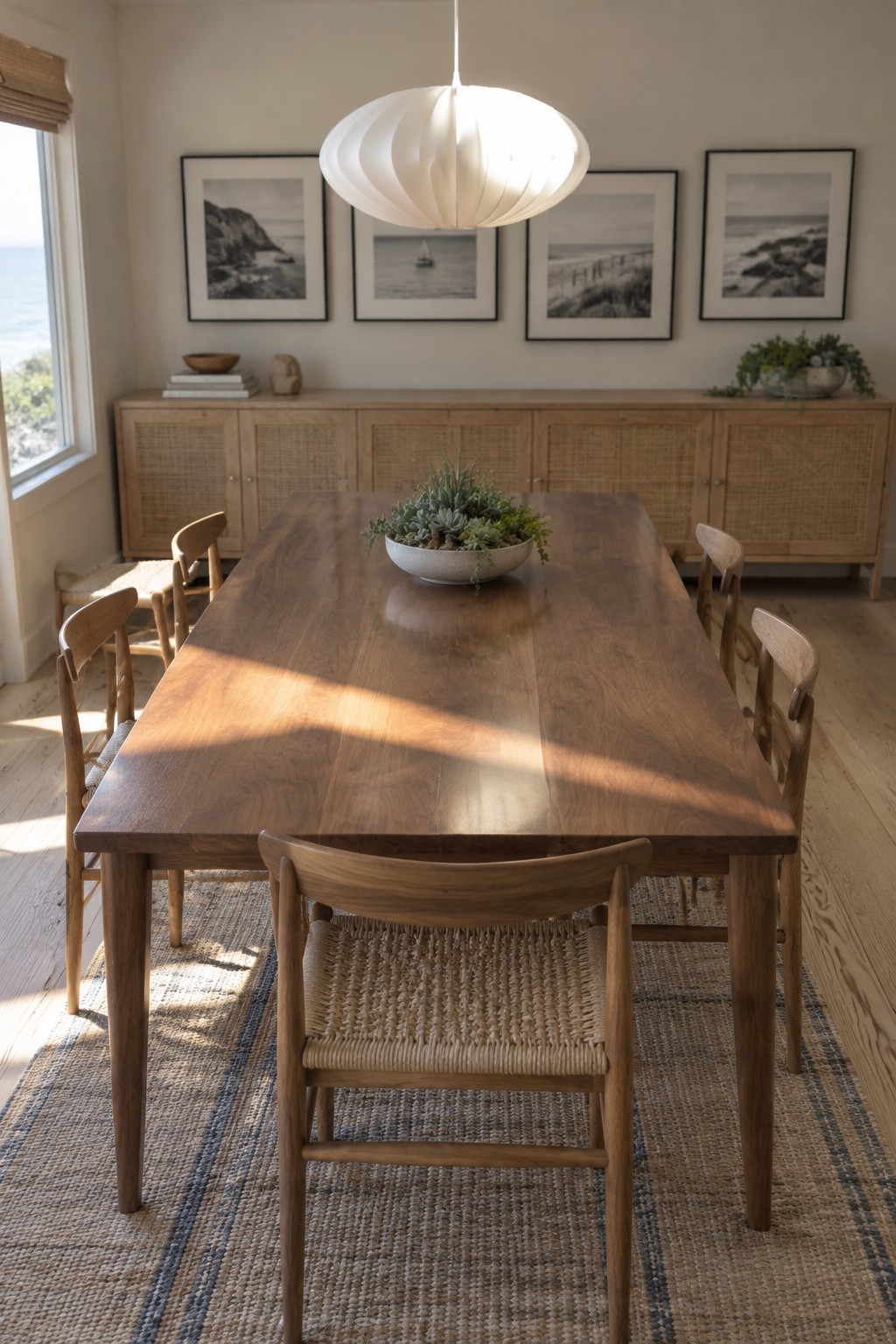
A solid wood dining table brings a relaxed, practical feel to a coastal dining room. Its simple shape and visible grain give the space a natural focal point without relying on extra decoration.
Choose a finish that suits the rest of the room, and leave enough space around the table for chairs to move comfortably. A woven rug can help define the dining area, especially in an open-plan home.
Add A Bench For Practical Entryway Storage

A built-in bench makes a coastal entry easier to use every day, giving people a place to sit while they take off shoes. Open cubbies below keep footwear close at hand without adding bulky cabinets.
This idea works well in a narrow entry or mudroom where floor space is limited. Use a durable wood seat and leave enough room underneath for the shoes your household wears most often.
Add a Built-In Bench to a Sunroom

A built-in bench makes a sunroom useful for both lounging and storage. Here, the L-shaped seating fits neatly along the windows, leaving the middle of the room open for a coffee table.
This approach works well in a small sunroom or enclosed porch where freestanding furniture might feel crowded. Add cushions that can handle regular use, and leave enough room to move around the table.
Add a Built-In Desk to Make Use of Wall Space
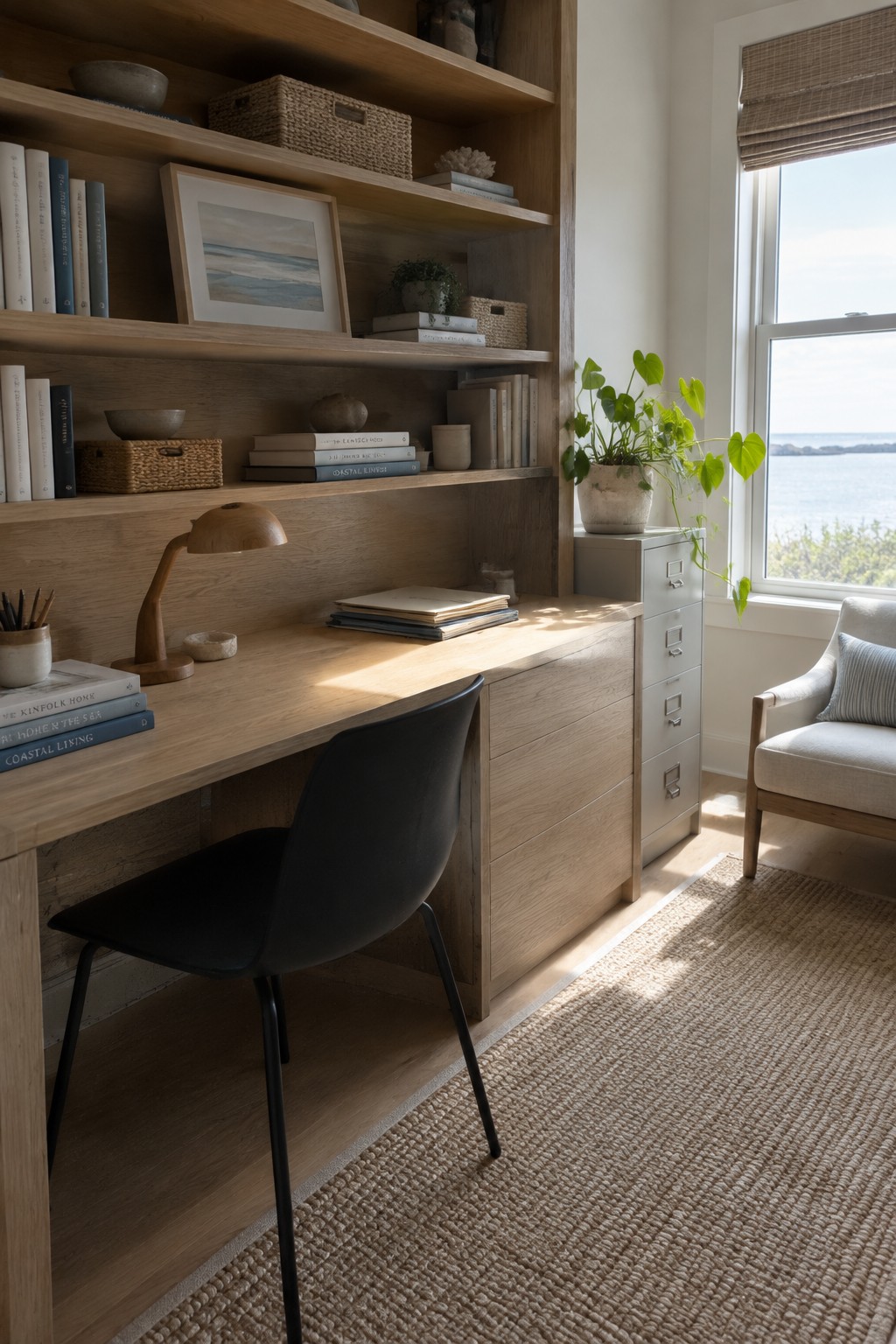
A built-in desk makes a small home office feel more organized without taking up extra floor space. Here, the wood work surface continues into shelving and drawers, so everyday storage stays close at hand.
This approach works well in a spare room or a quiet corner near a window. Keep the shelves edited and leave enough clear desk space for working; otherwise, the built-in can start to feel crowded.
Add Open Shelves for Laundry Room Storage
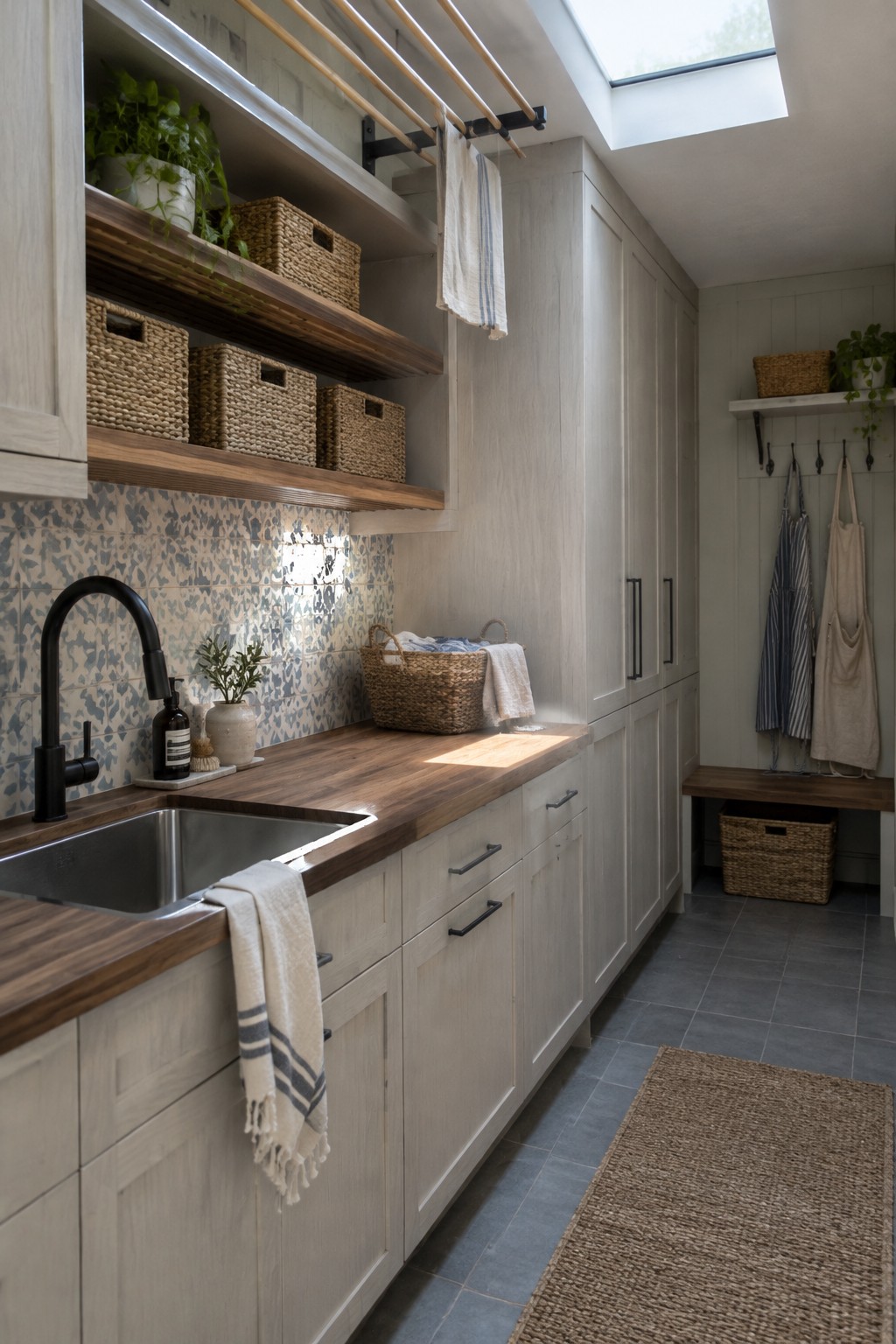
Open wood shelves make everyday laundry supplies easy to reach while giving the room a useful place for baskets. The natural finish also suits a coastal home without making the storage feel too formal.
Use sturdy shelves above a counter or washer and dryer, and keep smaller items in baskets to limit visual clutter. Leave enough space between shelves for the things you use most.
Use a Round Rug to Define a Nursery
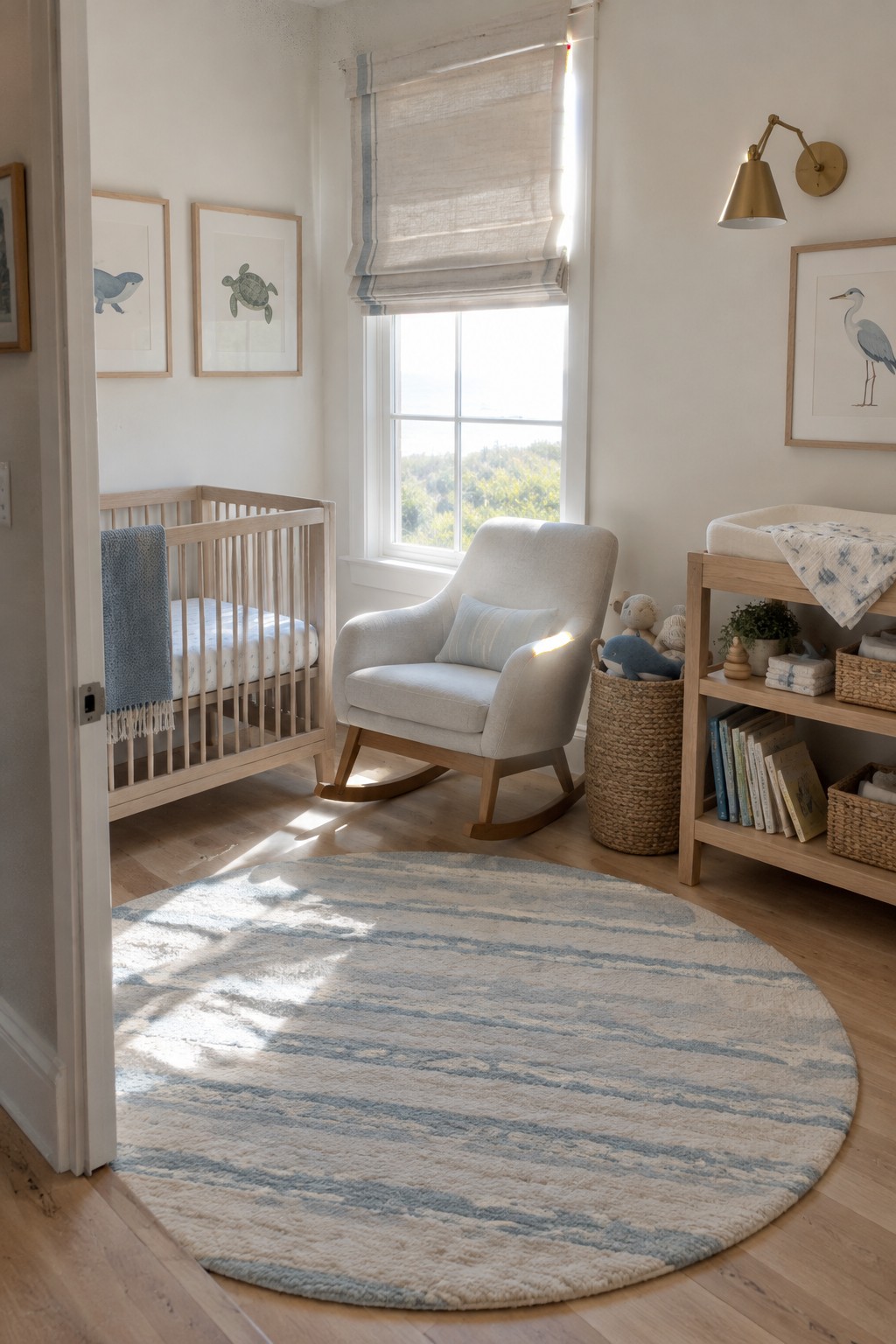
A round rug can help give a nursery its own soft, comfortable area without making the room feel boxed in. Here, the pale blue pattern brings a gentle coastal touch to the natural wood floor.
Choose a rug large enough to sit beneath the main seating area, and leave a little wood floor visible around the edge. A low-pile style is easier to clean and less likely to catch on a rocking chair.
Choose Wood Flooring for a Coastal Bathroom
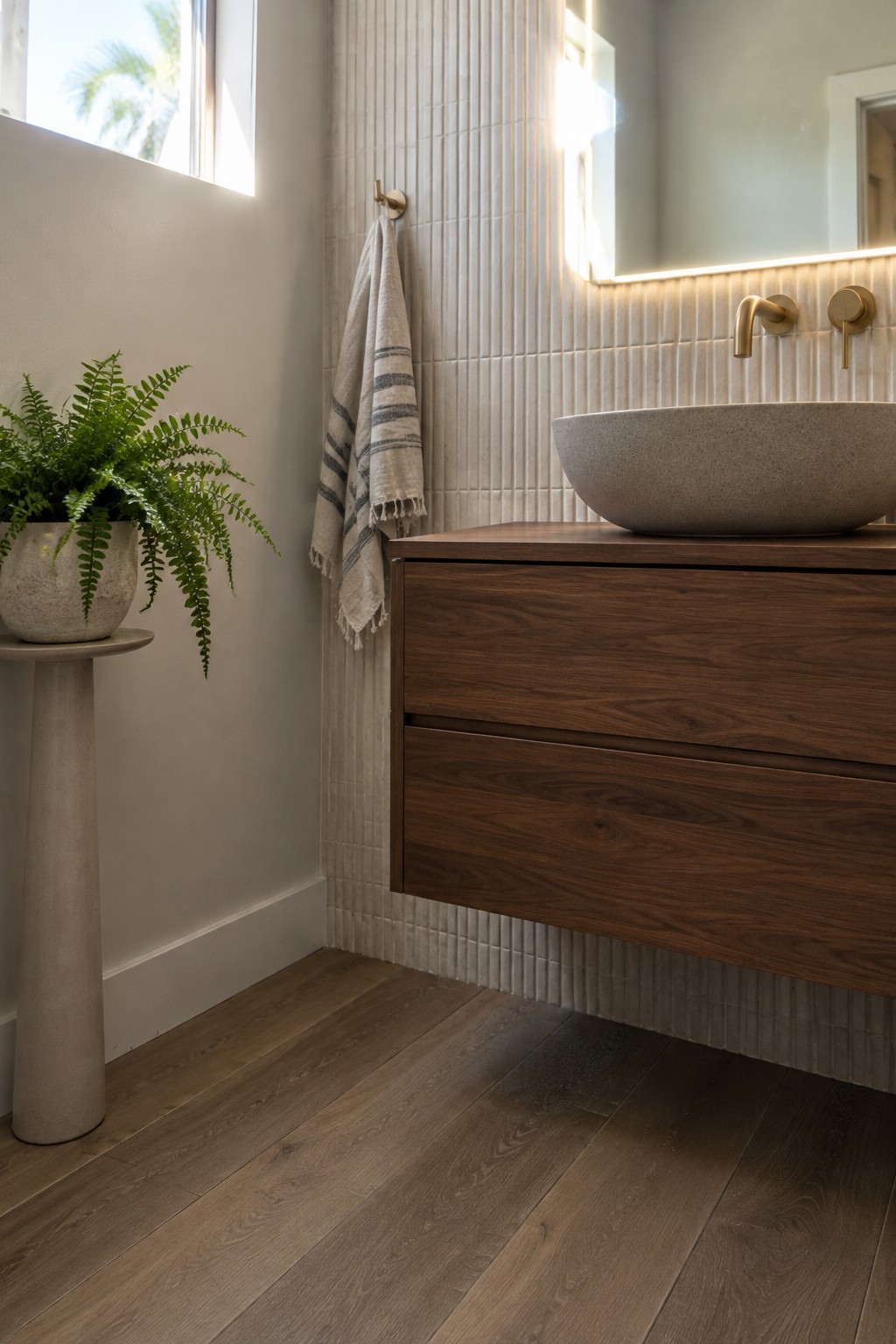
Natural wood flooring can make a bathroom feel warmer and less stark. In this space, the wide wood planks bring a relaxed, homey feel beside the simple tile and vanity.
For a similar look, choose flooring made for damp rooms and make sure water cannot collect around the sink or tub. Wood-look tile is a practical alternative if you want the same style with less upkeep.
Add a Center Island to Make a Walk-In Closet More Useful
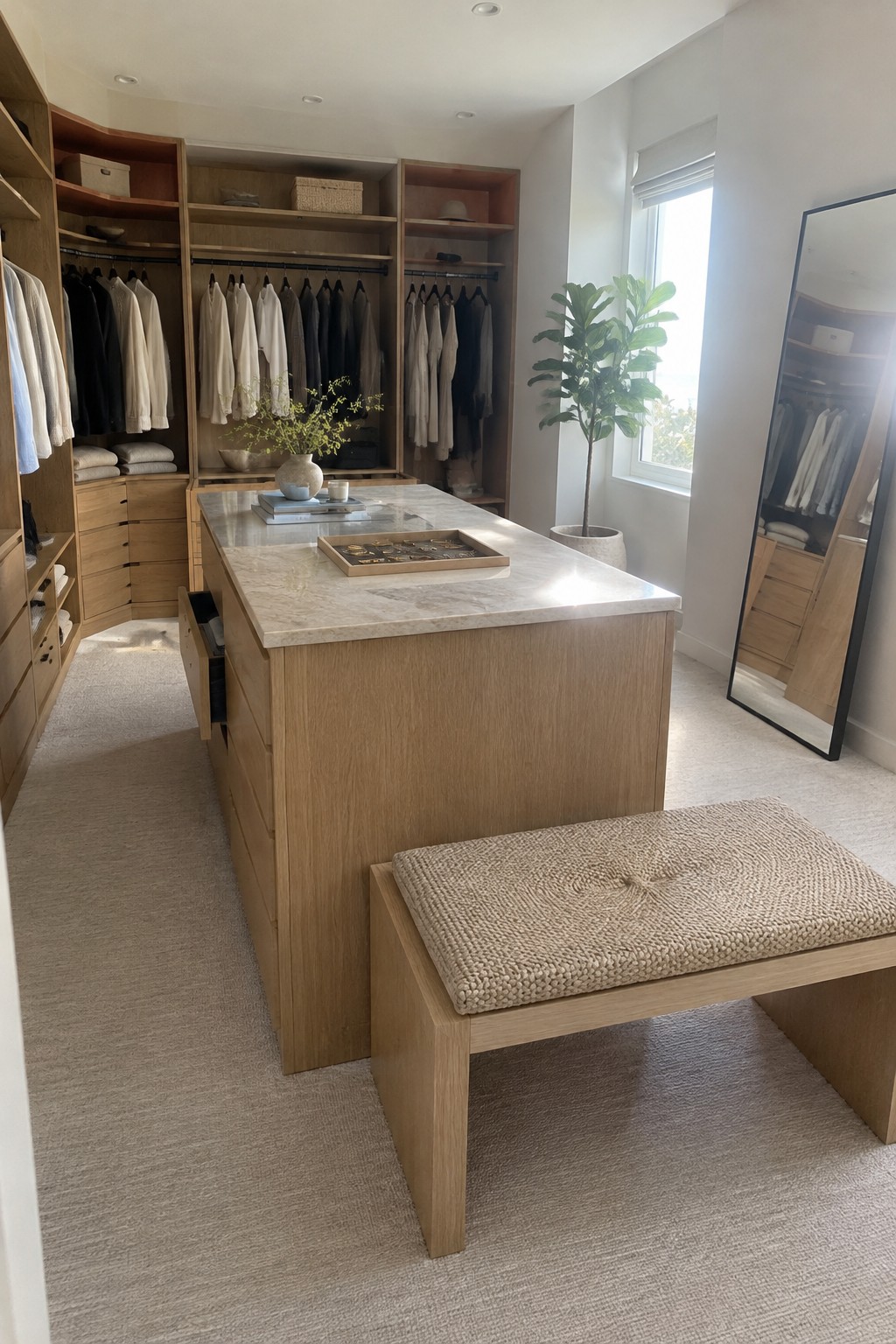
A center island gives a walk-in closet a handy place to sort clothes, set down accessories, or get ready for the day. Natural wood keeps this large storage piece in step with the coastal look without making the room feel overly formal.
This idea works best when there’s enough room to walk around the island comfortably. Choose drawers for small items and keep the top fairly clear so it stays useful rather than becoming another place to pile things.
Use Natural Wood for a Coastal Hallway
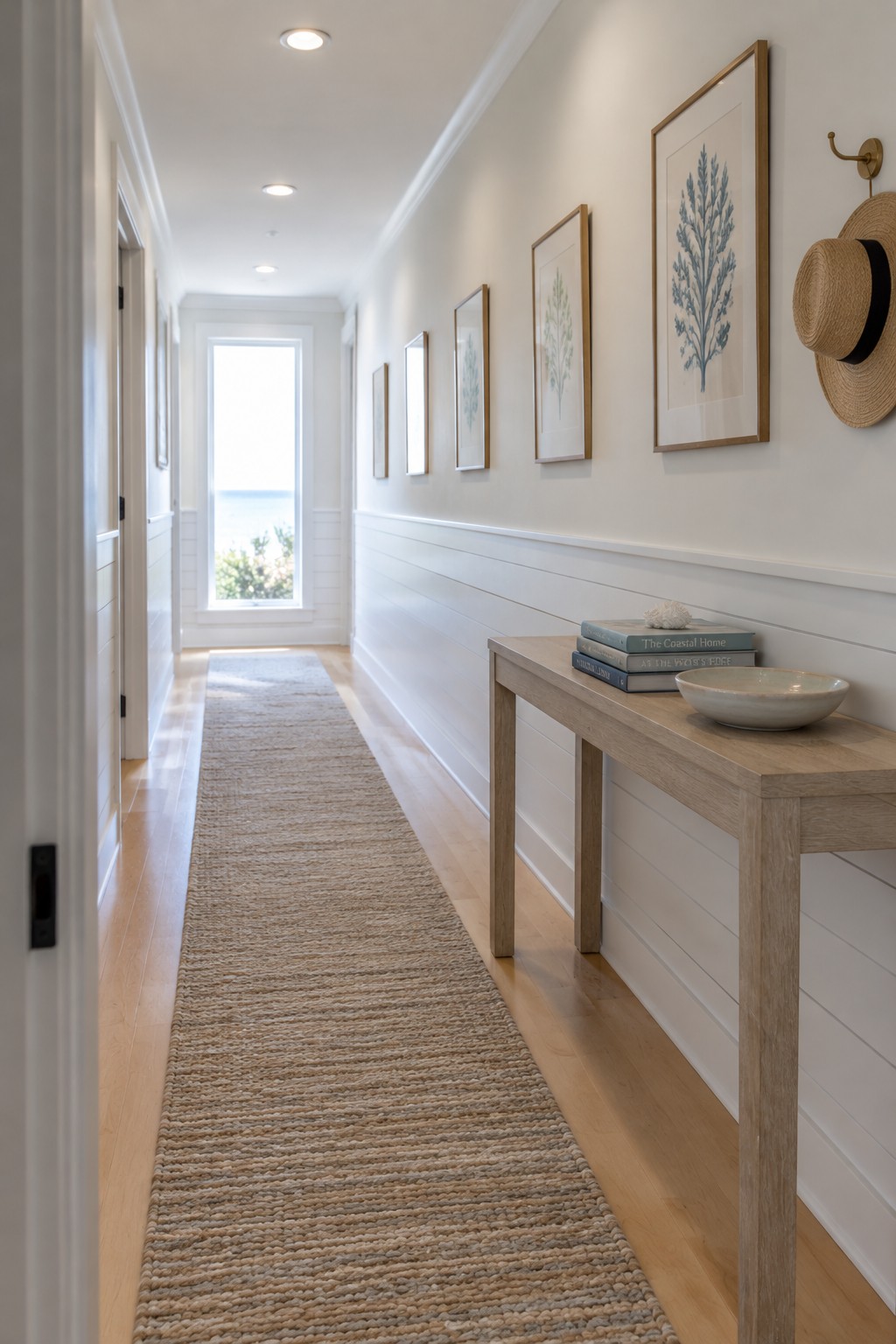
A simple wood console can make a long hallway feel more useful without taking up much floor space. Here, its pale finish works well with the white wall paneling and keeps the look light.
This idea suits a narrow entry or passage where a full cabinet would feel bulky. Choose a slim table and leave enough room for people to walk past comfortably.
Use Wood Slats for a Coastal Living Room Feature Wall

A wall of narrow wood slats is an easy way to give a living room more character without adding busy patterns. The vertical lines bring a simple natural detail to the space, while a wall-mounted TV can sit neatly within the design.
This works well behind a media console, especially in an open-plan room where one wall needs a clear purpose. Choose a wood tone that suits the rest of the furniture, and keep the slats evenly spaced so the wall feels calm rather than fussy.
Make a Round Table the Center of a Coastal Dining Room

A round wood table makes a dining area feel easy to gather around. Its curved shape also helps a smaller room feel less crowded than it might with a large rectangular table.
Look for a sturdy wood table with simple lines, then keep the chairs light in color to suit a coastal home. Leave enough room around the table for chairs to pull out comfortably.
Create a Coastal Kids’ Room That Keeps Art Supplies Organized
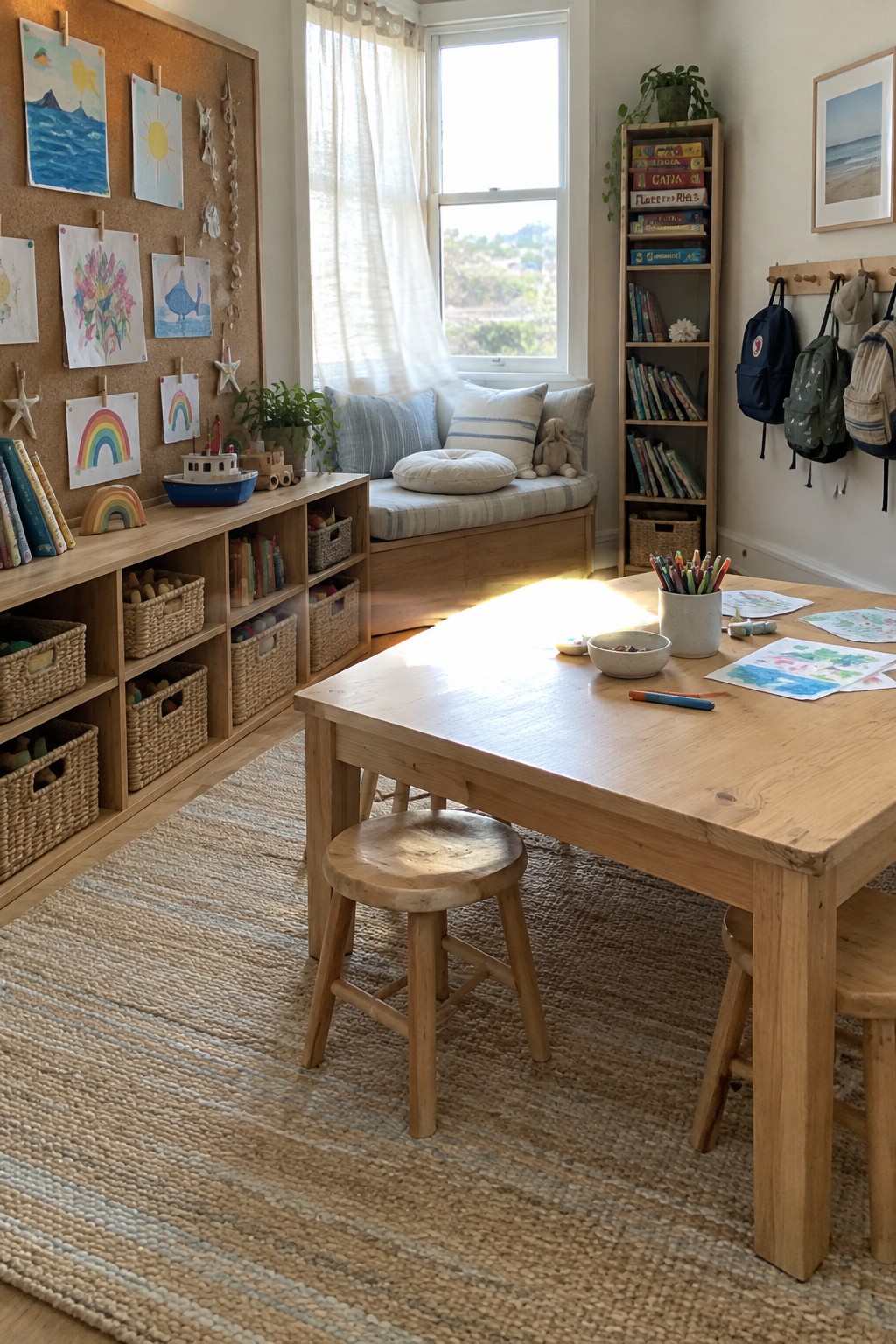
A low wood worktable and open cubbies make a children’s art space easy to use and tidy up. Baskets keep small supplies together, while the tabletop gives kids room to draw without taking over the rest of the room.
This setup works well in a playroom or a quiet corner of a family room. Choose sturdy furniture at a child-friendly height, and leave enough clear floor space for moving around the table.
Add a Built-In Desk to Make a Small Workspace Feel Settled

A desk built into the wall can make a work area feel like part of the home rather than a piece of furniture squeezed into a corner. The simple wood surface here gives the space a useful place to work without taking up much visual room.
This idea suits a study nook or a quiet spot along a hallway. Keep the desktop clear and choose a chair that fits neatly underneath so the area stays easy to use day to day.
Use a Built-In Shower Niche for Storage

A recessed niche keeps shower essentials close by without taking up space on a shelf or ledge. In this bathroom, the pebble backing gives the niche a distinct look while leaving the surrounding wall simple.
This works well in a tiled shower where you can plan the niche during construction. Keep it within easy reach and deep enough for the bottles you use, and choose a finish that can handle regular splashes.
Make an Attic Workspace Feel Open
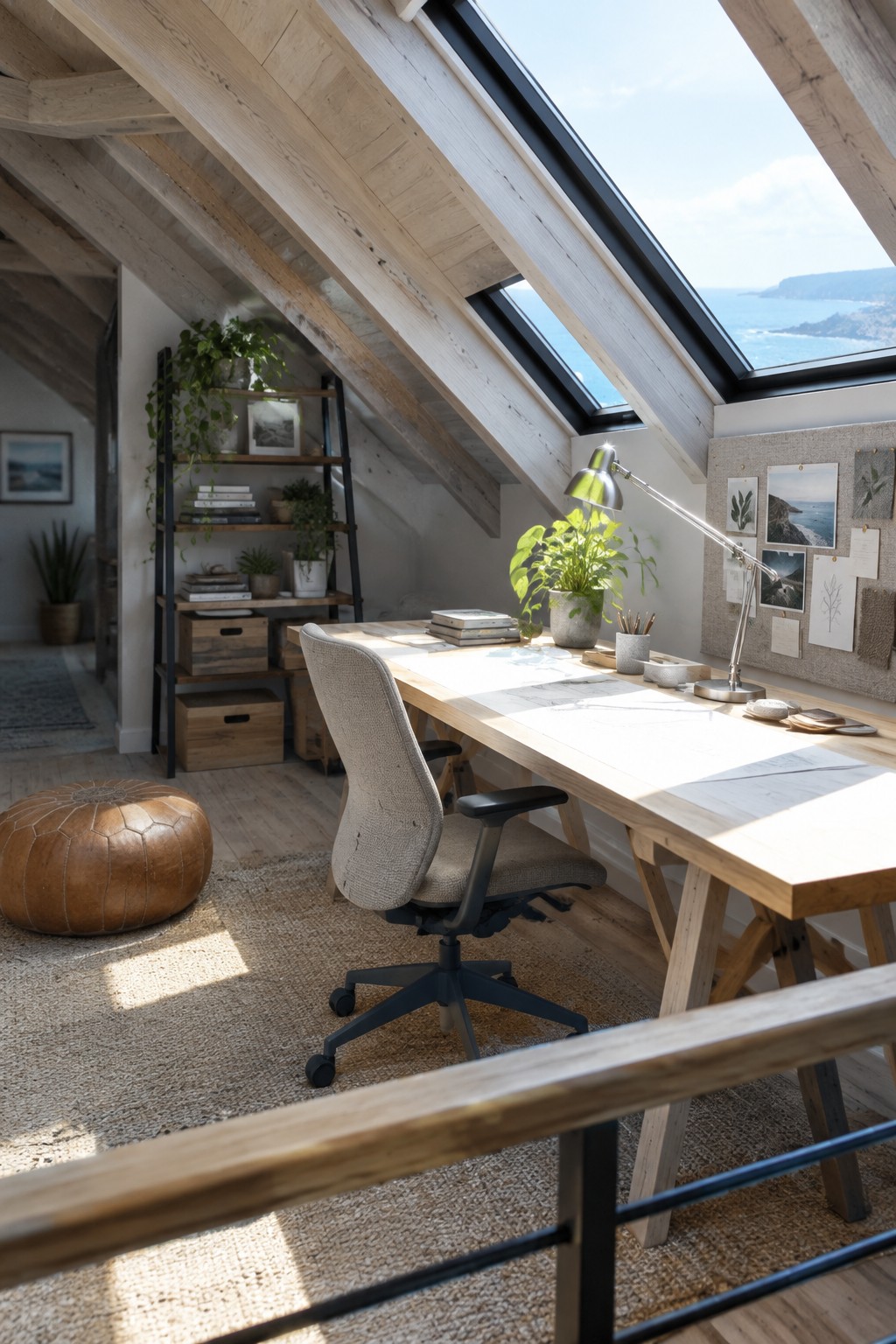
An attic desk can make good use of a sloped room that might otherwise be difficult to furnish. A long work surface beneath the skylights gives you plenty of room to spread out, while the open floor area keeps the workspace from feeling cramped.
This setup suits a loft or converted attic with enough headroom to move around comfortably. A simple desk and a few shelves are usually enough; avoid filling every low corner with furniture, since keeping those areas clear makes the room easier to use.
Use a Storage Bed to Make a Coastal Bedroom More Practical
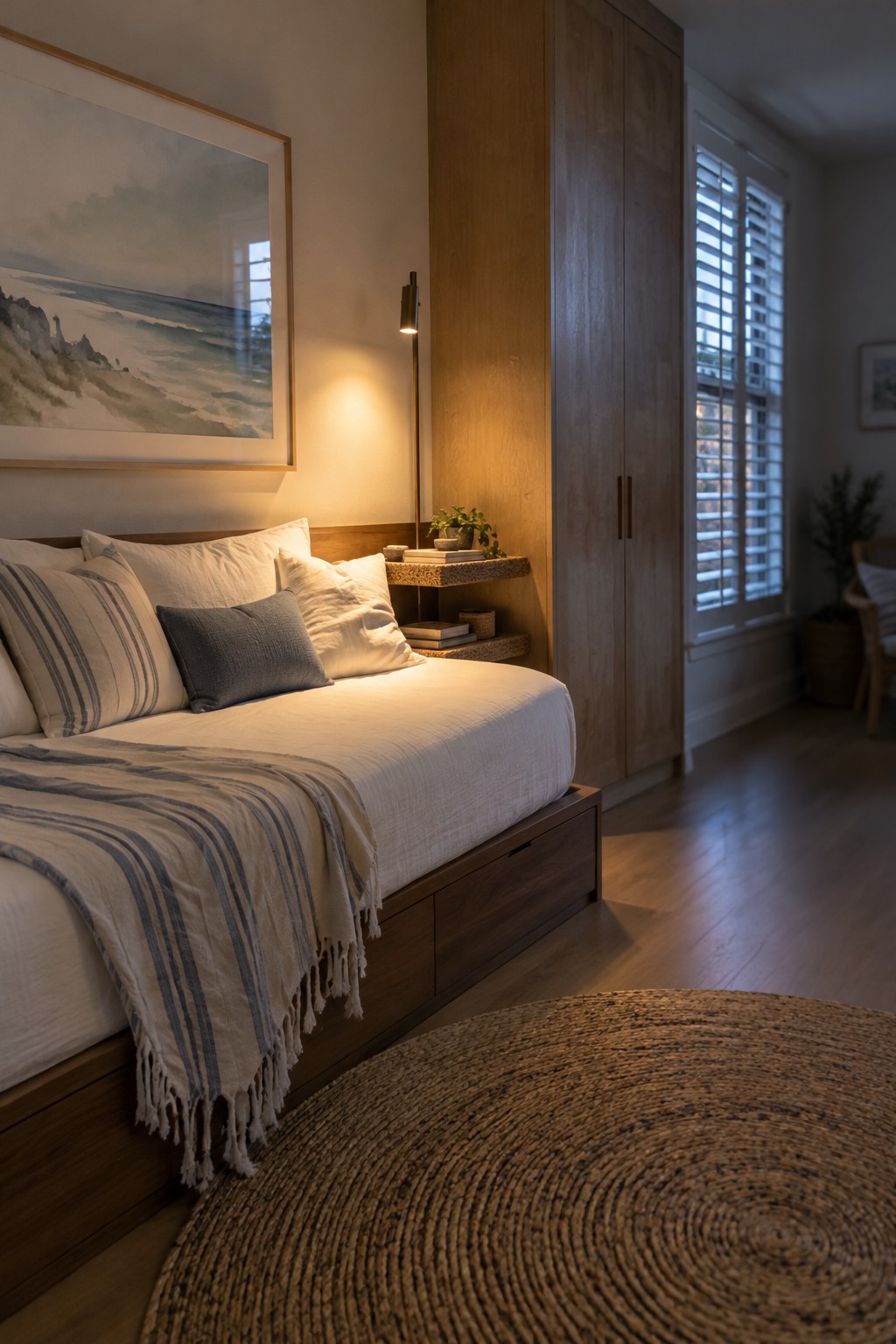
A bed with built-in drawers makes good use of space that often goes unused. It suits a coastal bedroom where a simple, uncluttered feel matters, and natural wood helps the storage feel like part of the room rather than an add-on.
This approach works especially well in smaller bedrooms or homes without much closet space. Keep everyday items in the drawers, and leave the bedside area fairly clear so the bed remains easy to use.
Frequently Asked Questions
Q: How do I keep a coastal room from feeling too beachy or themed?
A: Keep the colors and shapes simple, then let natural wood bring in warmth. A few coastal touches, like woven texture or soft blue accents, feel more relaxed than shells and nautical decor everywhere.
Q: What kind of wood works well with a light coastal palette?
A: Pale oak, ash, and weathered finishes pair easily with white walls and sandy neutrals. If you already have darker wood, balance it with light fabrics and plenty of natural light.
Q: Can I use natural wood in a bathroom near the coast?
A: Yes, but choose a finish made to handle moisture and wipe up splashes quickly. Wood-look tile is a practical option if you want the warmth without worrying about upkeep.
Q: How can I add clean lines without making the room feel cold?
A: Mix streamlined furniture with softer details, such as linen curtains, a textured rug, or rounded cushions. That contrast keeps the room feeling welcoming.
