


Light oak cabinets can brighten a kitchen, but the tile and surrounding finishes determine whether the room feels calm or busy.
I find coastal kitchens work best when pale wood, tile color, and natural light have enough balance to feel relaxed without turning the space into a theme.
The first thing I notice is how the backsplash meets the cabinets and counters, since that connection can make a kitchen feel cohesive or visually crowded.
Small choices, such as grout color, hardware, and the amount of open shelving, also affect how well the room functions day to day.
Some of these ideas are worth saving as a starting point, then adapting to your kitchen’s layout, light, and existing materials.
Use Coastal Tile As A Kitchen Feature Wall

A tiled wall can give a coastal kitchen its character without relying on lots of beach-themed decor. Here, blue-green tile brings color to the cooking area, while light oak cabinets keep the look natural and easy to live with.
This idea works well in kitchens with simple cabinet fronts and pale counters. Choose a tile with some variation, then keep nearby finishes fairly quiet so the pattern can stand out without making the room feel busy.
Use Light Oak Cabinets for a Long Kitchen Run

Light oak cabinets work especially well in a long, narrow kitchen because they keep the cabinetry feeling warm without making the room seem heavy. Here, the simple cabinet fronts let the pale blue-green counter and white tile remain easy to notice.
This approach suits galley kitchens and other spaces with one long stretch of storage. Keep the cabinet finish fairly consistent, then use coastal tile or a soft counter color for a little contrast.
Let Coastal Tile Set the Tone

A patterned tile backsplash is an easy way to give a kitchen a coastal feel without relying on nautical decorations. Blue-and-white tiles bring color to the cooking area, while light oak cabinets keep the overall look relaxed.
Use the tile on the wall behind the range, where it can become a natural focal point. If the pattern is busy, keep nearby finishes simple so the kitchen stays easy on the eyes.
Let Coastal Tile Add Color to Light Oak Cabinets
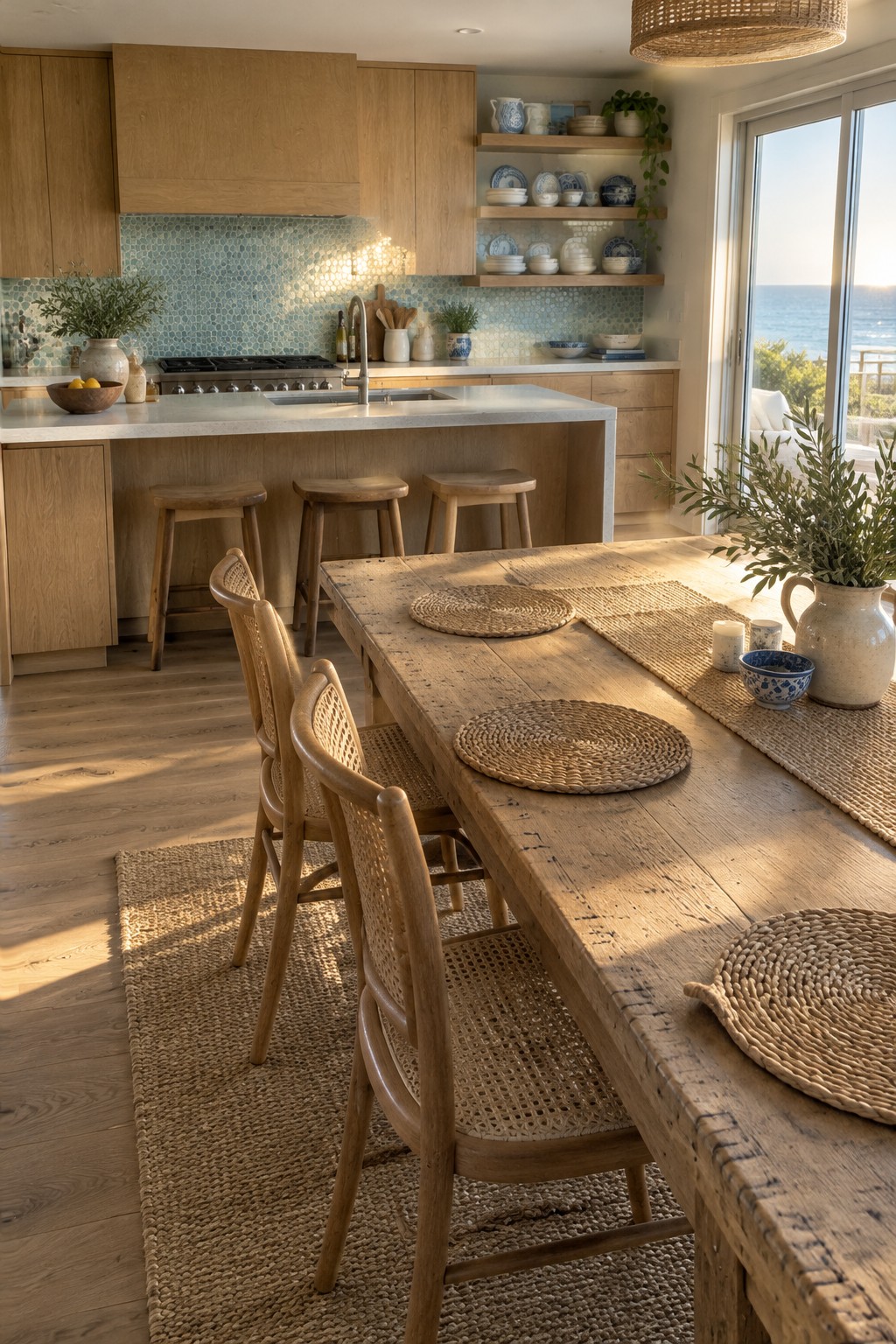
Light oak cabinets can keep a coastal kitchen feeling warm and simple, while a blue-green tile backsplash brings in color without taking over. The mix feels relaxed and works especially well when the rest of the finishes stay fairly quiet.
Use the tile behind the counter or range, where it can be seen without covering every wall. A small-scale pattern, like the rounded tiles shown here, adds texture, but keep the grout and nearby surfaces understated so the oak remains easy to notice.
Add a Long Counter for Everyday Kitchen Tasks
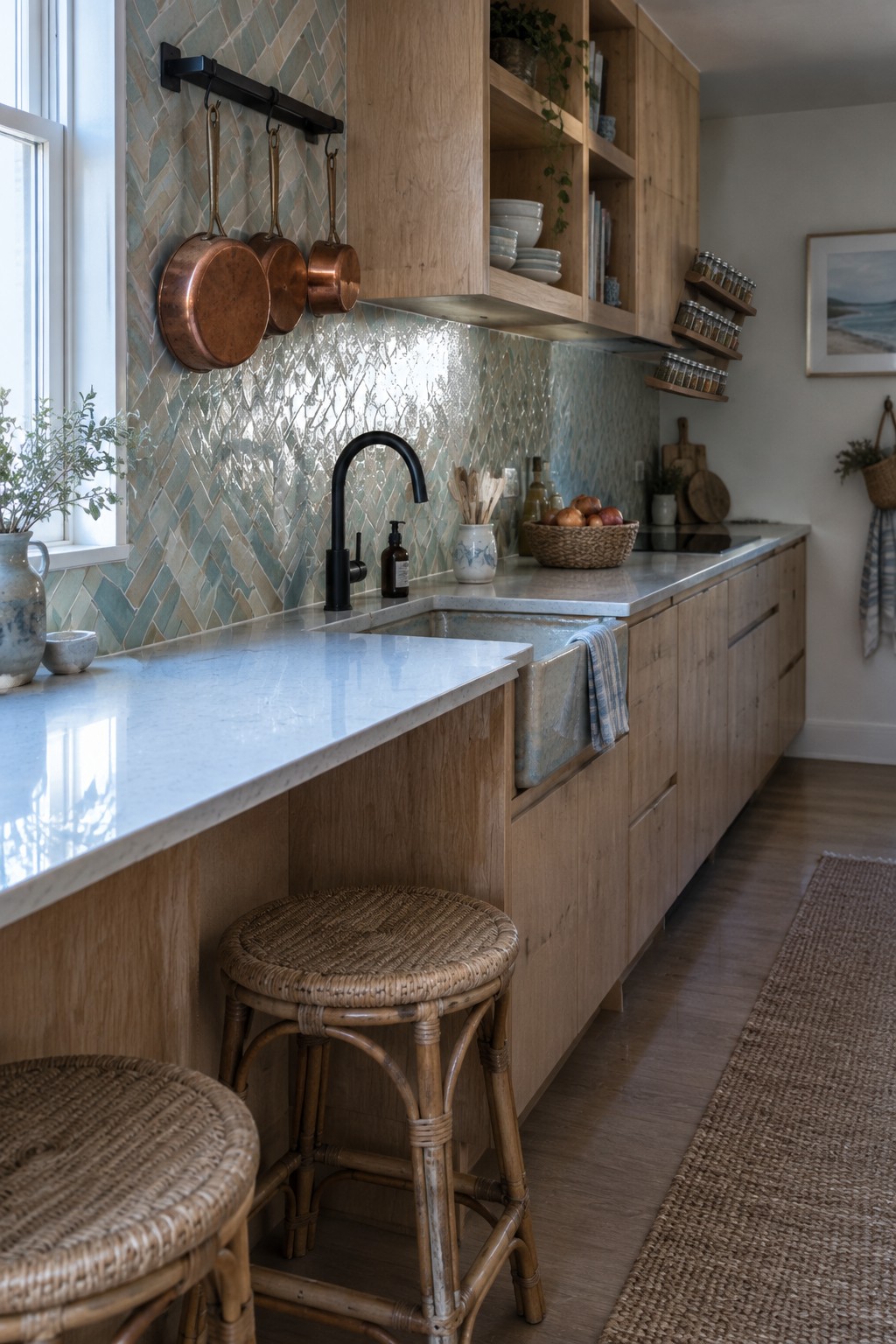
A long, uninterrupted counter gives a kitchen plenty of room for prep and serving. Here, the pale countertop runs along light oak cabinets, while the coastal tile adds color without taking over the space.
This setup works especially well in a narrow kitchen, where a continuous work surface can make the layout feel more useful. Keep frequently used items close by, but leave enough clear counter space for cooking.
Use Blue Tile On The Kitchen Island
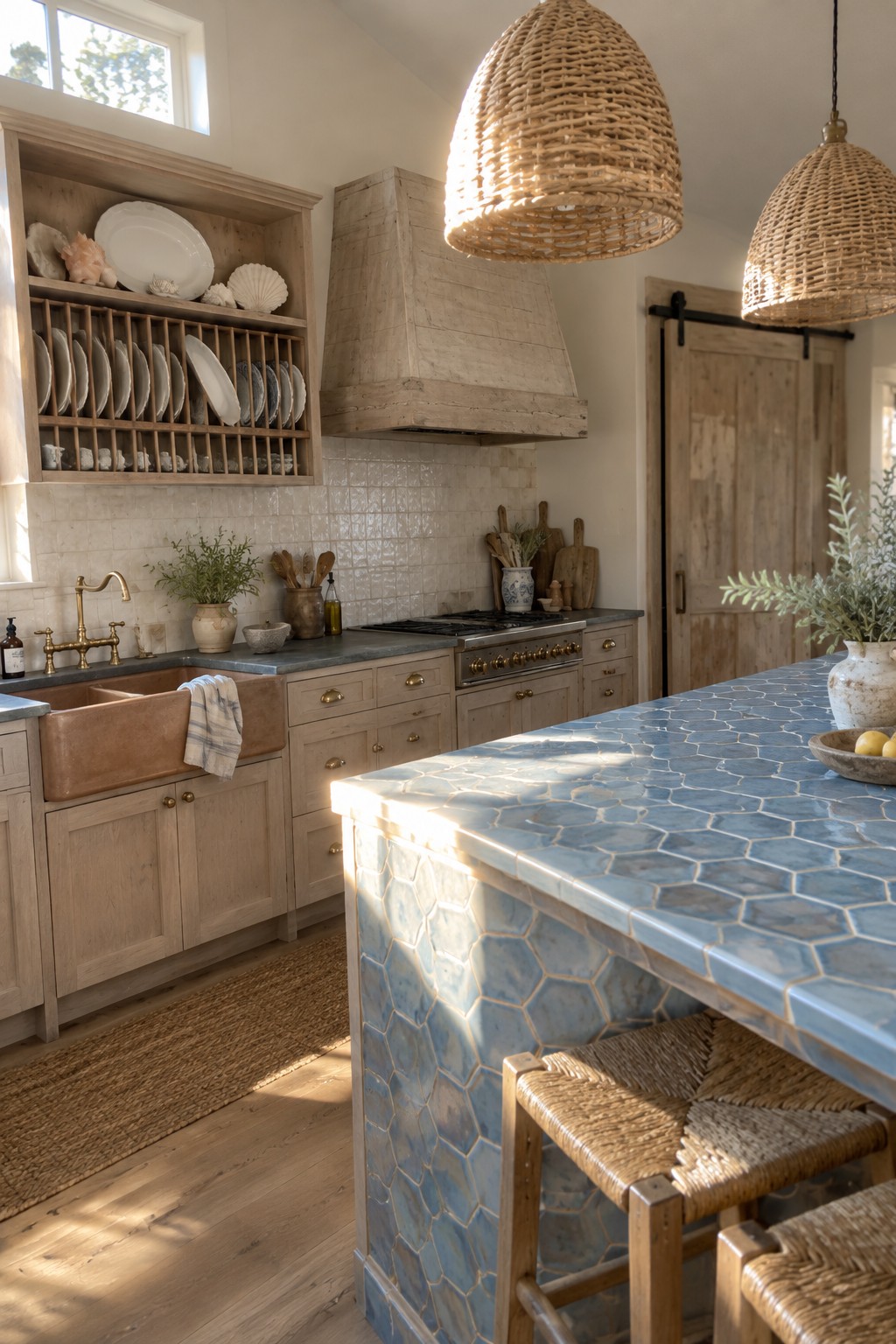
A tiled island is a simple way to bring color into a kitchen without covering every wall. Here, blue hexagonal tile turns the island into a useful feature while the light oak cabinets keep the rest of the kitchen feeling calm.
This idea works well in a kitchen with mostly neutral finishes. Choose a tile that suits the cabinet tone, and keep the grout and nearby surfaces fairly quiet so the island does not feel too busy.
Use Open Shelves to Show Off Coastal Tile

Open shelves leave more of the backsplash visible, so a textured coastal tile can become a main part of the kitchen without covering every wall. Here, the long white shelves keep the blue-green tile in view while light oak cabinets add a simple, natural finish.
This approach works well when you want color and texture but still need everyday storage. Keep the shelves fairly neat, and leave enough clear counter space below so the tile remains easy to see.
Use a Farmhouse Table for Extra Kitchen Workspace

A sturdy wood table can give a kitchen a useful work surface without adding more built-in cabinetry. It also brings a relaxed, lived-in feel, especially alongside simple light oak cabinets and coastal tile.
This works well in a larger kitchen where there’s room to move around the table. Choose a size that leaves clear paths to the counters, and use baskets underneath for everyday storage.
Use a Dark Island Counter to Define the Kitchen

A dark countertop on the island gives a light oak kitchen a practical focal point. It also makes a generous work surface feel distinct from the long counter along the wall, without needing a change in cabinet color.
This approach suits kitchens where the island is used for prep or casual seating. Choose a finish that can handle everyday use, and keep the surrounding surfaces fairly simple so the contrast does not feel busy.
Add a Built-In Bench to the Kitchen

A built-in bench can make an unused kitchen corner into a comfortable spot for meals and conversation. Here, the striped cushions give the oak cabinetry a casual coastal feel without taking attention away from the kitchen.
This idea works especially well beside a window, where the bench can make good use of space that might otherwise be hard to furnish. Choose wipeable upholstery, and include drawers below the seat if you need extra storage.
Use a Blue Tile Backsplash Behind the Cooktop
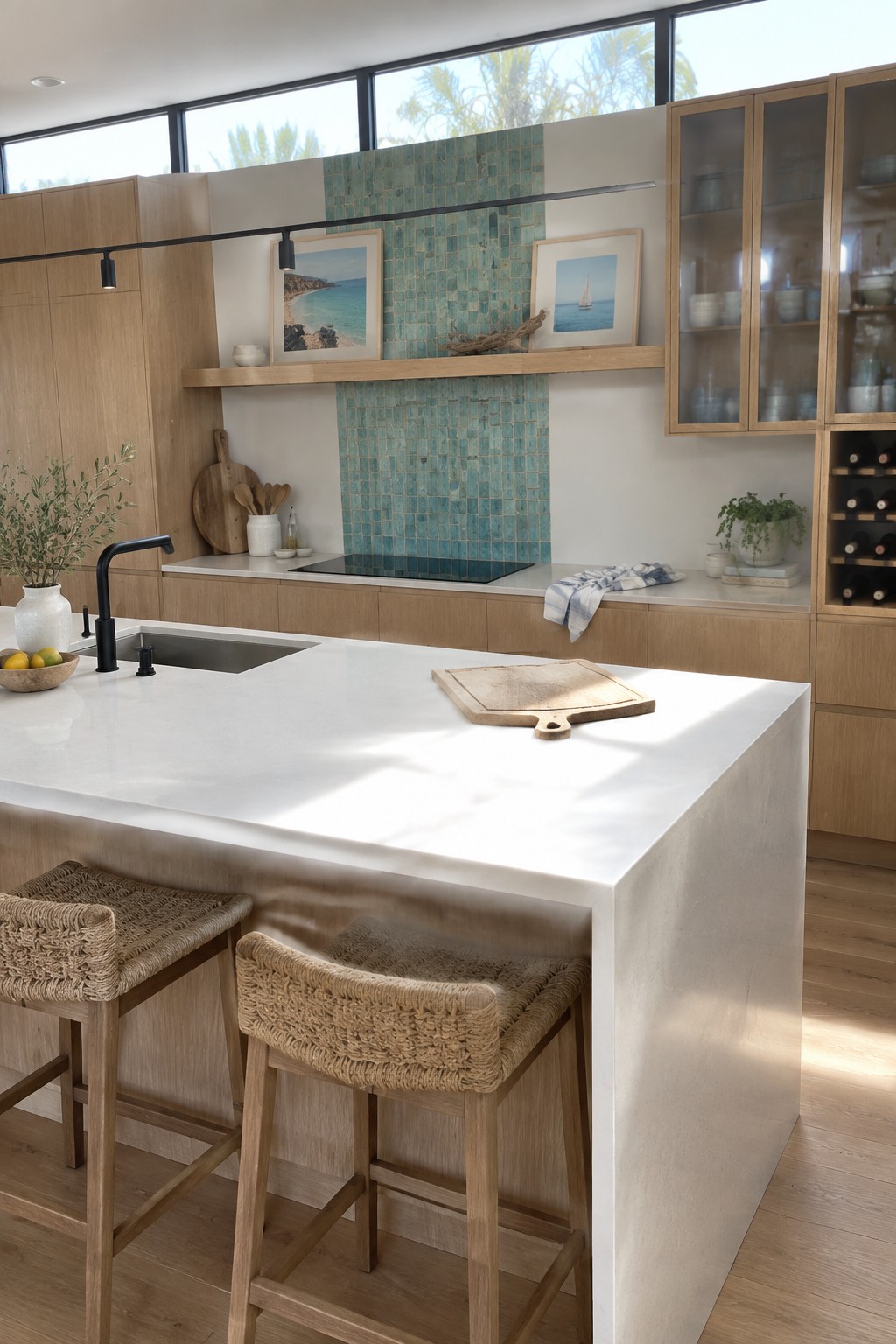
A vertical strip of blue-green tile can give a light oak kitchen a clear coastal touch without covering every wall. It brings color to the cooking area while letting the wood cabinets and pale counters stay simple.
This approach works well when you want a feature but prefer a quieter look than a full backsplash. Choose tile with some variation in tone, and keep nearby finishes fairly plain so the cooktop area feels connected to the rest of the kitchen.
Use a Stone Kitchen Island for Extra Seating
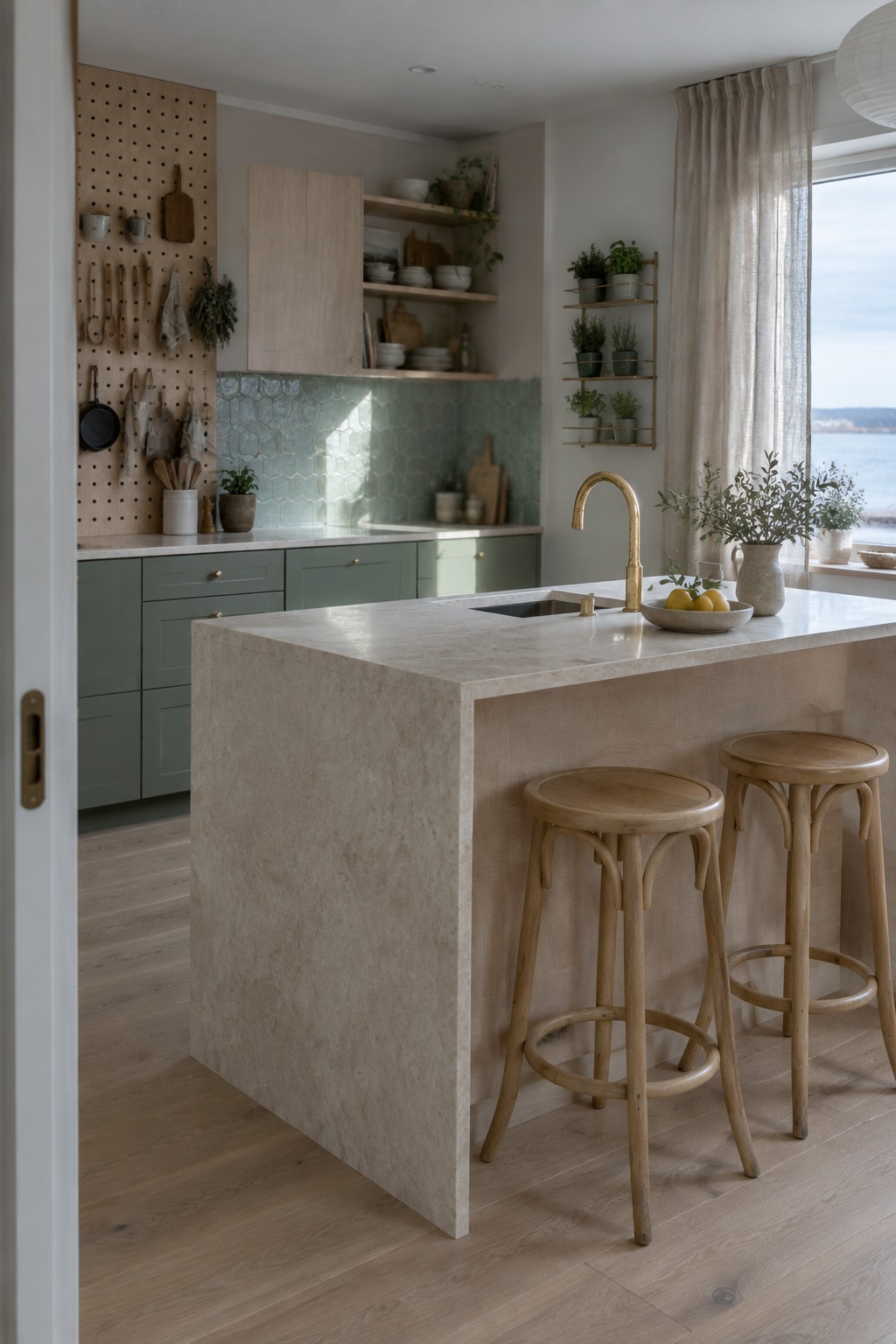
A large stone island can provide everyday seating without taking up space for a separate dining table. Its solid surface also gives the kitchen a useful work area, while the simple finish suits a relaxed coastal home.
For a similar setup, choose stools that tuck neatly beneath the counter and leave enough room to move around the island. A pale stone surface works well with light oak cabinets and muted green or blue tile, but check that the countertop is practical for regular cooking.
Use Handmade Coastal Tile Across the Kitchen

Handmade-look tile can cover a large stretch of kitchen wall without making the room feel too formal. The varied blue and cream squares here give light oak cabinets a bit of color and an easy, lived-in feel.
This approach works well in kitchens where the tile is a main feature, especially when the cabinets and counters stay fairly simple. Choose a tile with a few related shades, and let its natural variation provide most of the pattern.
Use Open Shelves to Keep a Coastal Kitchen Practical
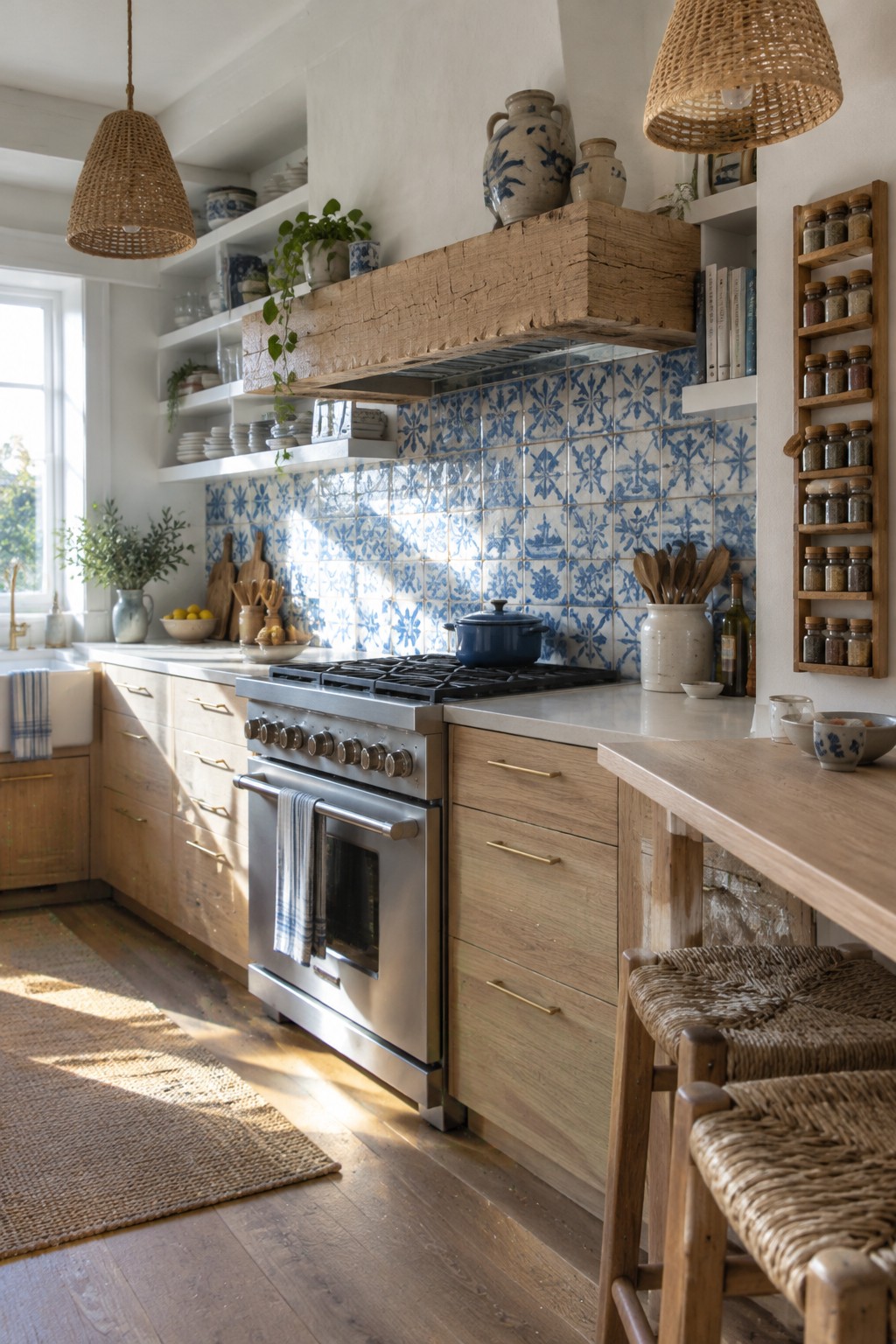
Open shelves make everyday dishes easy to reach while keeping a kitchen feeling less closed in. In this kitchen, they also leave the blue patterned tile visible, so the wall remains part of the design rather than hiding behind upper cabinets.
This approach works well in a smaller kitchen or in a room where you want to show off a tile backsplash. Keep the shelves to items you use often, and leave a little open space so they do not become crowded.
Use a Waterfall Marble Island for Extra Seating
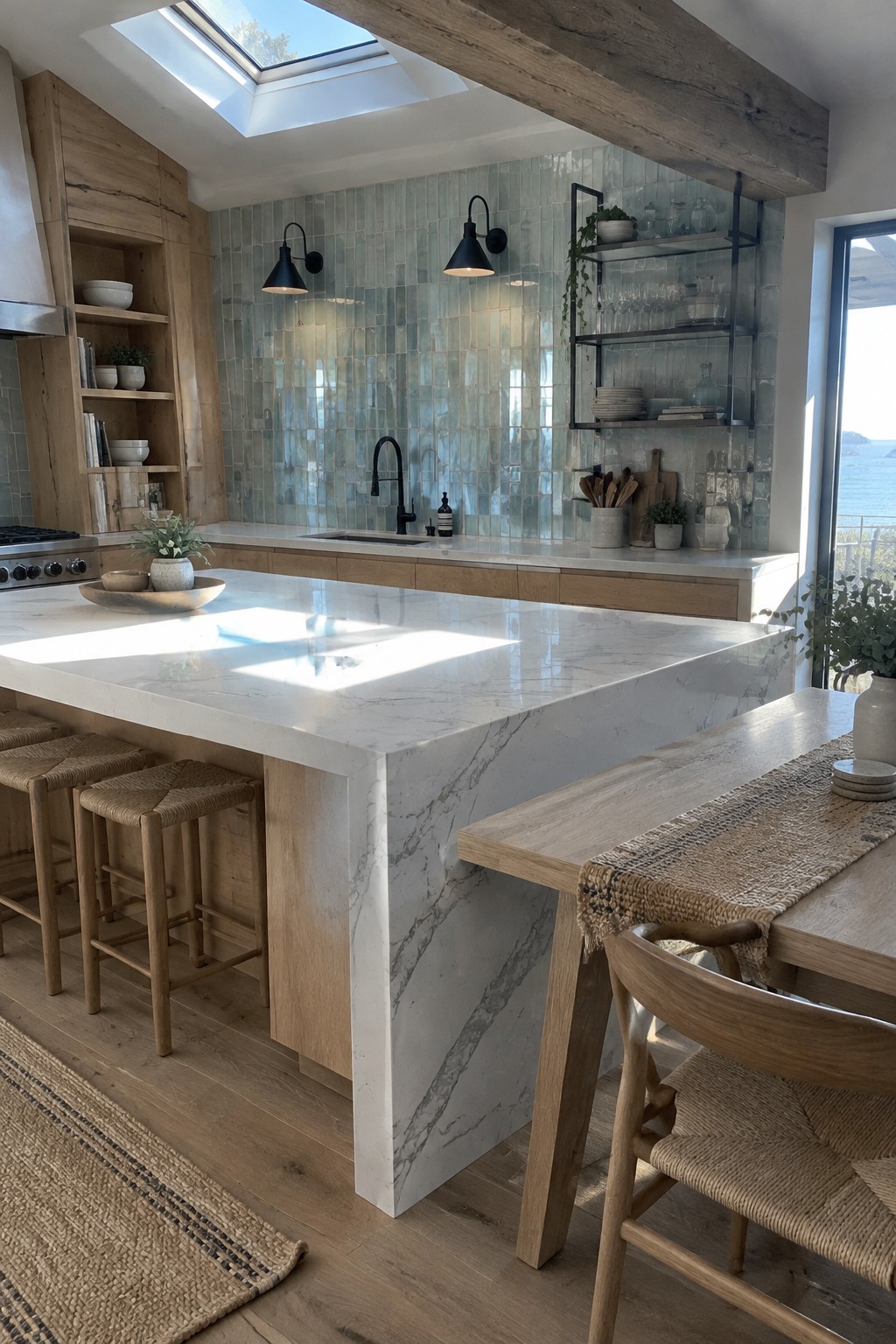
A waterfall marble island gives a kitchen a generous work surface and a finished look at the end of the counter. Here, the stone continues down the side facing the dining area, while the island also leaves room for a row of stools.
This layout suits an open kitchen where people gather while someone cooks. Leave enough clearance around the island for stools to tuck in and for everyday traffic to pass comfortably.
Use a Tiled Peninsula for Casual Kitchen Seating
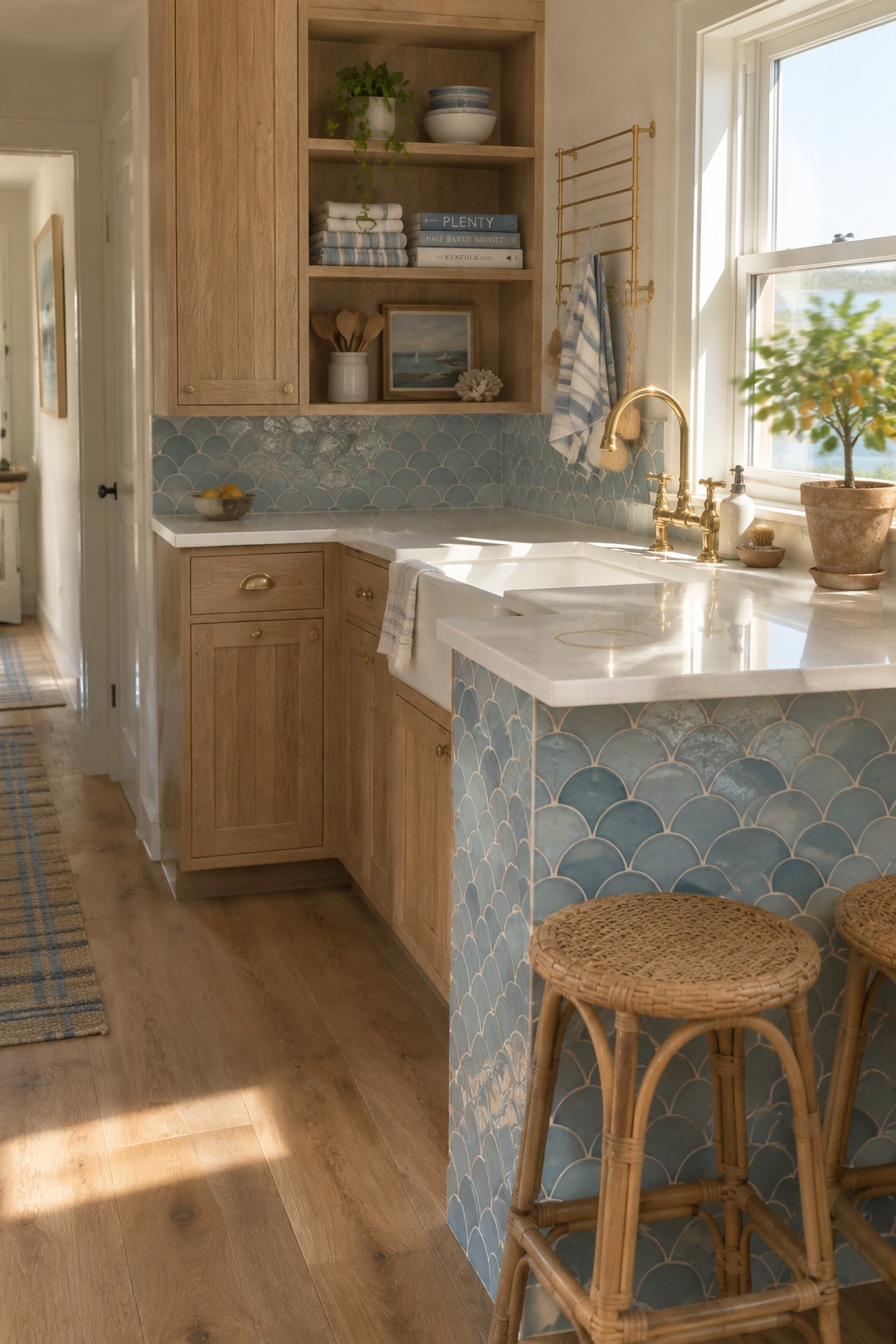
A tiled peninsula can give a kitchen a useful spot for a quick meal or a cup of coffee without needing room for a separate table. The blue scallop tiles make the seating area feel like part of the kitchen, rather than an add-on.
For a similar setup, leave enough counter overhang for stools and keep the tile pattern easy to clean. This works especially well in a narrow kitchen where a peninsula can provide seating and extra counter space.
Use A Wide Island As A Kitchen Worktable

A wide island gives a kitchen room for prep, serving, and casual seating without needing a separate table. Here, the pale stone top leaves plenty of clear counter space, while the light oak base keeps the large piece from feeling too heavy.
This setup works well in an open kitchen where people tend to gather while someone cooks. Leave enough room around the island for stools and easy movement, and consider adding drawers or shelves to make the extra surface more practical.
Use a Curved Tiled Island to Shape the Kitchen

A rounded island can make a kitchen feel easier to move through, especially when it sits beside a dining nook. The curved end takes up less visual space than a square corner, while small coastal tiles give the island a clear place in the room.
This shape works well in an open kitchen where people pass between cooking and seating areas. Choose a durable tile for the island face and keep the countertop edge smooth, so the curve is comfortable to walk around and easy to clean.
Use a Large Island for Kitchen Prep

A roomy island gives you a useful place to chop, set out ingredients, or serve a quick meal. Here, the broad pale countertop keeps the work area simple and easy to use.
In a kitchen with light oak cabinets and coastal tile, a plain island surface can let those materials stand out without adding more pattern. Leave enough room around the island for stools and for people to move through comfortably.
Use Blue Tile to Cover the Kitchen Wall
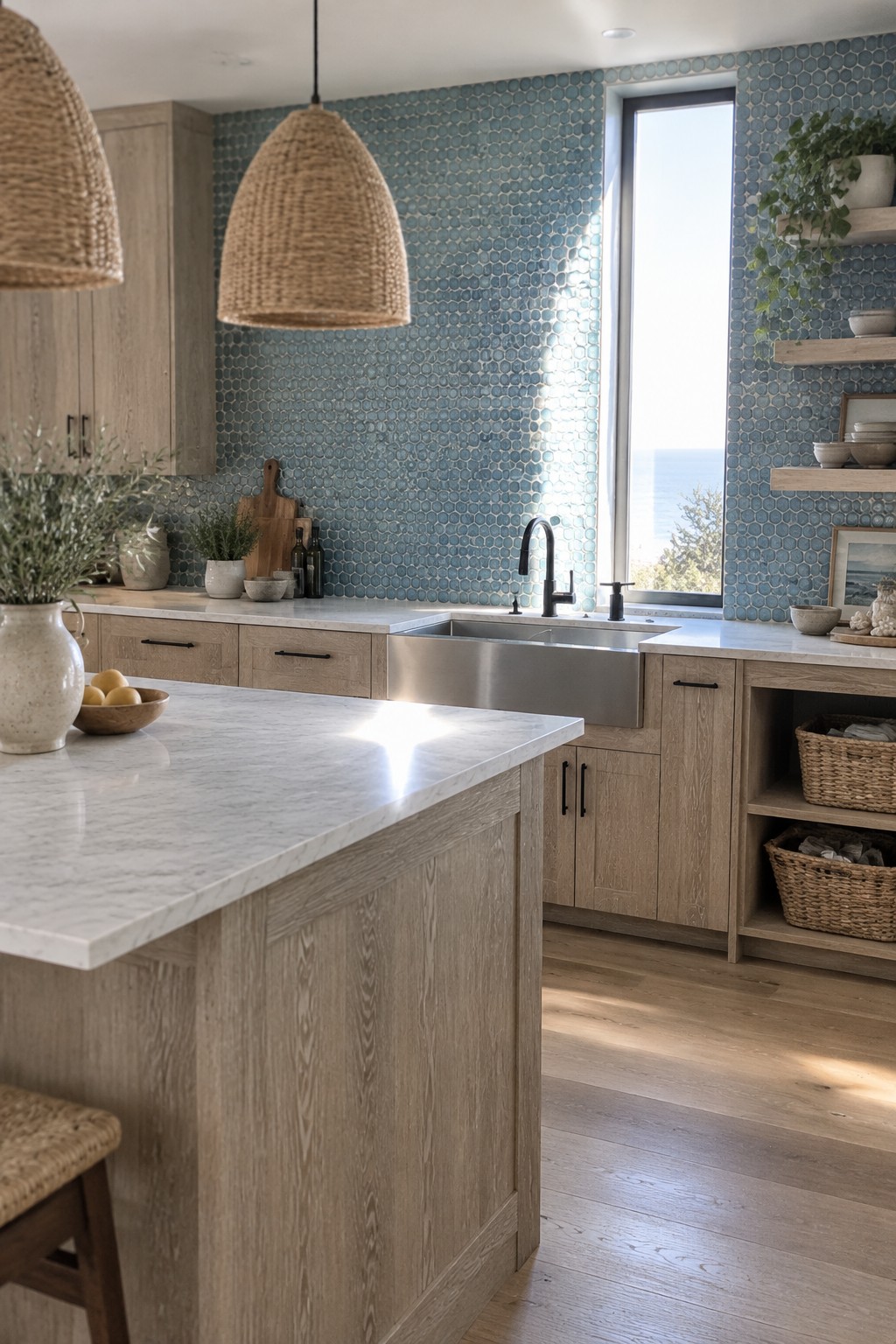
A full wall of blue tile can give a kitchen a clear coastal feel without relying on lots of themed decor. Here, the small round tiles bring color to the space while the light oak cabinets keep the overall look relaxed.
This works well in a kitchen with simple cabinetry and a fairly open wall behind the counters. Choose a tile shade that suits the wood and keep grout close in color if you want the pattern to feel less busy.
Use Patterned Tile on the Kitchen Island

A tiled island is a useful way to bring coastal pattern beyond the backsplash. Here, muted star-and-floral tiles cover the island base, giving it character while the pale countertop keeps the work surface simple.
This idea suits a kitchen where the cabinets and counters are fairly restrained. Choose a tile pattern with a few soft colors, and keep nearby finishes quiet so the island does not compete with the rest of the room.
Frequently Asked Questions
Q: How do I keep light oak cabinets from making the kitchen feel too pale?
A: Add contrast with a deeper island, dark cabinet pulls, or a few warm wood accents. Coastal tile with a soft blue or green pattern also brings in color without making the room feel busy.
Q: What countertop colors work well with light oak and coastal tile?
A: White, cream, and soft gray countertops all pair nicely with light oak. If your tile has a strong pattern, choose a quieter countertop so the surfaces don’t compete.
Q: Can coastal tile work in a small kitchen?
A: Yes. Try it on a backsplash or a small area behind the range instead of covering every wall. A simple pattern and light grout keep the space feeling open.
Q: How can I keep the kitchen coastal without using lots of blue?
A: Use sandy neutrals, woven textures, and a few natural details like a wood bowl or linen shade. The tile can carry a hint of sea glass green or muted blue, while the rest of the room stays warm.
