


Along the Mediterranean coast, a home’s character often comes through in its exterior: sun-warmed stone, terracotta details, and the way the roofline meets the landscape.
I find these materials work best when their colors and textures feel connected to the setting rather than added as decoration.
The entry, windows, and shaded areas matter too, since they shape how the facade looks from the street and how the house handles bright sun.
Some combinations can feel heavy, so I’d pay attention to where lighter plaster, simple trim, or greenery can give the stone room to breathe.
The ideas ahead offer practical details to save and adapt to a home’s own climate, structure, and surroundings.
Make a Stone Entry Feel Welcoming

A deep arched entry gives a stone house a sheltered, welcoming entrance. It also makes a useful transition between the garden and the front door, rather than leaving the doorway exposed on the facade.
This approach suits Mediterranean-style homes, especially where stone is a main exterior material. A built-in bench can make the recess more practical, but keep the entry wide enough for an easy path to the door.
Add a Stone Fountain to a Courtyard Patio
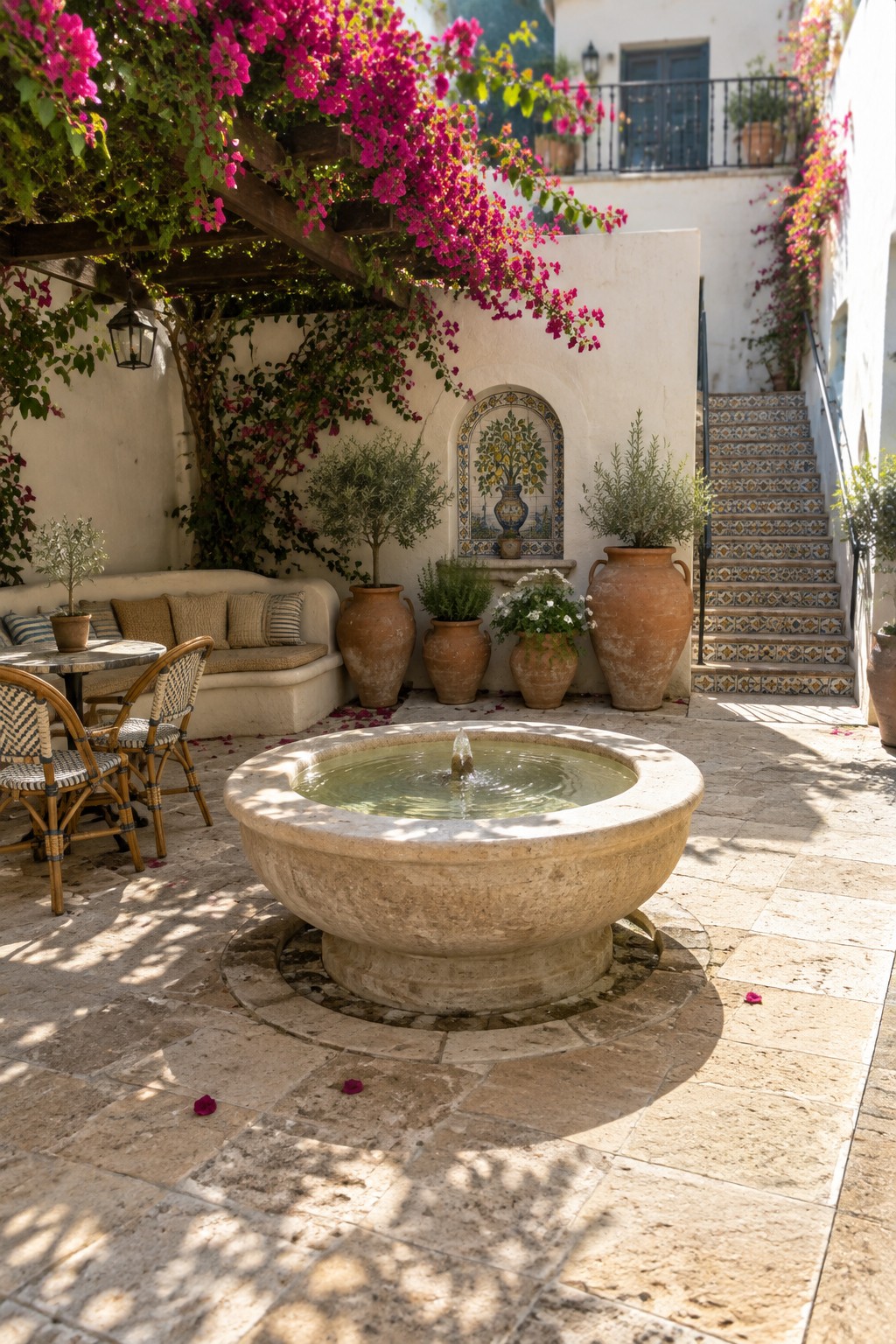
A small stone fountain can give a courtyard patio a useful focal point without taking up much room. Its simple shape suits Mediterranean homes, and the sound of moving water makes a seating area feel more settled.
Place the fountain where it can be seen from nearby chairs, but leave enough space to walk around it. A warm stone finish works well with terracotta pots and paved courtyards; check that the base is level and that water can drain safely.
Make Room for Outdoor Dining
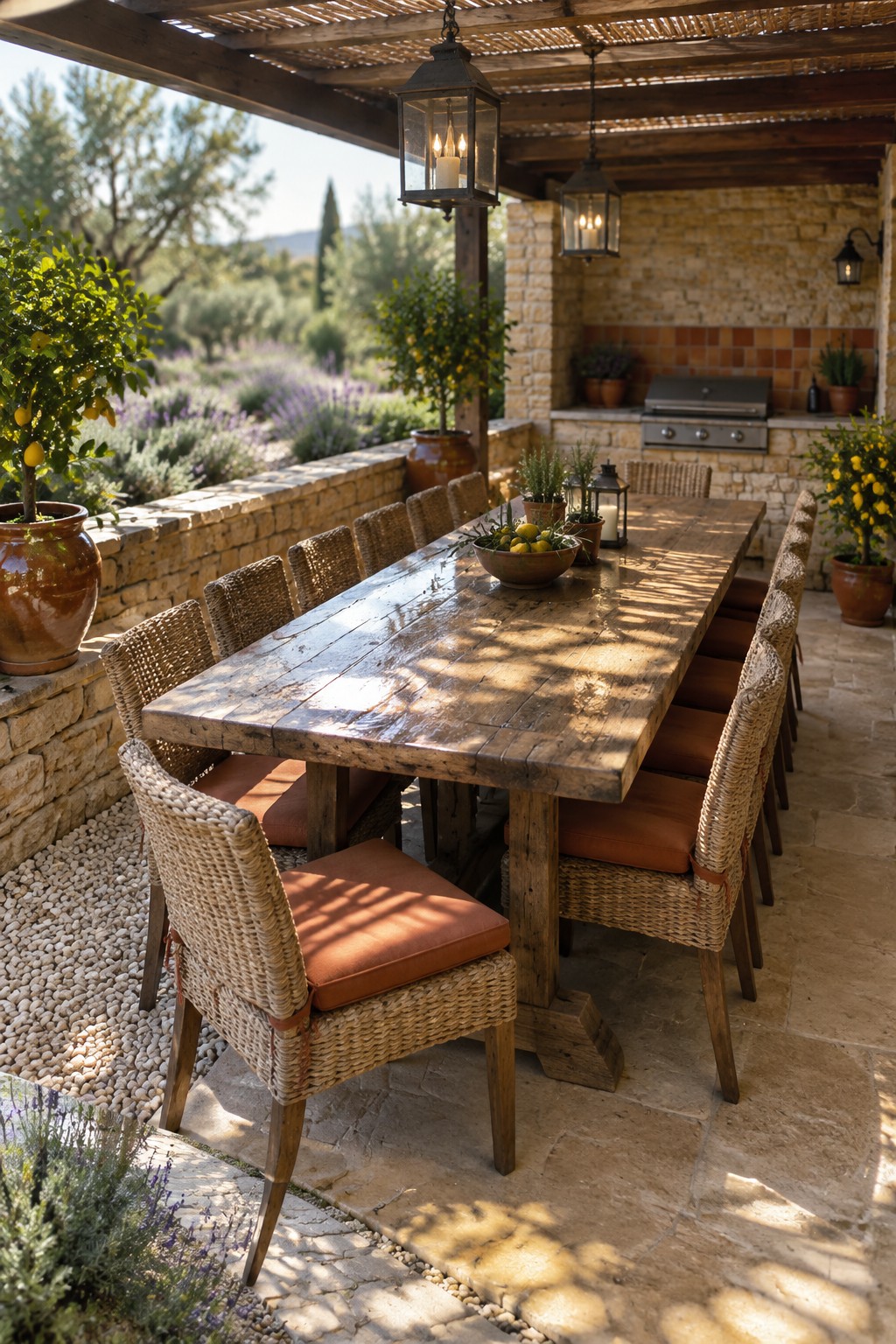
A long dining table makes a covered patio useful for more than a quick meal. It gives family and friends a place to gather, while the overhead pergola provides shade and helps define the dining area.
For a similar setup, choose a table that leaves enough space to pull out chairs and walk around comfortably. Stone paving and woven chairs suit this style well, but keep the table size in proportion to the patio.
Make the Pool Area Part of the Patio
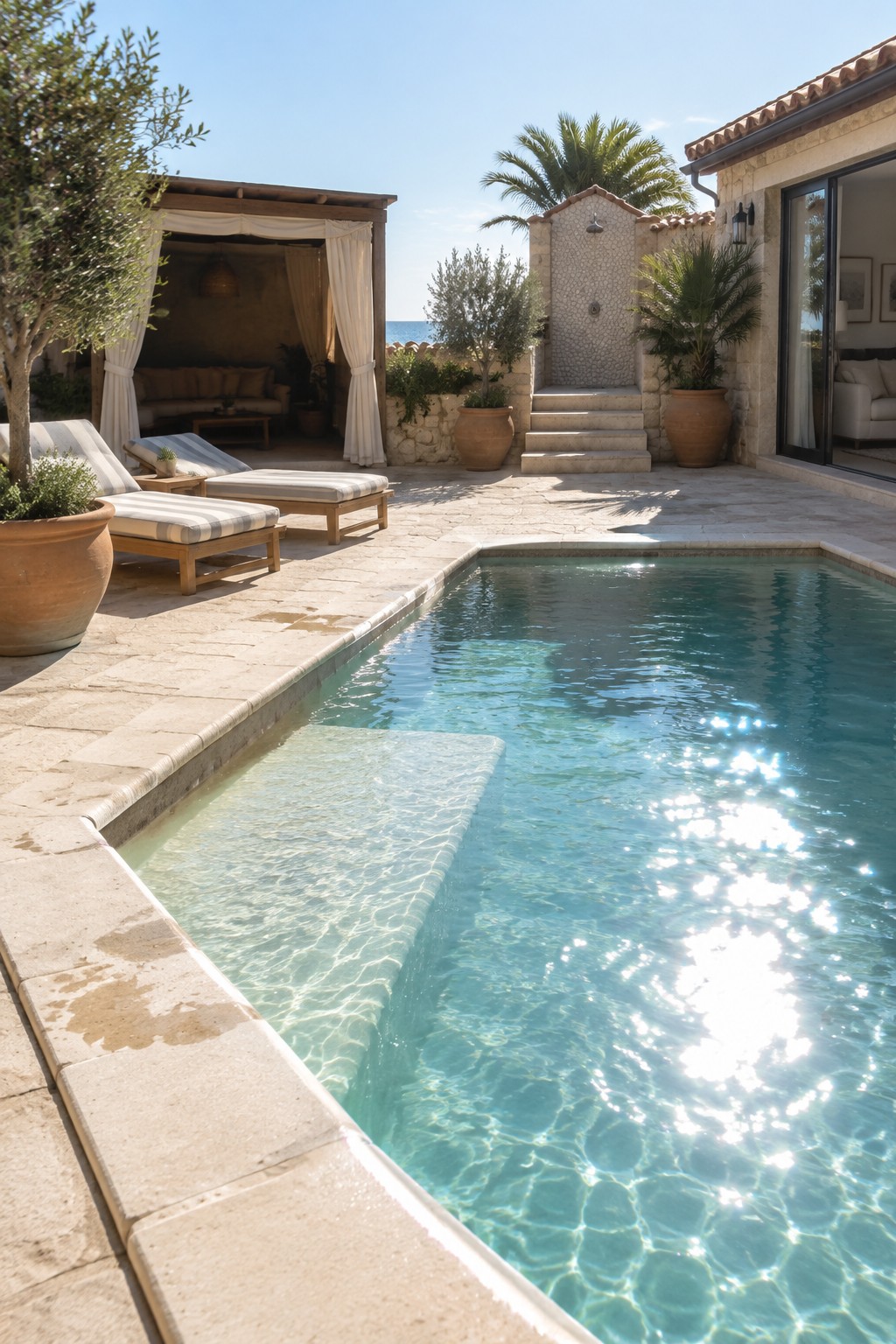
A pool works well as part of the patio layout rather than a separate zone. Here, pale stone paving runs right up to the water, making the pool feel connected to the seating area and easy to use.
For a similar setup, choose paving that can handle wet feet and add a shallow ledge if you want a place to sit or cool off. Leave enough clear space around the pool for people to move safely.
Add Shade to a Terracotta Terrace

A shade canopy can make a sunny terrace easier to use through the day. It also gives an outdoor seating area a clear place to gather, while terracotta paving keeps the space tied to the home’s warm, traditional character.
This works well on a rooftop or open patio where there is room for a seating group beneath the canopy. Choose a sturdy frame and fabric suited to outdoor use, and leave enough open space around the furniture for people to move comfortably.
Use Terracotta Steps to Give the Entry More Character
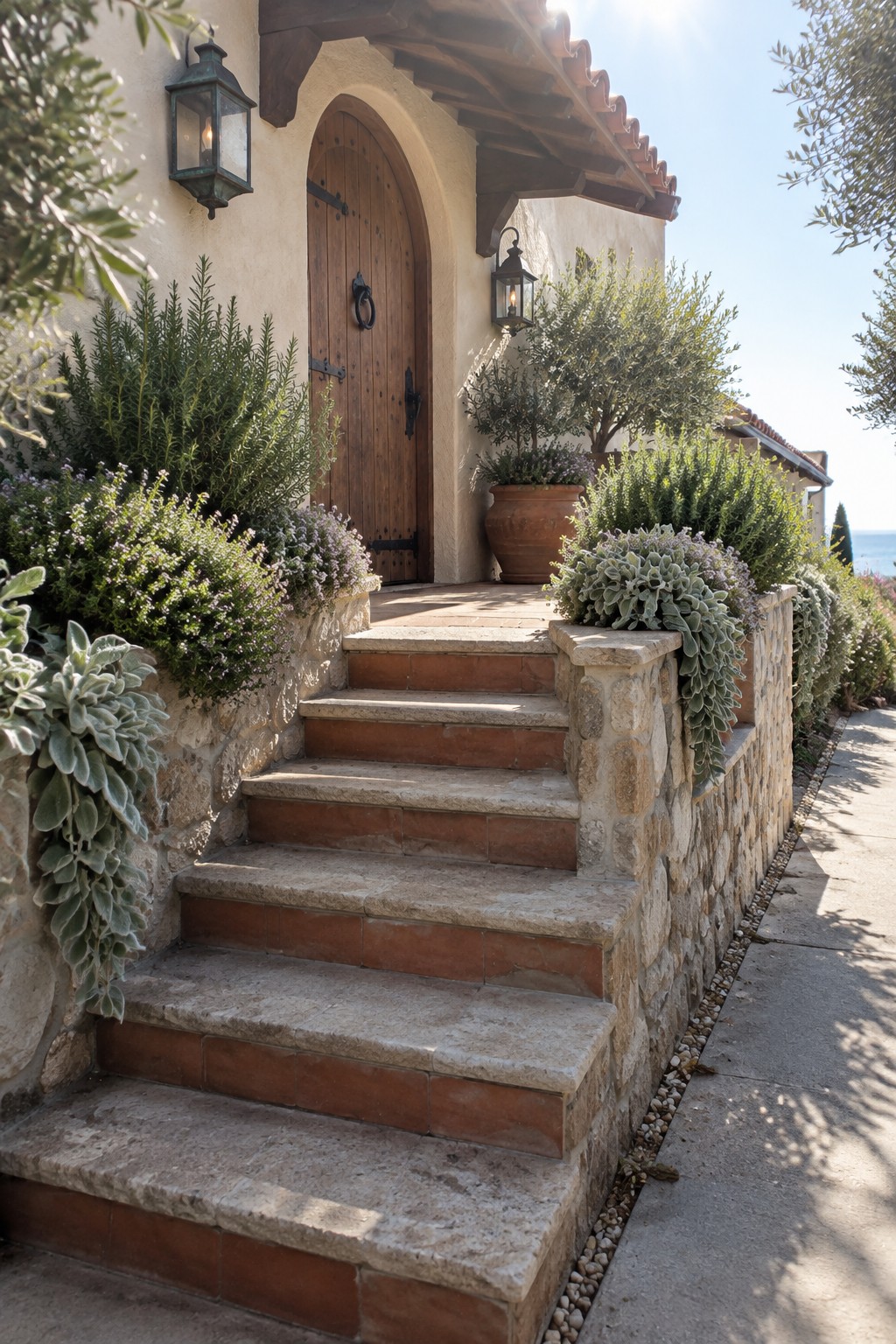
Terracotta risers are a simple way to make a Mediterranean entry feel rooted and welcoming. Their earthy color works naturally with warm stone, and the repeated steps give the approach a clear sense of direction.
This idea suits a home with a raised front door or sloping path. Use terracotta on the vertical faces and stone for the treads, and keep the steps broad enough to feel comfortable underfoot.
Use Terracotta Tiles for a Garden Path

Terracotta paving gives an outdoor walkway a warm, traditional feel and suits Mediterranean-style homes especially well. Here, the tiled area meets a simple gravel path, giving the garden a clear route without making it feel overly formal.
Use terracotta tiles for a patio or the section of a path closest to the house, then switch to gravel farther into the garden. Choose tiles with a slightly varied finish to make everyday marks less noticeable, and check that they are suitable for outdoor use.
Make a Stone Fireplace the Center of the Patio
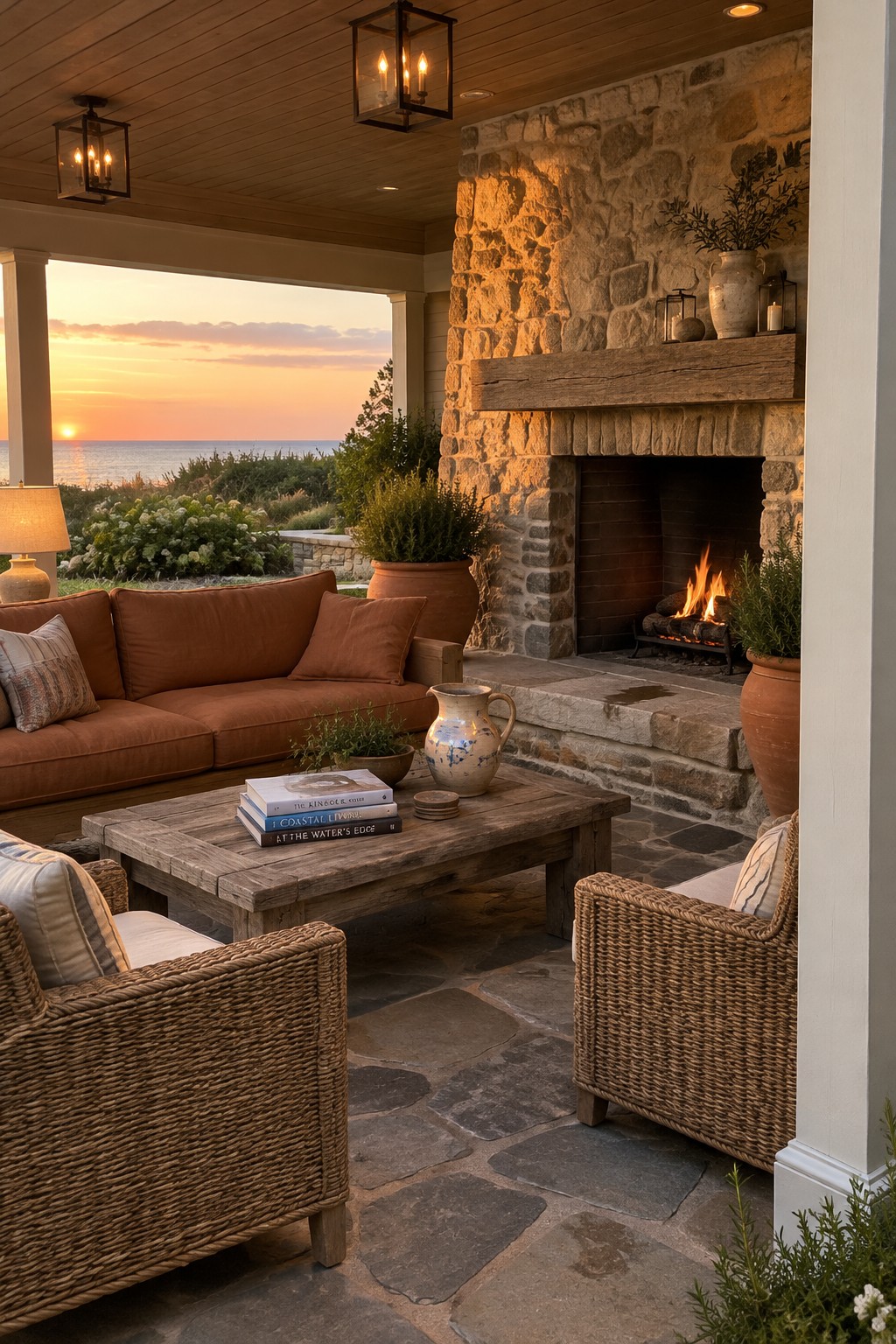
A stone fireplace gives an outdoor seating area a natural place to gather. The rough stone and thick wood mantel suit a Mediterranean coastal home, and the fire makes the patio useful on cooler evenings.
Set the fireplace beside a seating group, leaving enough room to walk around the chairs and coffee table. This idea works especially well on a covered patio, where the hearth can be part of the space without taking over the whole layout.
Make a Small Balcony Work for Outdoor Dining

A small balcony can still be a pleasant place to sit and eat. A compact round table uses the space well, and a tiled top brings in color without needing much decoration.
Choose chairs that tuck close to the table, and leave a clear path to the door. Terracotta floor tiles suit this kind of coastal balcony, but add a cushion or two if the hard surfaces feel a little stark.
Build an Outdoor Kitchen Around a Stone Worktop

An outdoor kitchen is easier to use when the work surface and cooking area are built into one sturdy setup. Here, a long stone counter gives room to prep food beside the grill, while terracotta tile makes the cooking wall feel at home in a Mediterranean setting.
This approach suits a covered patio or terrace where you cook often. Choose a durable stone that can handle outdoor use, and plan for enough counter space near the grill. A sink is useful, too, but keep the layout simple if space is limited.
Use a Tree to Shade a Courtyard Seating Area

A mature tree can provide natural shade for a courtyard seating area and make a paved space more comfortable to use. A built-in bench beneath the branches makes good use of the spot without taking up extra room.
This idea suits enclosed courtyards and small patios, especially where a tree can grow in a generous planter or open planting bed. Keep enough space around the trunk for healthy growth, and choose paving that is easy to sweep when leaves fall.
Use a Stone Wall to Create a Terraced Garden
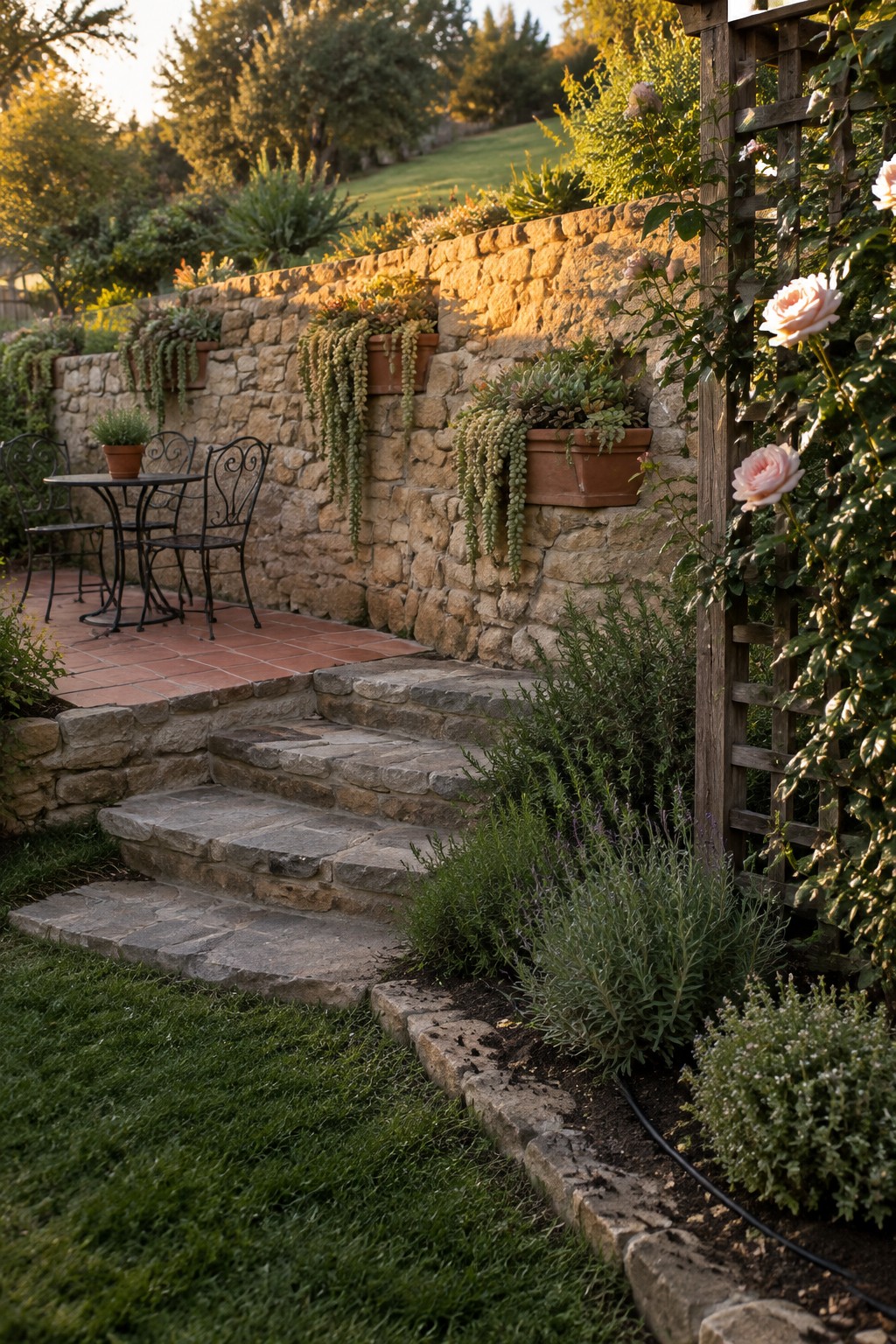
A low stone wall can make a sloping garden easier to use while giving it a clear, orderly structure. Here, the raised planting area sits above a terracotta-tiled patio, so the wall also helps define the outdoor seating space.
This approach works well on a sloped lot where you want room for both planting and a small patio. Use local stone if possible, and keep the wall height suited to the grade so it feels sturdy without blocking the garden.
Set Up a Bocce Court Beside the Outdoor Bar
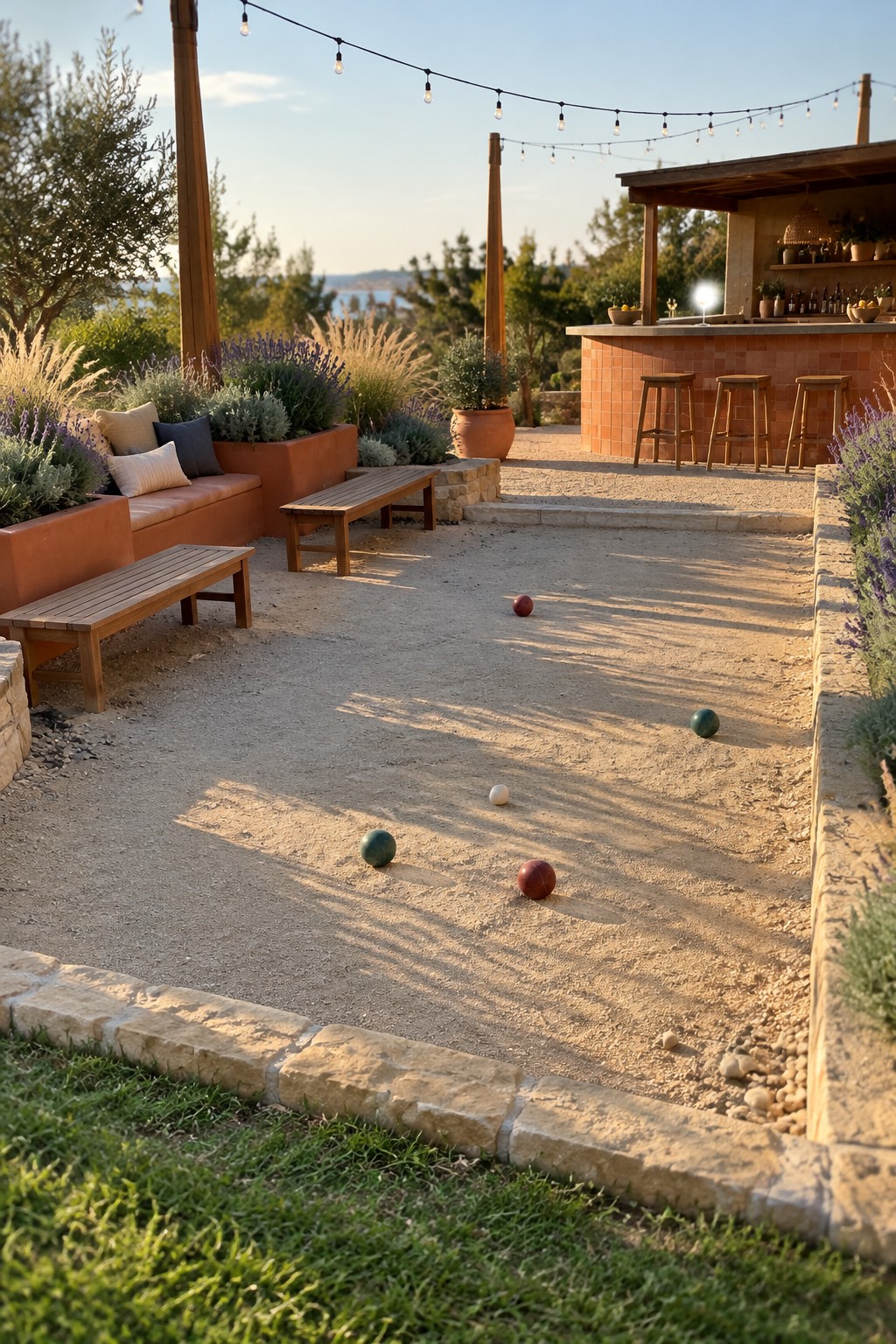
A simple gravel bocce court gives an outdoor living area a place for casual games, without taking up space for a full lawn. Here, the court sits beside a terracotta-fronted bar, so people can play while others sit nearby.
For a similar setup, use a level, well-drained surface and a low stone edge to keep the gravel in place. It suits a broad patio or garden, but leave enough room along the sides for players to move comfortably.
Create a Shaded Poolside Seating Area
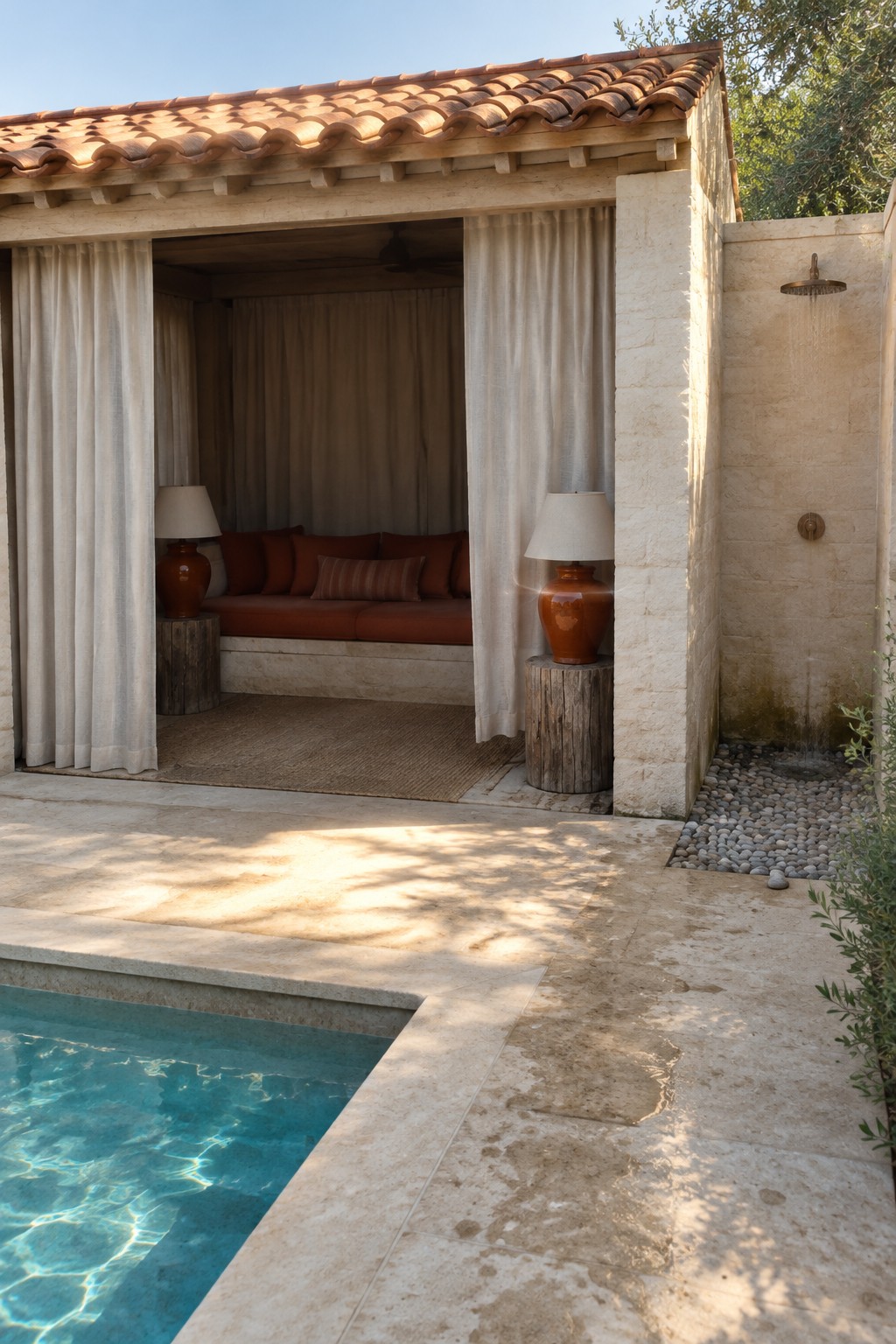
A covered seating nook beside the pool gives people a place to pause out of the sun without leaving the outdoor space. Here, a built-in sofa makes the small pavilion useful for lounging, not just passing through.
For a similar setup, place the seating close enough to the pool to feel connected, but leave a clear path around the water. A simple roof and curtains can provide shade and privacy in a courtyard or compact backyard.
Use Stonework to Shape a Side Entry
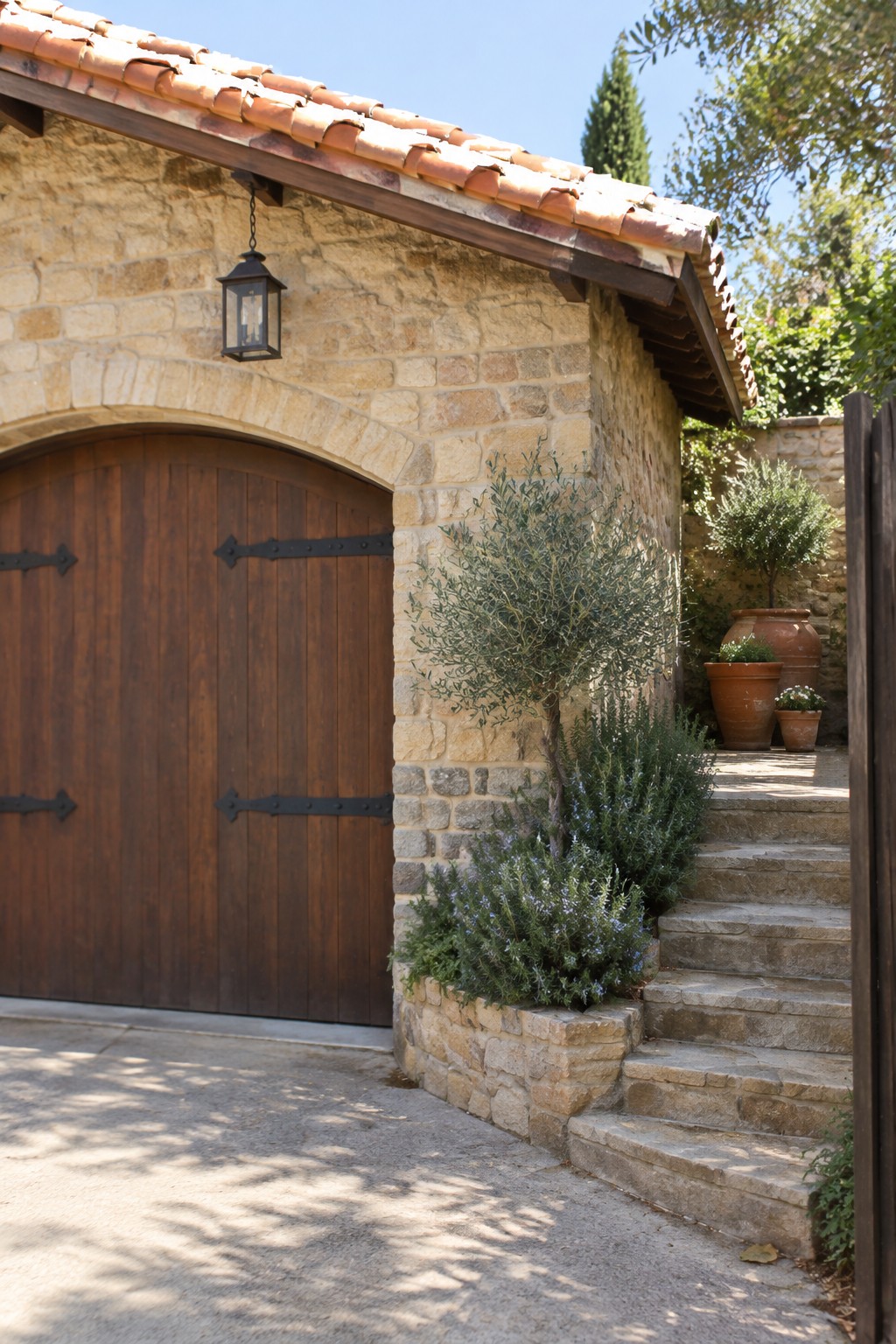
A side entry can feel like part of the home rather than a leftover passage when the steps and walls use the same stone. Here, the stone stairway fits naturally beside the arched wooden door and gives the entry a clear, finished look.
This approach suits Mediterranean homes where a side path needs to connect the driveway or yard to a courtyard. Keep the steps wide enough to use comfortably, and choose stone that works with the house rather than introducing another finish.
Build a Stone Bench Into the Terrace
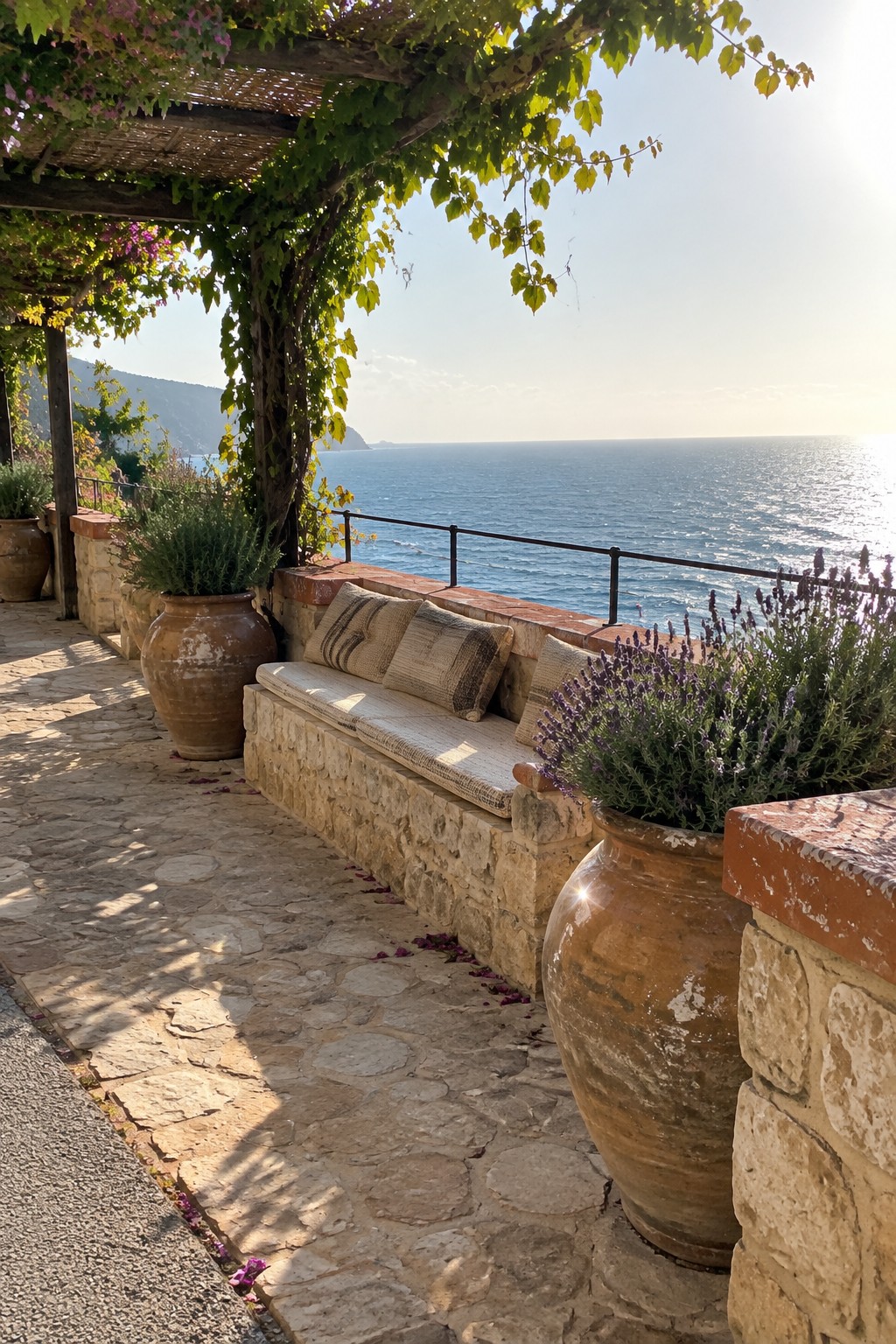
A built-in stone bench makes a coastal terrace feel settled and gives people a place to sit without crowding the walkway. A simple cushion keeps the hard surface comfortable while letting the stone remain part of the design.
This works especially well along a terrace edge or low retaining wall. Keep the seat deep enough for lounging, and use outdoor fabric that can handle sun and salt air.
Use Stone Pavers to Shape a Garden Path
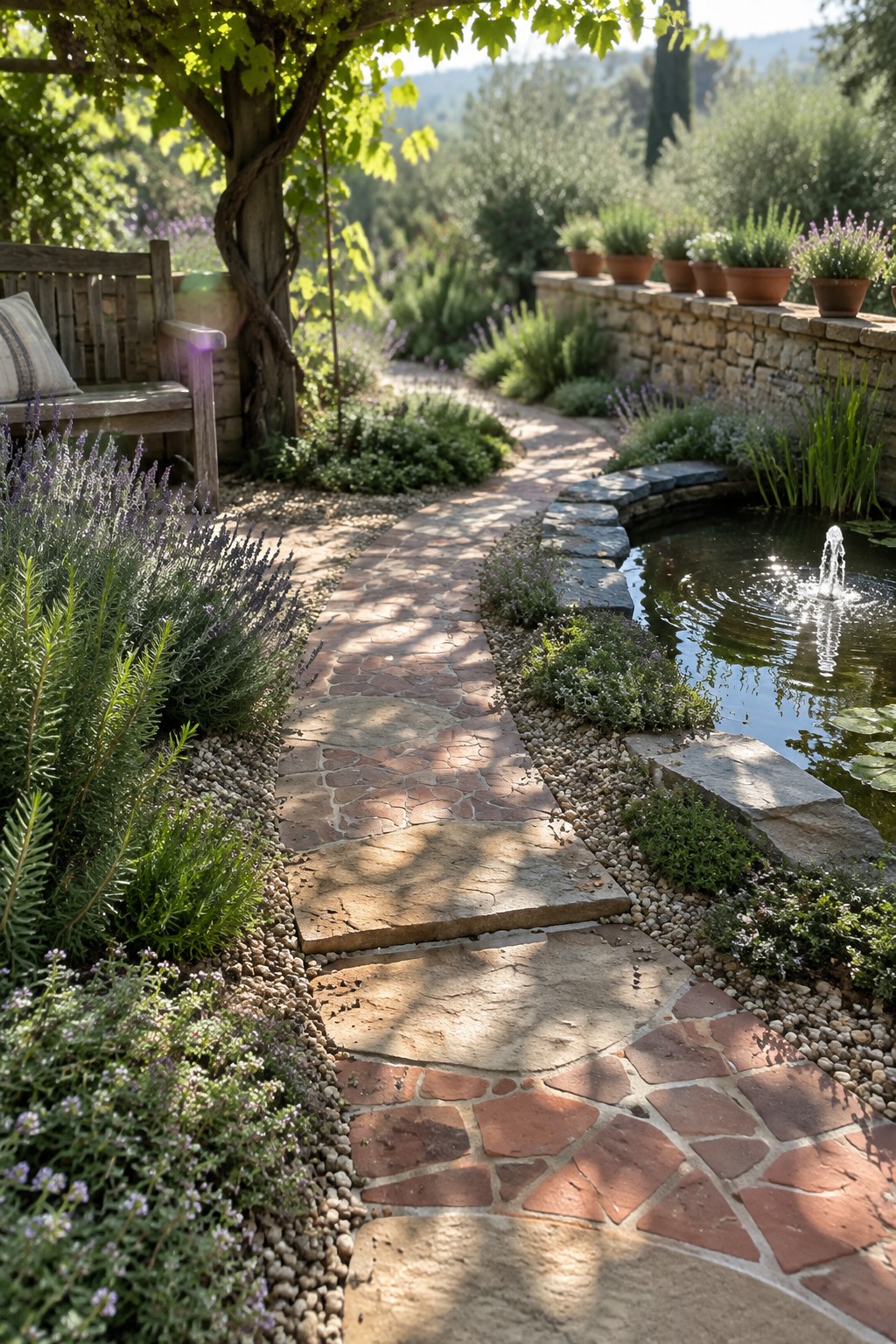
A stone path can give a Mediterranean garden a clear route through the planting without making it feel too formal. The irregular terracotta pieces here bring color and texture, while the pale gravel along the edges keeps the walkway distinct from the beds.
This approach works well in a cottage-style yard or beside a courtyard garden. Choose pavers with a fairly even walking surface, and leave enough room between them for comfortable steps.
Set Up a Shaded Terrace for Outdoor Dining

A simple pergola can make an outdoor dining area comfortable through the hotter parts of the day. Here, loose fabric across the timber beams filters the sun without closing off the terrace.
This works well on an exposed patio where you want shade but still want the space to feel open. Keep the dining table beneath the covered section, and choose fabric that can be removed or adjusted when the weather changes.
Use Stone Paths to Connect the Garden and Entry
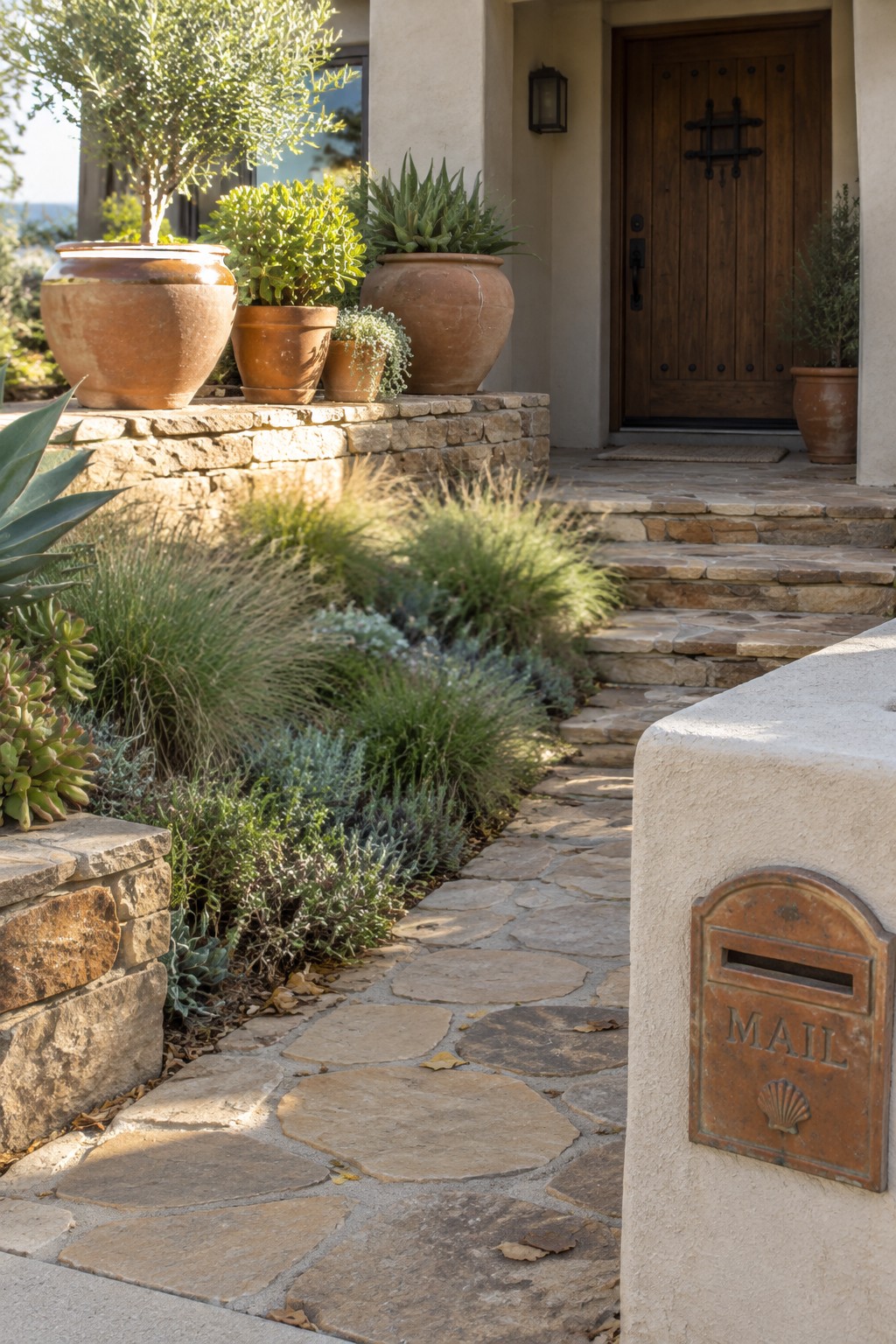
A flagstone path can make a Mediterranean garden feel like part of the home instead of a separate area. The irregular stones suit older-style architecture and give the route to the front door a relaxed, natural look.
Use larger stones where people walk most, and keep the gaps even enough to avoid awkward steps. Low, drought-tolerant plants can soften the edges without crowding the path.
Frequently Asked Questions
Q: How can I use terracotta if my rooms don’t get much sunlight?
A: Choose pale, warm terracotta for small accents, like a backsplash, pots, or a tiled entryway. Pair it with creamy walls and light stone so the room stays bright.
Q: Do warm stone and terracotta work in a modern home?
A: Yes. Keep the shapes simple and let the materials bring the character. A clean-lined stone floor or terracotta pendant can add warmth without making the room feel rustic.
Q: What’s an easy way to bring this look outdoors?
A: Try terracotta planters beside a stone bench or along a sunny patio wall. Add a few hardy herbs, and the space will feel welcoming without much upkeep.
