


Light oak can make a coastal room feel open and settled, but the shade and finish matter once you see them beside your walls, furniture, and natural light.
I find that pale floors work best when they bring warmth without making a room feel washed out, especially in spaces that get strong sun throughout the day.
The grain, plank width, and sheen also shape how a floor feels underfoot and how easily it fits with everyday life, from sandy entryways to busy kitchens.
Some rooms benefit from a quiet, consistent floor, while others feel more grounded when the wood adds a little texture.
I’d save the ideas that suit your home’s light and layout, then test a sample in the room before settling on a finish.
Light Oak Floors Keep Coastal Rooms Feeling Open

Pale hardwood is a good fit for a coastal living room because it keeps the floor feeling light while still bringing in a natural wood finish. Here, wide light-oak boards suit the relaxed, simple furnishings without competing with them.
This look works especially well in rooms with plenty of daylight and neutral fabrics. Choose a matte finish if you want the boards to feel casual, and check that the wood tone works with your wall color before committing.
Pale Hardwood Keeps a Coastal Bedroom Feeling Light

Pale hardwood is a practical choice for a coastal bedroom because it keeps the floor looking bright without feeling stark. Here, the light oak tone works well with the woven bed frame and simple white bedding.
For a similar look, choose a matte or low-sheen finish that lets the wood grain show. A natural-fiber runner can add a little texture beside the bed, but leave some floor visible so the room still feels open.
Light Oak Flooring Keeps a Coastal Kitchen Bright

Pale hardwood is a natural fit for a coastal kitchen because it keeps the room feeling open while bringing in a little warmth. Here, the light oak floor works well with the white cabinets and island, without competing with the patterned blue backsplash.
This look suits kitchens that get plenty of everyday use and need to feel bright rather than formal. Choose a durable finish that can handle spills, and consider a matte surface to keep scuffs less noticeable.
Use Pale Oak Flooring In a Coastal Dining Room
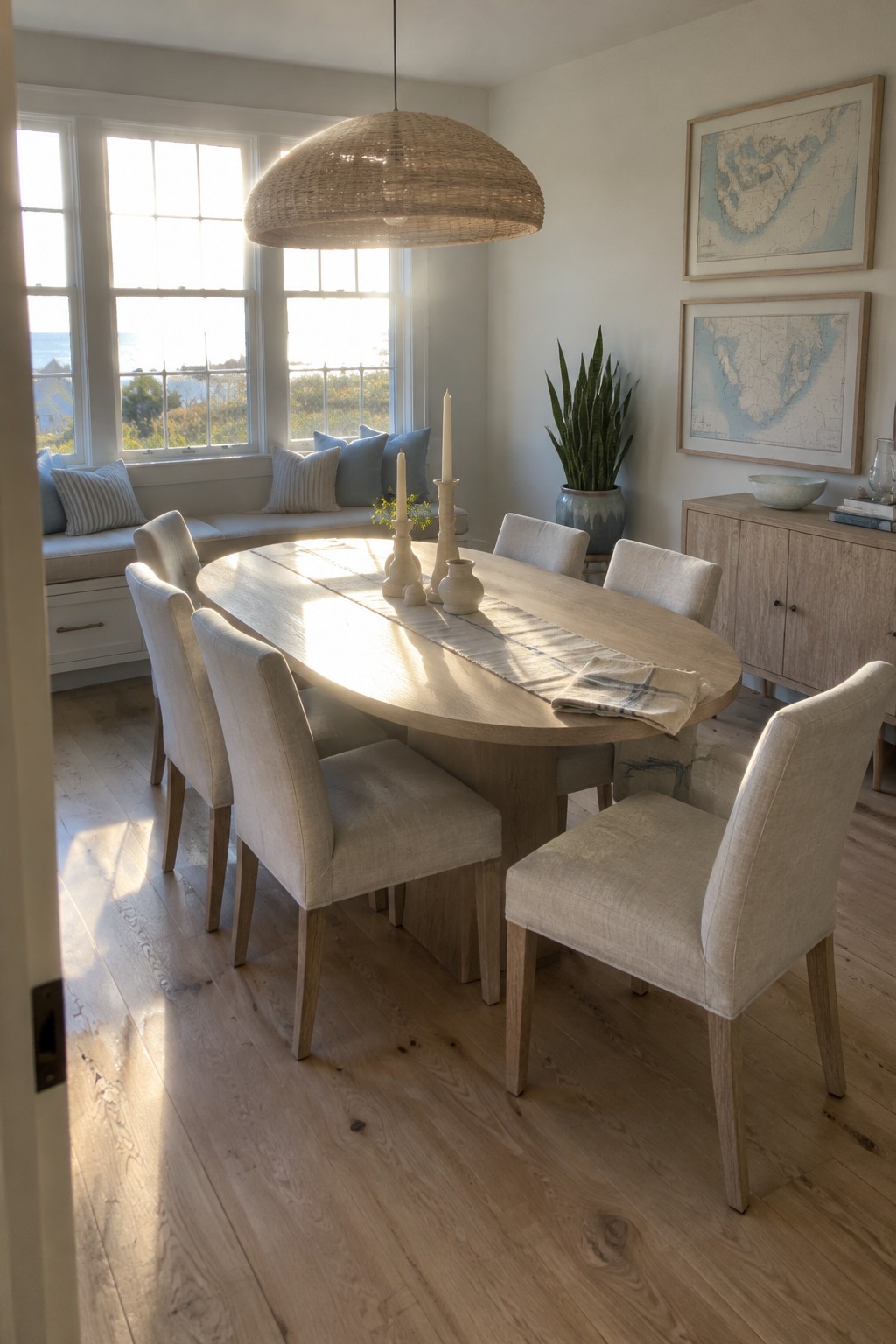
Pale oak flooring suits a dining room that needs to feel relaxed but still practical. Its light color works naturally with simple wood furniture, and it helps keep a large dining area from feeling too heavy.
This look works especially well in coastal homes with plenty of natural light. Choose a durable finish that can handle chair movement and everyday spills, and use felt pads on chair legs to help protect the floor.
Pale Oak Floors Work Well With Casual Coastal Furniture

Pale hardwood is a practical choice for a coastal living room because it keeps a large seating area from feeling too heavy. Here, the light oak tone suits the relaxed linen sofa and simple wood coffee table without competing with them.
This flooring works especially well in open living spaces where furniture already takes up plenty of room. Choose a low-sheen finish to keep the boards looking natural, and use a rug to mark out the seating area.
Pale Oak Flooring Works Well in a Small Home Office

Pale oak flooring can help a narrow home office feel more open without making it seem stark. Its light color suits a coastal palette, and the natural grain keeps the floor from looking plain.
It works especially well in a small room where a desk takes up much of the space. Choose a matte finish and a simple grain so the floor stays easy on the eyes.
Pale Hardwood Makes a Nursery Feel Calm

Pale hardwood is a practical choice for a coastal nursery because it keeps the room light without making it feel formal. The natural oak crib shows how the floor and furniture can share a simple, easygoing look.
A woven rug can soften the area around the crib while leaving some of the wood visible. Choose a durable finish that is easy to wipe clean, and use a rug pad to help keep the rug in place.
Pale Hardwood Makes a Practical Coastal Entry

Pale hardwood is a useful choice for a coastal entry because it keeps a hardworking space feeling open rather than cramped. Here, the light floor continues beneath a built-in bench, so the storage feels like part of the room instead of a bulky add-on.
A bench with baskets below is handy for shoes, bags, and outdoor gear, especially in a narrow mudroom. Choose a durable floor finish that can handle sand and damp shoes, and use a washable runner where people come in most often.
Pale Oak Flooring Suits a Practical Laundry Room

Light oak floors are a good fit for a laundry room because they keep a work space from feeling cramped or overly utilitarian. Here, the pale boards carry through the room beneath a long wood counter.
In a narrow laundry room, light-colored hardwood can help the floor feel more open. Choose a durable finish that can handle everyday traffic, and wipe up spills promptly.
Pale Hardwood Works Well in a Coastal Bathroom

Pale hardwood can carry a coastal look beyond the main living areas. In a bathroom, it brings a softer, more natural feel than tile alone, while keeping the room light. A floating oak vanity is one way to echo the floor without making the space feel too wood-heavy.
Choose flooring made for bathrooms, since standing water and humidity can damage ordinary hardwood. If solid wood is not practical, a quality waterproof wood-look floor can give a similar look with less worry.
Use a Built-In Banquette to Save Space

A built-in banquette makes a dining nook feel settled without taking up room for chairs all the way around the table. It also gives a small space a comfortable spot for everyday meals.
This layout works well in a bay window or along a kitchen wall. Pale hardwood flooring suits the relaxed look, and a round table makes it easier to move around the nook.
Use Pale Oak Flooring In a Cozy Reading Nook

Pale oak flooring works well in a small reading nook because it keeps the floor from feeling heavy, even when the space has a low, sloped ceiling. A woven rug can mark out the sitting area without hiding all the wood.
This approach suits an attic corner or spare room. Choose a rug in a natural tone, and leave some floor visible around it so the room still feels open.
Keep a Canopy Bed Light and Airy

A simple canopy bed can give a bedroom a little structure without making it feel formal. Here, the pale wood frame and loose white fabric keep the look relaxed, while the light oak floor helps the room feel open.
This style suits a coastal bedroom where you want a focal point but not a lot of visual weight. Choose a slim frame and soft, washable fabric, and leave enough space around the bed so it does not crowd the room.
Choose a Natural Rug to Add Texture

A woven rug is an easy way to add texture over pale hardwood without hiding the floor. In a coastal living room, its natural color suits relaxed furniture and helps define the seating area.
Choose a size that reaches beneath the front legs of the sofa and coffee table. A flat weave works well for everyday use and lets more of the wood flooring show.
Open Shelving Keeps Pantry Storage Handy

Open pantry shelves make everyday ingredients easy to find and put away. Clear jars keep dry goods visible, while baskets on the lower shelves can hold bulkier items without making the space feel cluttered.
This setup works well in a narrow pantry or along a kitchen wall, especially when there is enough shelf depth to keep jars stable. Pale hardwood flooring suits the simple wood shelving, though a durable finish is useful in a room where spills are likely.
Keep a Walk-In Closet Open and Organized

Pale hardwood helps a walk-in closet feel less cramped, especially when the storage is open rather than hidden behind bulky doors. In this closet, the light floor keeps the narrow walkway feeling clear, while the rug adds a softer place to stand.
This approach works well in a dressing room or a roomy bedroom closet. Keep the floor mostly clear, and choose a low-pile rug so drawers and doors can still open easily.
Use a Runner to Protect an Entryway Floor
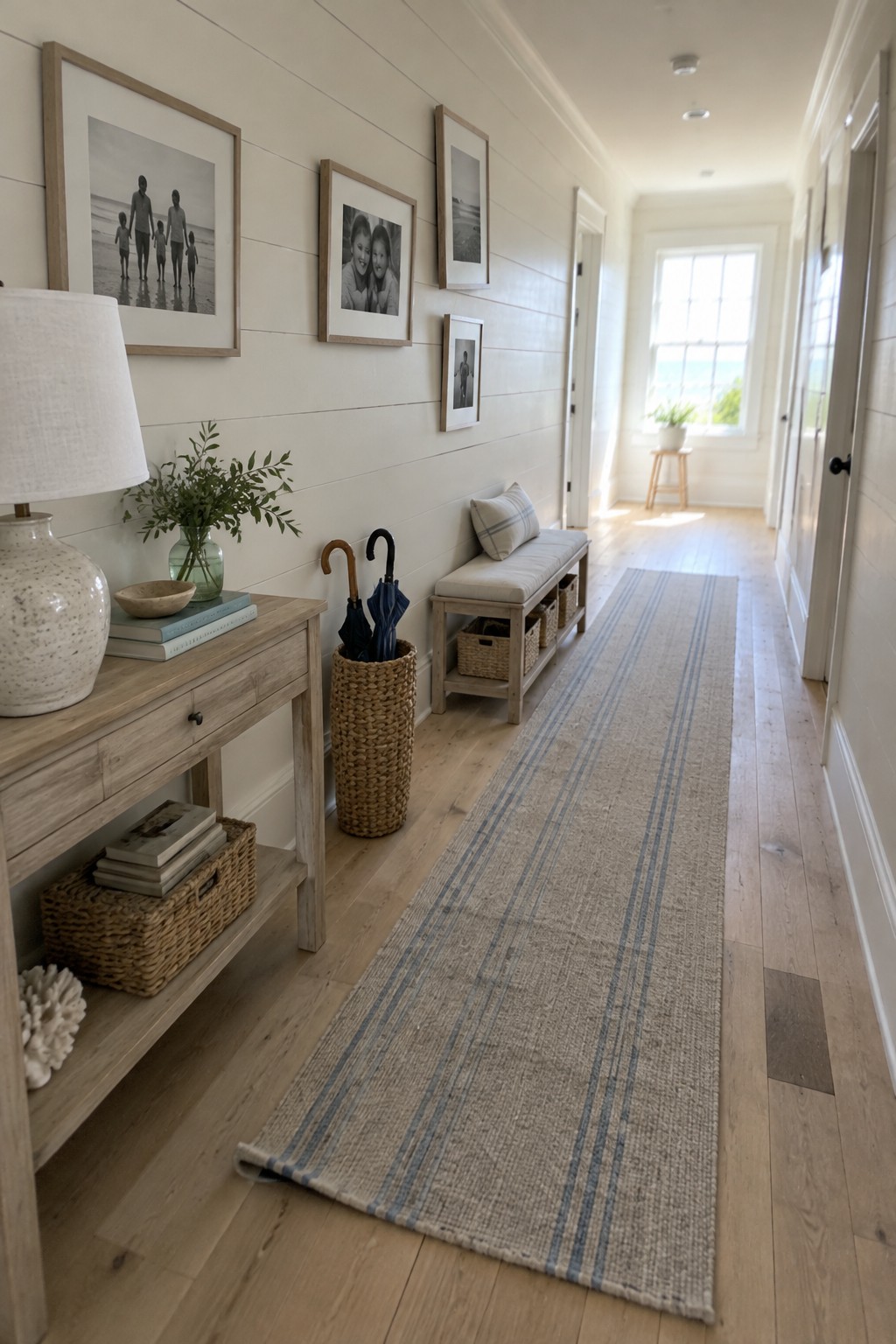
A long natural-fiber runner is a practical choice for a coastal entry. It gives the hallway a comfortable path to walk on and helps protect pale hardwood from everyday foot traffic. The blue stripes add a little color without taking over.
Choose a runner that leaves some floor visible at the sides, and make sure it lies flat so it won’t become a tripping hazard. This simple approach works especially well in a long, narrow hall.
Pale Oak Floors Suit a Hands-On Craft Room

Pale oak flooring is a practical choice for a room used for making things. It keeps the space feeling light, while its natural grain works comfortably with the worn wooden worktable and shelves.
In a craft room, choose a durable finish that can handle scuffs and the occasional spill. A matte finish helps the floor feel casual, and a small washable rug can catch scraps near the work area.
Use Pale Oak Floors in a Sunroom

Pale oak flooring suits a sunroom because its light, natural color helps the space feel open without competing with the view. Here, the simple wood floor works well with a round woven rug and relaxed seating.
This approach works in bright rooms that get plenty of use, especially when you want a coastal feel without adding much decoration. Choose a durable finish that can handle foot traffic, and use rugs where chairs may scrape the floor.
Use Light Oak Flooring In a Coastal Playroom

Light oak floors are a practical choice for a playroom because they keep the space feeling bright while standing up to everyday use. Here, the pale wood continues beneath a soft foam mat, so children have a comfortable place to play without covering the whole floor.
A washable play mat can protect the area where toys tend to gather, while leaving some hardwood visible around it. This works well in a family room or playroom, especially when you want a kid-friendly setup that still feels connected to the rest of the home.
Pale Hardwood Suits a Simple Home Office

Pale hardwood is a practical choice for a home office that also serves as a creative workspace. Its light, natural color keeps the room feeling open, while the wood grain gives it a little character without needing much decoration.
A clear finish helps show the grain and makes everyday dust easier to spot and clean. It works especially well with a simple wood desk and chair, as long as you use felt pads or a rug to protect the floor from chair legs.
Use a Vintage Rug to Add Color

A patterned vintage rug is an easy way to bring color into a coastal living room without making it feel fussy. Its muted tones work well with pale hardwood floors, while leather seating gives the room a more relaxed, collected look.
Choose a rug large enough for the front legs of the seating to rest on it. This helps define the conversation area, especially in an open living room. Keep the flooring visible around the edges so the room still feels light.
Let Pale Hardwood Connect an Open Living Area

Pale hardwood helps a narrow open-plan room feel like one continuous space instead of separate zones. Here, the same light flooring runs from the kitchen past the dining table toward the sitting area, while the natural wood keeps the look relaxed.
This approach works well in compact coastal homes where a clear path matters. Choose a low-sheen finish that can handle daily foot traffic, and use rugs to mark out seating areas without breaking up the floor.
Frequently Asked Questions
Q: Does light oak flooring work in a coastal home with pets and kids?
A: Yes, especially if you choose a finish with a little texture or visible grain. It tends to hide everyday dust and small scratches better than a very smooth, glossy floor.
Q: What wall colors look good with pale hardwood floors?
A: Soft white, warm cream, and muted blue or green all pair nicely with pale oak. If the room feels too cool, try a warmer white rather than adding more gray.
Q: Will pale wood floors make a small room feel bigger?
A: They often help because they reflect light and keep the floor from feeling visually heavy. Carrying the same flooring into nearby rooms can make the space feel more open.
Q: How do I keep sand from scratching light oak floors?
A: Use a mat at the entrance and sweep or vacuum up grit regularly. Sand is more likely to scratch when it gets dragged around, so a quick cleanup goes a long way.
