


Spanish coastal homes often make their first impression through the shape of the facade, where stucco walls and arched openings soften the view from the street.
I find that these details work best when they suit the home’s proportions and local light, rather than feeling added just for decoration.
Rooflines, entry doors, window placement, and the texture of the finish all affect whether the exterior feels cohesive or overly busy.
The ideas worth keeping are often the ones that could adapt to a real house, whether through a curved doorway, a warm wall color, or a simpler, more balanced facade.
Small choices can change the whole read of a home.
Make the Entry Feel Part of the Architecture

A recessed entry is a useful way to give a Spanish-style facade more character. The arched opening makes the doorway feel sheltered, while the stucco keeps the look simple and traditional.
This approach suits homes with a little room to set the entry back from the wall. A dark wood door can give the pale stucco some contrast, and a covered recess offers a practical spot to pause out of the sun.
Add a Fountain to a Covered Patio
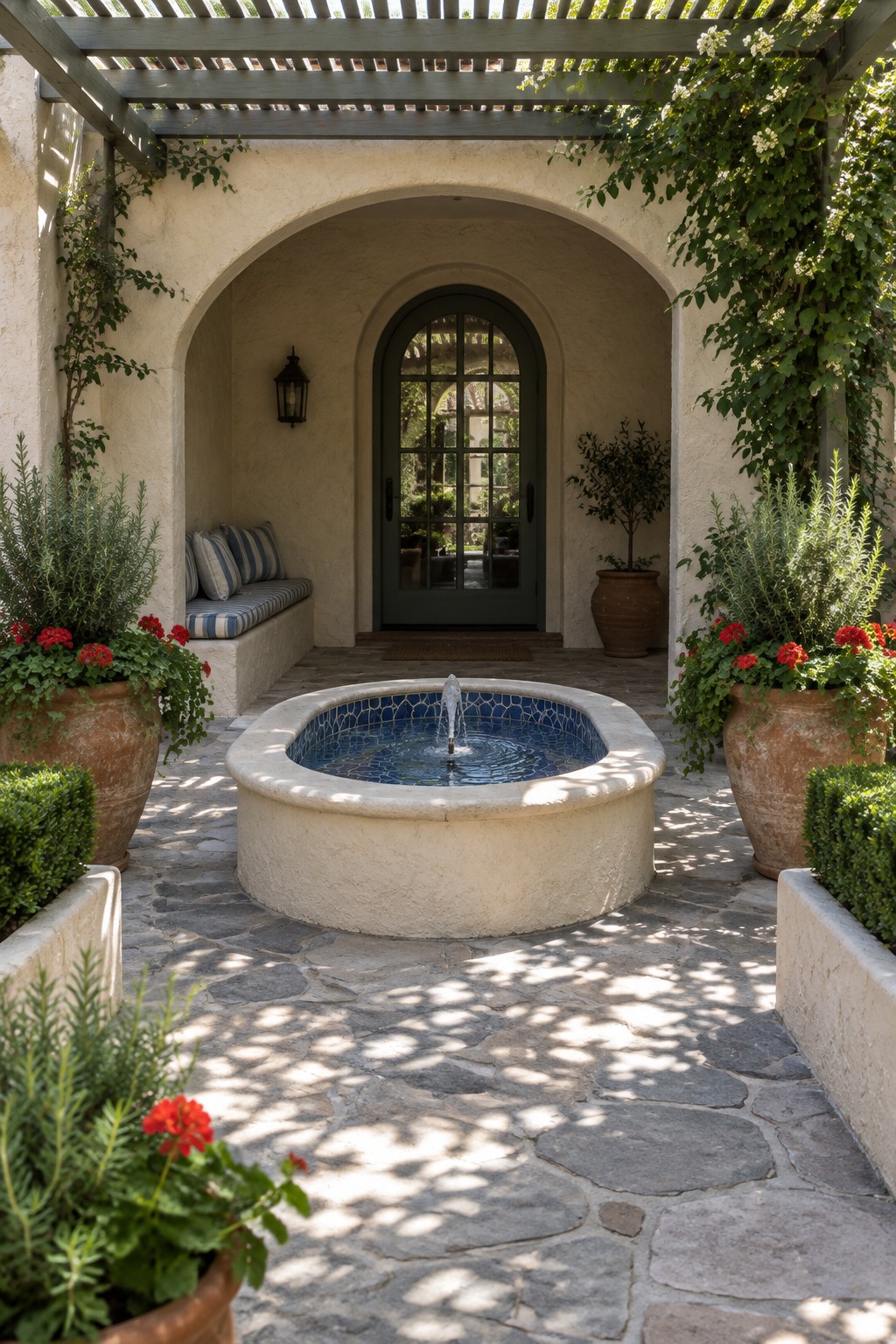
A small fountain can give a sheltered patio a clear focal point without taking up much room. Here, the round stone basin sits along the path to the arched entry, making the space feel like a place to pause rather than just a route through the garden.
This idea works well in a courtyard or compact patio where a larger water feature would feel crowded. Choose a basin that leaves enough room to walk around it, and keep the pump easy to reach for cleaning and upkeep.
Use Built-In Seating To Make A Coastal Living Room More Relaxed
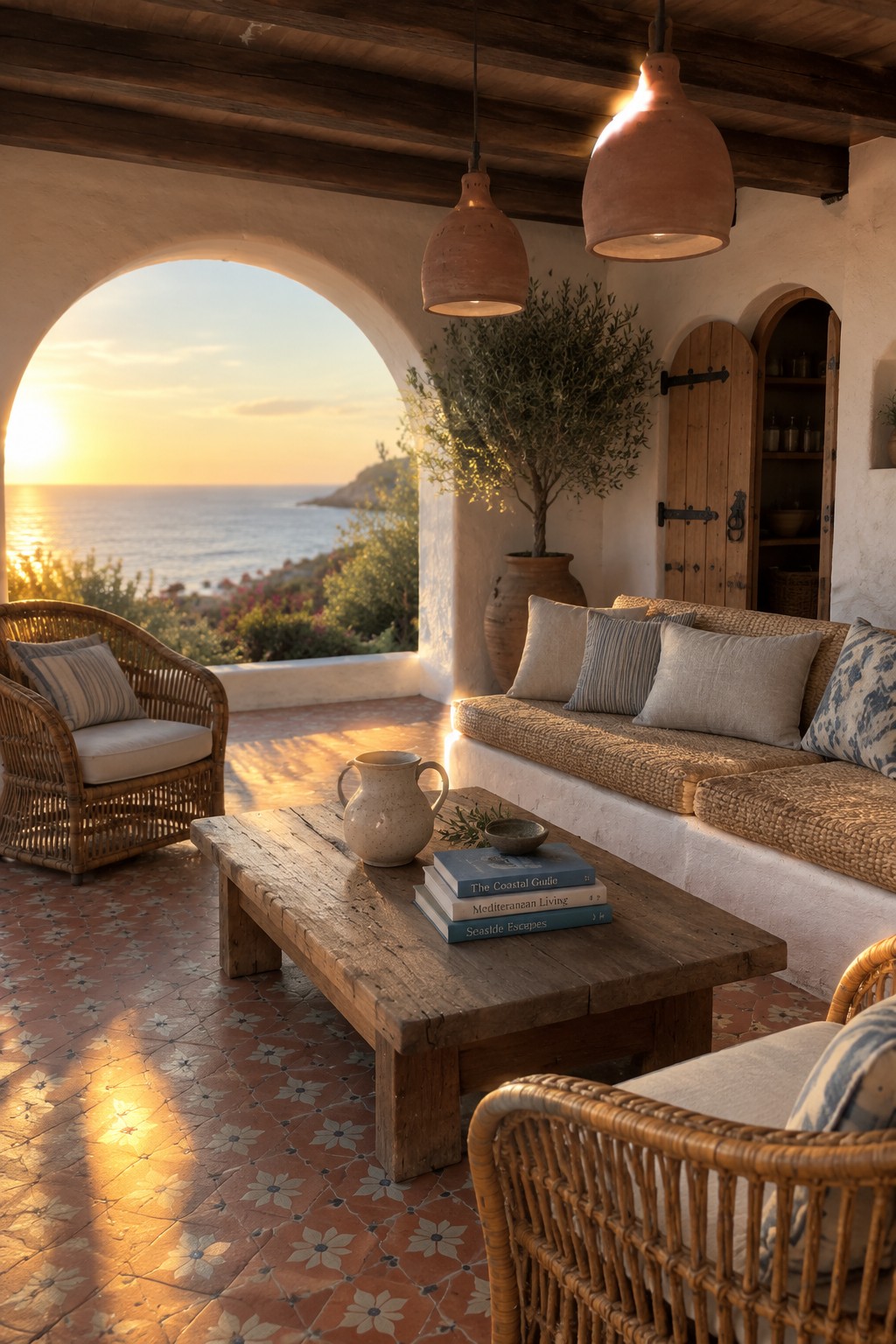
A built-in bench can make a living room feel settled without needing a lot of separate furniture. Here, the long seat follows the wall and gives the room a comfortable place to gather.
For a similar look, add a firm cushion and a few washable covers, then keep a small coffee table within reach. This works especially well in rooms where floor space is limited or where you want seating to feel part of the architecture.
Built-In Entry Storage
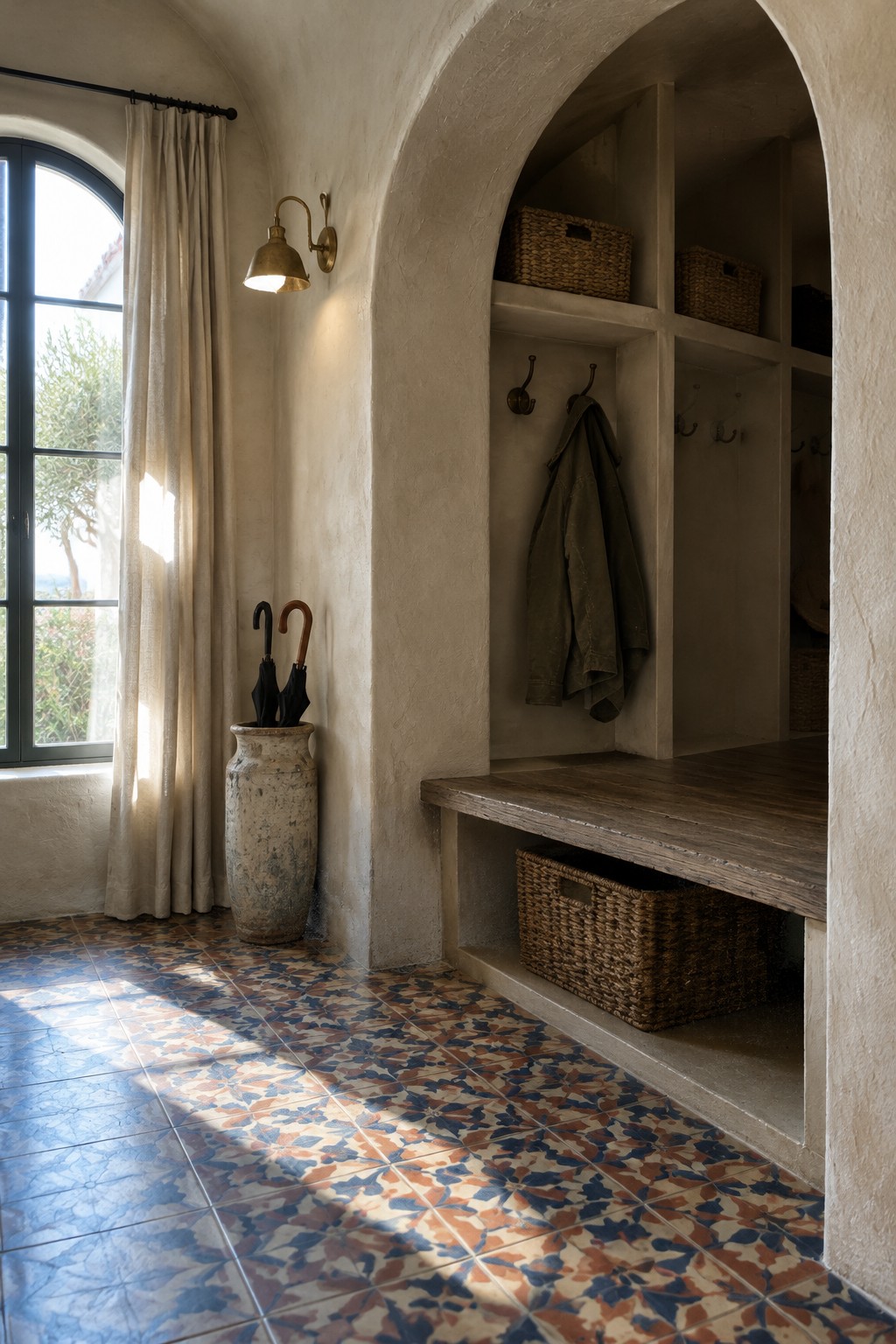
A built-in entry nook can keep everyday items organized without adding bulky furniture. Here, open cubbies hold baskets above a long wooden bench, while hooks leave coats easy to reach.
This kind of storage works well in a Spanish-style home where thick walls and arched openings are part of the architecture. Use baskets to hide smaller items, and leave enough bench space for sitting down to take off shoes.
Use Arched Doorways To Connect Indoor And Outdoor Spaces

An arched doorway can make the transition to a patio feel like part of the room’s layout, rather than just an opening in the wall. It suits Spanish coastal homes especially well, where simple plaster walls and rounded forms give the architecture a relaxed, consistent look.
Use an arch where it leads to a terrace or garden, and keep the surrounding finish simple so the shape can stand on its own. Here, the opening also keeps the view toward the water visible from the living room.
Use a Rustic Island as the Kitchen’s Main Work Surface

A thick wood island gives a Spanish coastal kitchen a practical center for cooking and casual meals. Here, the broad countertop also leaves room to work without crowding the stove or sink.
This idea suits kitchens with enough floor space to move around the island comfortably. Choose sealed, durable wood for the countertop, and leave a clear path to nearby cabinets and appliances.
Use an Arched Doorway to Connect the Bedroom to the Outdoors

An arched doorway can make a bedroom feel connected to a terrace without needing a wide wall of glass. The curved opening suits Spanish-style homes, and it gives a simple route outside a little more character.
This works especially well in a bedroom that opens onto a private balcony or patio. Keep the surrounding finish simple, such as smooth stucco, so the arch remains the main feature.
Use Patterned Tile To Give a Bathroom Character
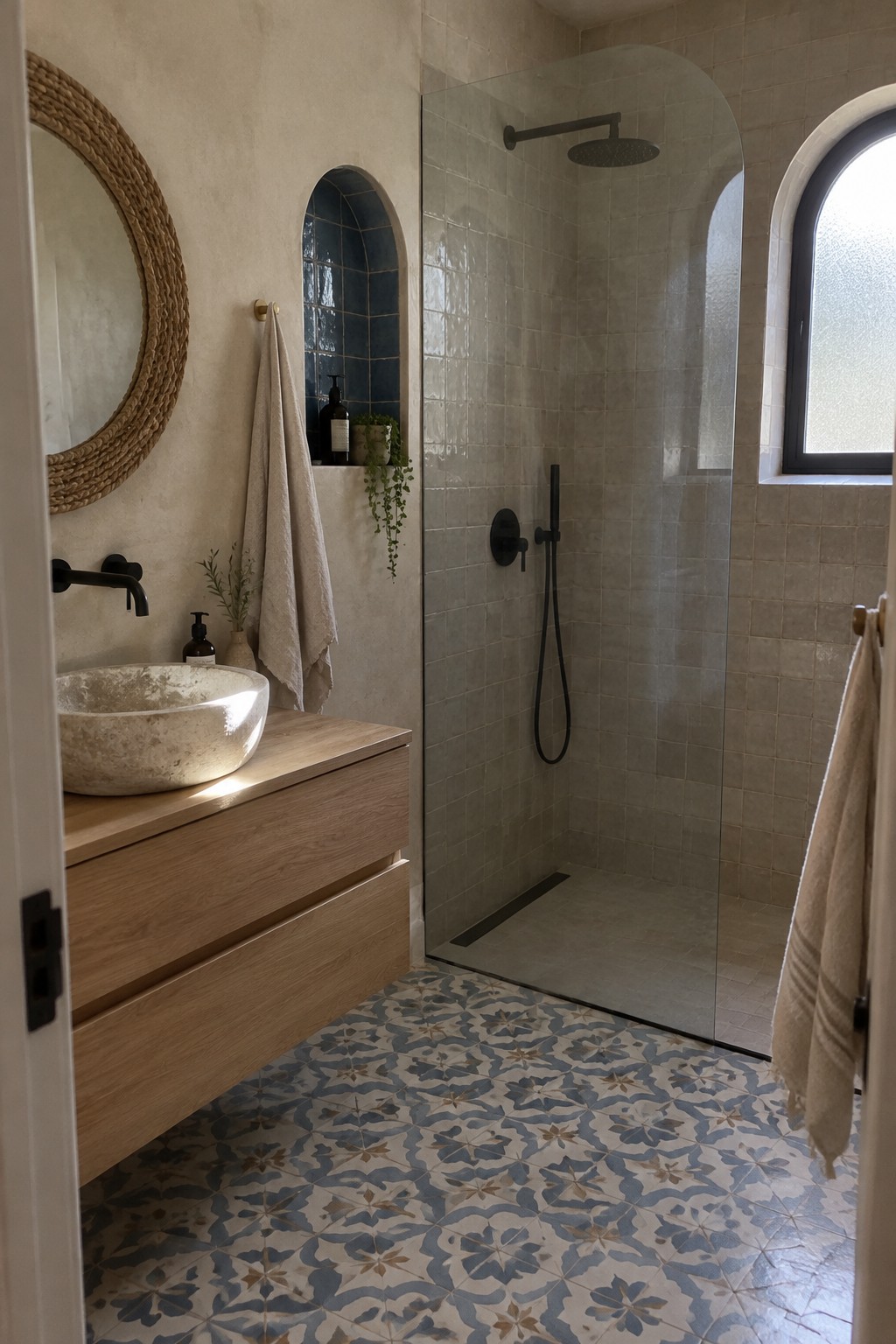
Patterned floor tile is a simple way to bring color into a Spanish-style bathroom without covering every surface. Here, the blue and muted tan pattern gives the room a clear focal point while the plain plaster and tile keep things from feeling too busy.
This works well in a smaller bathroom, where one strong floor pattern can carry the design. Keep the surrounding finishes fairly quiet, and choose a tile with enough variation to suit the relaxed, handmade look of the home.
Make Outdoor Dining Work in a Covered Patio

A sturdy dining table can make a covered patio useful for everyday meals, not just special occasions. Here, the open pergola gives the table shade while still leaving the cooking area close by.
This setup works well in a courtyard or narrow patio where dining and cooking need to share space. Leave enough room to pull out chairs and walk around the table, and choose outdoor-friendly materials that can handle sun and occasional rain.
Make the Poolside Patio Work for Dining and Lounging

A poolside patio can do more than provide a place to dry off. Here, a shaded dining nook sits close to the pool, while loungers leave room for relaxing nearby. Giving each activity its own spot makes the area easier to use without needing a large patio.
For a similar setup, place dining furniture under a pergola or other shade structure and keep loungers along the pool edge. Stone paving suits a Spanish coastal home, but leave enough clear space to walk safely around the water.
Choose a Long Dining Table for Coastal Gatherings

A long wooden table makes a dining room useful for both everyday meals and larger gatherings. Here, the simple, rustic tabletop suits the relaxed feel of a Spanish coastal home without needing much extra decoration.
This arrangement works well in a room with enough space to move around the chairs. Wicker seating keeps the setup casual, while a sturdy table gives it a practical center.
Set Up a Small Balcony for Outdoor Dining
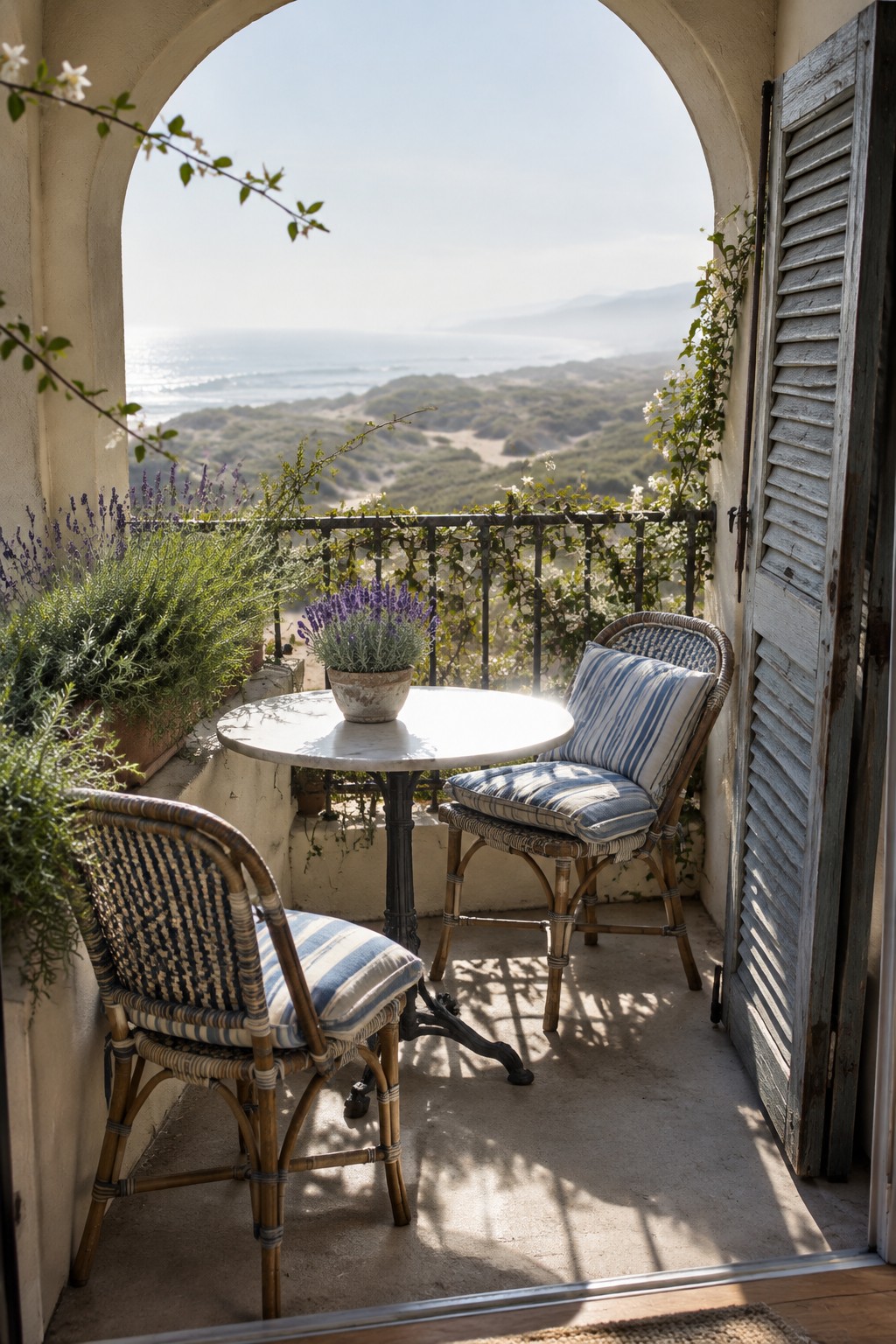
A small balcony can still work as a proper dining spot when the table and chairs fit the space without blocking the way through. A round table is a practical choice here, since it gives two people room to sit and leaves the corners clear.
This kind of setup suits a narrow terrace or apartment balcony. Choose chairs that are easy to move, and keep the table modest in size so there’s still space to walk around it.
Use a Stepping-Stone Path to Guide the Garden

A gravel path set with broad stepping stones gives a garden a clear route without covering it in paving. The gaps keep the path informal, while the stones make it easier to walk through the planting.
This approach suits a Mediterranean-style entry, especially where the ground is uneven or a solid walkway would feel too formal. Set the stones at a comfortable stride and keep them level so the path feels steady underfoot.
Use A Pergola To Shade The Patio
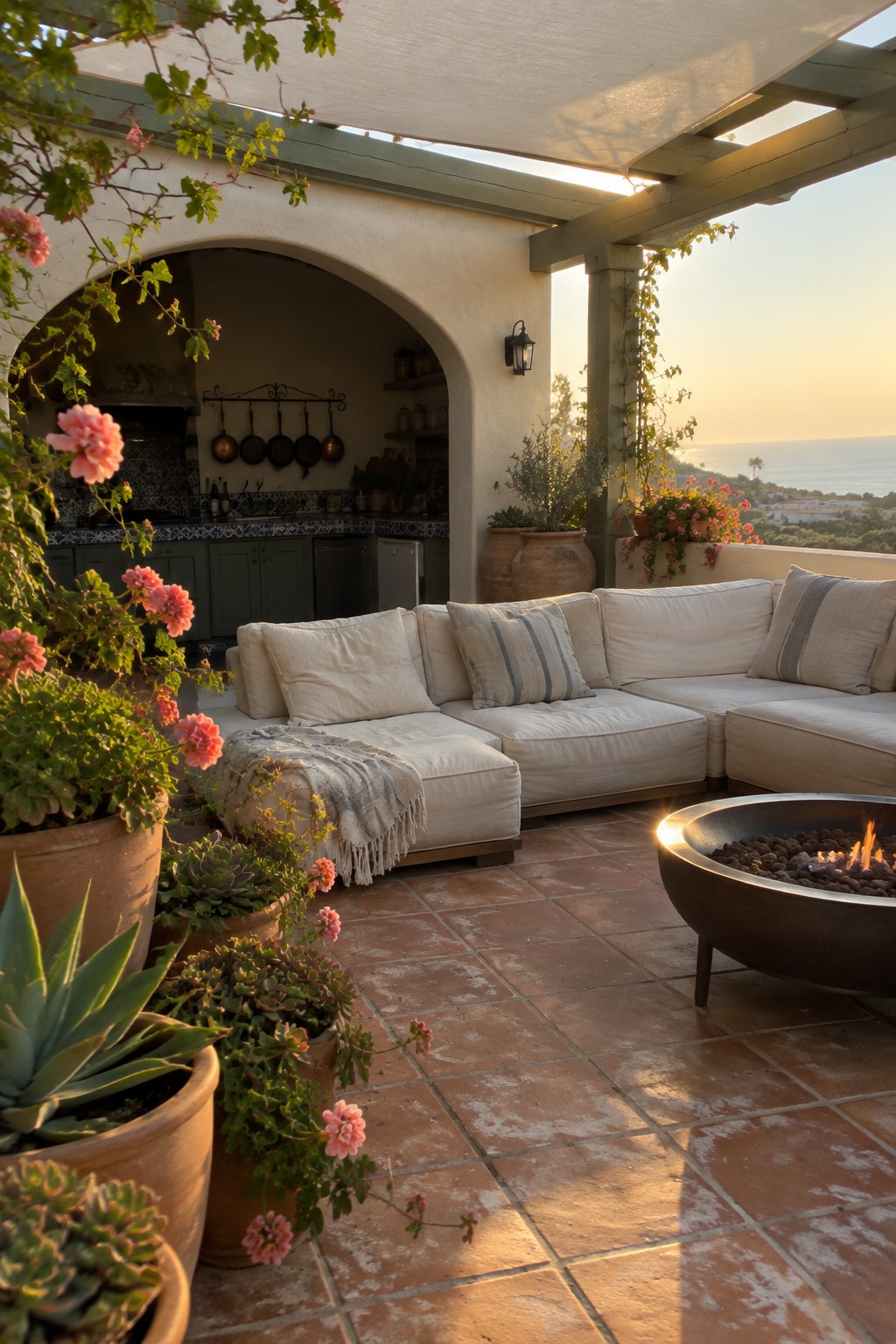
A pergola makes an outdoor seating area more comfortable while still letting in some daylight. Here, the overhead shade covers the lounge area without closing it off from the open terrace.
For a similar setup, place the seating beneath the pergola and leave a clear path around it. This works well on sunny patios, especially when you want shade without building a fully enclosed room.
Use a Built-In Nook to Make a Small Sitting Room Work

A recessed shelf can make good use of an alcove while keeping storage tucked neatly into the wall. In a small sitting room, that leaves more floor space for a comfortable chair and a little table.
Use the shelves for a few books and useful objects, rather than packing them full. This idea suits older homes with deep walls and arched openings, but a carpenter can also build a shallow version into a plain wall.
Frequently Asked Questions
Q: Do stucco walls work in a rainy or humid coastal climate?
A: They can, but the finish needs to suit the local weather. Use a breathable stucco system and make sure the walls have proper drainage and protective detailing around windows and roof edges.
Q: How can I make an arched doorway feel less formal?
A: Keep the surrounding details simple. A plain wood door, understated hardware, and a soft, natural wall color let the arch add character without making the entry feel grand.
Q: What colors pair well with Spanish-style stucco?
A: Warm white, sand, and pale terracotta feel at home with stucco and coastal light. Try a small sample on the exterior first, since direct sun can make colors look brighter than expected.
Q: Can I add Spanish coastal details to a modern home?
A: Absolutely. An arched entry or textured stucco accent can bring in the style without changing the whole house. Choose one or two details and let the rest stay clean and simple.
